
Neil Gehrels Swift Observatory Ends Historic Mission With Atmospheric Re-entry
The Neil Gehrels Swift Observatory concluded its nearly 22-year operational life on Wednesday, re-entering Earth's atmosphere and ending a remarkably produ
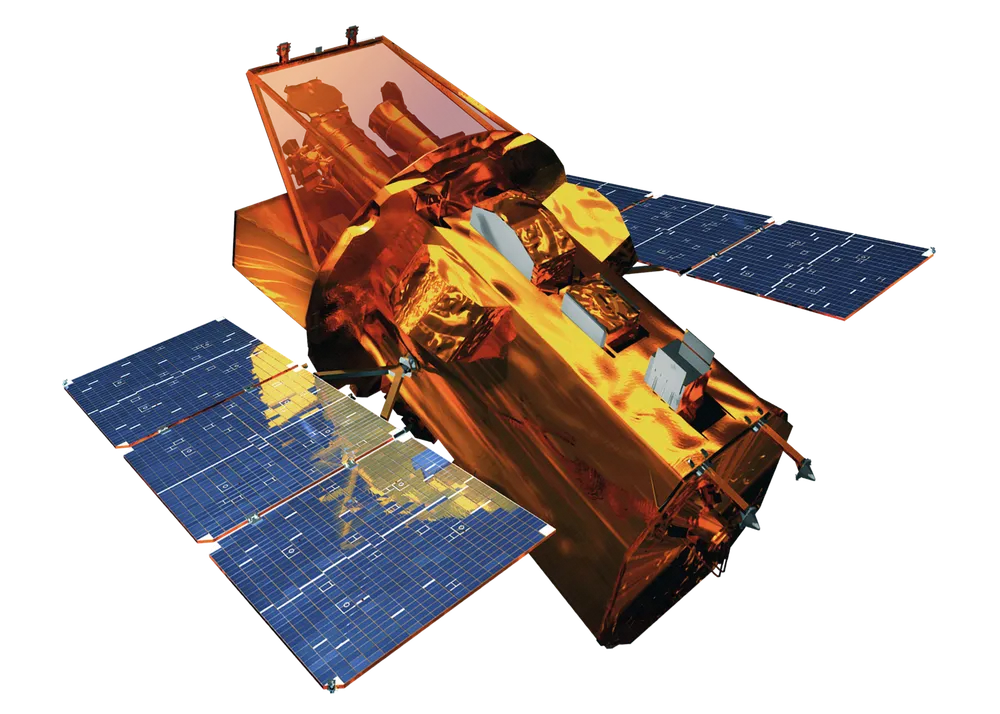
The Neil Gehrels Swift Observatory concluded its nearly 22-year operational life on Wednesday, re-entering Earth's atmosphere and ending a remarkably productive mission that fundamentally reshaped our understanding of high-energy astrophysics. Atmospheric re-entry occurred over the island of Sumatra, bringing a controlled close to a space telescope that far outlived its original design parameters and became a cornerstone of transient astronomy.
Launched on November 20, 2004, aboard a Delta II rocket, the observatory was originally designated the Swift Gamma-Ray Burst Explorer. Developed as a collaborative NASA Medium-class Explorer (MIDEX) mission, it was led by the Goddard Space Flight Center alongside an international consortium involving academic and research institutions in the United States, the United Kingdom, and Italy. The spacecraft was operated by Pennsylvania State University and named in honor of its founding principal investigator, Neil Gehrels, who led the project until his passing in 2017.
Swift was engineered with a specific, rapid-response capability to detect gamma-ray bursts—the most energetic and luminous electromagnetic events in the universe—and immediately pivot to capture their fading afterglows across X-ray, ultraviolet, and optical wavelengths. Operating with a detection sensitivity approximately three times greater than its predecessor on the Compton Gamma Ray Observatory, the telescope consistently logged roughly 100 bursts annually. While its nominal on-orbit lifetime was projected at just two years, robust engineering and continuous software updates allowed the observatory to function for more than two decades.
Over the course of its extended mission, Swift evolved from a specialized instrument into an indispensable, general-purpose multi-wavelength observatory. Astronomers relied on its rapid slewing abilities to monitor not only distant gamma-ray bursts, but also comets, supernovae, active galactic nuclei, and tidal disruption events where stars are torn apart by supermassive black holes. The spacecraft’s prompt alerts frequently served as the primary trigger for ground- and space-based telescopes worldwide, enabling multi-messenger astronomy campaigns that bridged high-energy physics and optical observation.
The retirement of the Swift observatory marks the conclusion of a remarkably successful era in international scientific cooperation and deep-space monitoring. As the global astronomical community transitions to newer generations of transient-detecting facilities, the vast public archive of data accumulated by Swift over its 22-year tenure will continue to serve as a foundational resource for researchers investigating the most violent phenomena in the cosmos.
Produced by our editorial team, with AI assistance in editing.
