Massive wildfires sweep through British Columbia's Okanagan region, forcing evacuations of over 20,000 people.
On August 8, a wildfire broke out in British Columbia's Okanagan region, forcing the evacuation of 20,000 residents, including the entire village of Summer
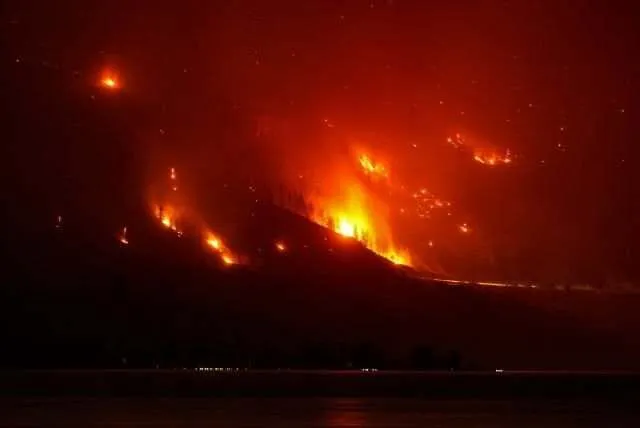
On August 8, a wildfire broke out in British Columbia's Okanagan region, forcing the evacuation of 20,000 residents, including the entire village of Summerland. The Canadian government declared a state of emergency.
Summerland is a small town with a population of 12,000 people situated near Okanagan Lake, the largest lake in the Okanagan region. Residents of Summerland were ordered to evacuate on the evening of August 8, and nearby Peachland's 8,000 residents were also evacuated. The fire resulted in the death of an 80-year-old woman who died while attempting to evacuate.
On August 8, British Columbia Premier David Eby declared a state of emergency and stated, "This is an explosive fire." Canadian Prime Minister Justin Trudeau has placed the Canadian military on standby to assist in responding to the disaster. The wildfire spread rapidly, causing widespread evacuations.
On the evening of August 7, the fire caused significant destruction in the Okanagan region, with over 5,000 hectares already burned. By the morning of August 8, that number had risen to 10,000 hectares. Due to the combination of wind direction and fire intensity, the fire quickly spread across mountain slopes and intensified as it approached the lake.
The Canadian military is actively assisting with evacuation efforts in the affected area, and local authorities are working to mobilize resources to help disaster-stricken residents. As of now, 50,000 farm animals have been left behind on 146 farms, with some caretakers allowed to remain on the farms to tend to the animals.
The wildfire is one of the most severe natural disasters in Canada this year and has exposed the region's vulnerability to wildfires. For Taiwan, this wildfire is primarily a regional event but can serve as an important reference for understanding the wildfire risks in North America.
In recent years, wildfire risks have been increasing, and British Columbia has experienced multiple large-scale wildfires, causing significant impacts on local residents and the environment. Understanding these events can improve our knowledge of the region's environment and response measures, helping us prepare for similar natural disasters.
Produced by our editorial team, with AI assistance in editing.