Magnitude 5.7 earthquake strikes central Japan, injuring 22 people and halting transport.
A magnitude 5.7 earthquake struck central Japan, centered in Shizuoka Prefecture and sending strong tremors across several neighboring prefectures, includi
A magnitude 5.7 earthquake struck central Japan, centered in Shizuoka Prefecture and sending strong tremors across several neighboring prefectures, including Aichi, Gifu, Nagano, and Yamanashi. Local authorities and emergency services have confirmed that at least 22 people sustained injuries from falling objects and unstable terrain during the shaking. While transportation networks and utility providers temporarily suspended certain operations to conduct safety checks, no major structural collapses or tsunami warnings have been reported following the seismic event.
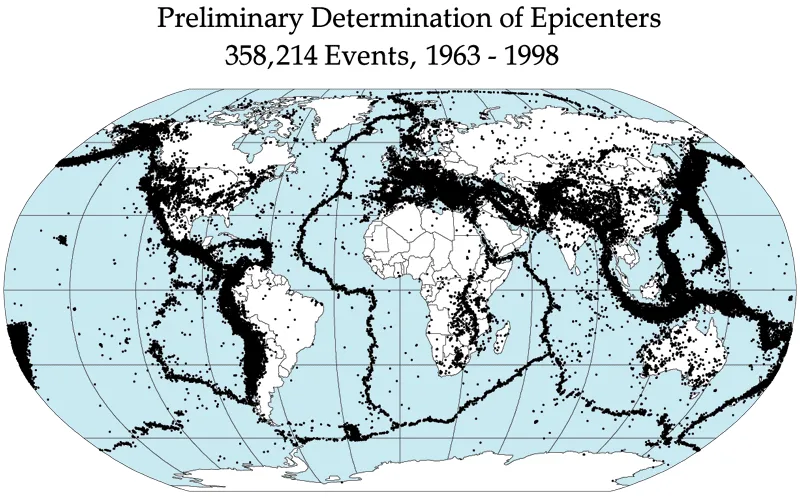
Japan sits atop one of the most seismically active regions in the world, positioned along the volatile Pacific Ring of Fire where several major continental and oceanic tectonic plates converge. This geological setting subjects the country to frequent earthquakes, which are caused by the sudden release of accumulated stress along fault lines within the lithosphere. While minor tremors are a daily reality for residents, moderate to severe earthquakes routinely test the resilience of local infrastructure, ranging from residential buildings to complex industrial facilities.
In response to these constant geological hazards, Japan has developed some of the world's most stringent building codes and advanced early-warning systems. Civil engineers and municipal planners continually update structural standards to absorb seismic energy, minimizing casualties and infrastructure damage during sudden ruptures. Public preparedness drills, conducted regularly across schools and workplaces, further ensure that populations know how to respond immediately when seismic waves propagate outward from an earthquake's hypocenter.
Beyond the immediate domestic impact on local communities and emergency infrastructure, seismic events in Japan carry broader implications for regional stability and global supply chains. As a critical hub for high-technology manufacturing, precision engineering, and the production of advanced semiconductors, any disruption to central Japan’s industrial corridors can reverberate across international markets. Ensuring the rapid recovery and structural integrity of this region is therefore vital not only for Japan's domestic security, but also for maintaining the continuity of global trade and technological supply networks.
Produced by our editorial team, with AI assistance in editing.