KJC opens 75,000‑seat Kingdome in Davao, world’s largest indoor arena
The Kingdom of Jesus Christ (KJC) inaugurated its 75,000‑seat Kingdome in Davao City on 1 September 2026, marking the group’s 41st anniversary and establis
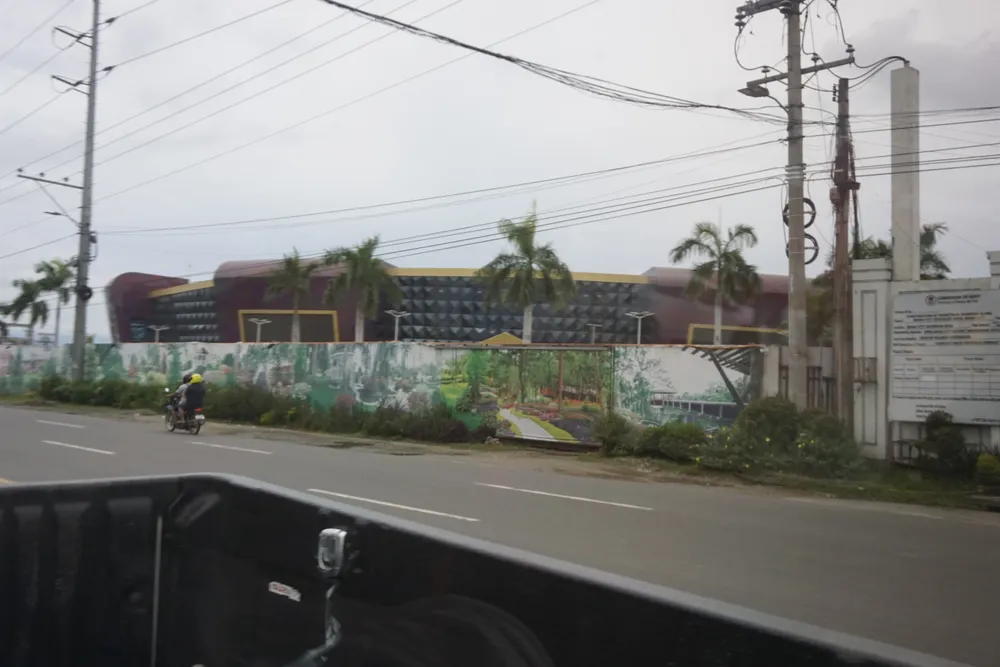
The Kingdom of Jesus Christ (KJC) inaugurated its 75,000‑seat Kingdome in Davao City on 1 September 2026, marking the group’s 41st anniversary and establishing the venue as the world’s largest indoor arena. The ceremony, attended by senior KJC officials, local dignitaries and a crowd of supporters, was followed by a religious service that highlighted the structure’s dual identity as both a sports and concert venue and a “cathedral” for the sect’s worshippers. The Kingdome, situated adjacent to Francisco Bangoy International Airport, opened its doors to the public after more than a decade of construction that began in September 2012.
The Kingdome’s capacity of 75,000 seats eclipses the 55,000‑seat Philippine Arena in Bocaue, Bulacan, owned by the rival Iglesia ni Cristo (INC). Both structures reflect a broader trend among Philippine religious groups to invest in massive multipurpose facilities that can serve as worship spaces, event venues, and symbols of organizational reach. The KJC, founded in 1985 by Apollo Quiboloy, has positioned the Kingdome as “the world’s largest indoor cathedral,” emphasizing its role in expanding the sect’s visibility and influence. The INC, while not directly involved in the Davao project, has expressed cautious acknowledgement of the development, noting that competition in large‑scale religious infrastructure underscores the growing financial capabilities of faith‑based organizations in the Philippines.
Construction of the Kingdome was financed largely through donations from KJC members and private benefactors, with the project’s scale necessitating a complex supply chain that drew on both domestic and overseas contractors. Local firms supplied much of the concrete, steel reinforcement and interior finishes, while specialized engineering services were sourced from firms in South Korea, Japan and, to a lesser extent, Taiwan. The involvement of Taiwanese construction firms, though limited, reflects the broader integration of the Philippines into regional supply networks for high‑value infrastructure, where Taiwanese companies have historically contributed expertise in large‑scale building projects and prefabricated components.
The venue’s location near Davao’s main airport is strategic, aiming to attract international concerts, sporting events and conventions that might otherwise be held in Manila or abroad. Davao City officials have welcomed the development, citing potential boosts to tourism, hospitality and ancillary services. However, some urban planners have raised concerns about traffic congestion, noise pollution and the adequacy of public transport links to accommodate the influx of up to 75,000 attendees for major events. The city’s municipal council has pledged to review zoning regulations and invest in infrastructure upgrades to mitigate these impacts.
Religious scholars note that the Kingdome’s opening illustrates how megachurches and sects in the Philippines increasingly adopt corporate‑style branding and large‑scale real‑estate development to cement their social standing. While the KJC frames the arena as a spiritual hub, its commercial potential cannot be ignored; the venue is already being marketed to international promoters and may host non‑religious events that generate significant revenue. Critics argue that such dual‑purpose facilities blur the line between worship and commerce, raising questions about tax exemptions, regulatory oversight and the equitable allocation of public resources.
The Kingdome’s emergence carries implications for the wider Southeast Asian region, where competition for hosting rights to major concerts, sports tournaments and conventions is intensifying. For Taiwan, the project underscores opportunities for Taiwanese firms in the Philippine construction and engineering sectors, reinforcing existing trade ties and highlighting the island’s role in regional infrastructure supply chains. Moreover, the venue’s capacity to host large gatherings could position Davao as a new hub for multinational events, potentially reshaping travel and logistics patterns that affect airlines, shipping routes and tourism flows across the Indo‑Pacific.
Produced by our editorial team, with AI assistance in editing.