
Jakarta Airport Halts Flights Due to Anak Krakatoa Ash Cloud
Jakarta’s main gateway, Soekarno‑Hatta International Airport, halted all take‑offs and landings on Thursday afternoon after a plume of volcanic ash from An
Jakarta’s main gateway, Soekarno‑Hatta International Airport, halted all take‑offs and landings on Thursday afternoon after a plume of volcanic ash from Anak Krakatoa drifted into the airport’s airspace. The suspension, announced by the airport’s management at 14:30 local time, affected more than 150 scheduled flights and left thousands of passengers stranded, prompting airlines to reroute services to secondary airports such as Halim Perdanakusuma and to coordinate ground assistance for affected travelers.
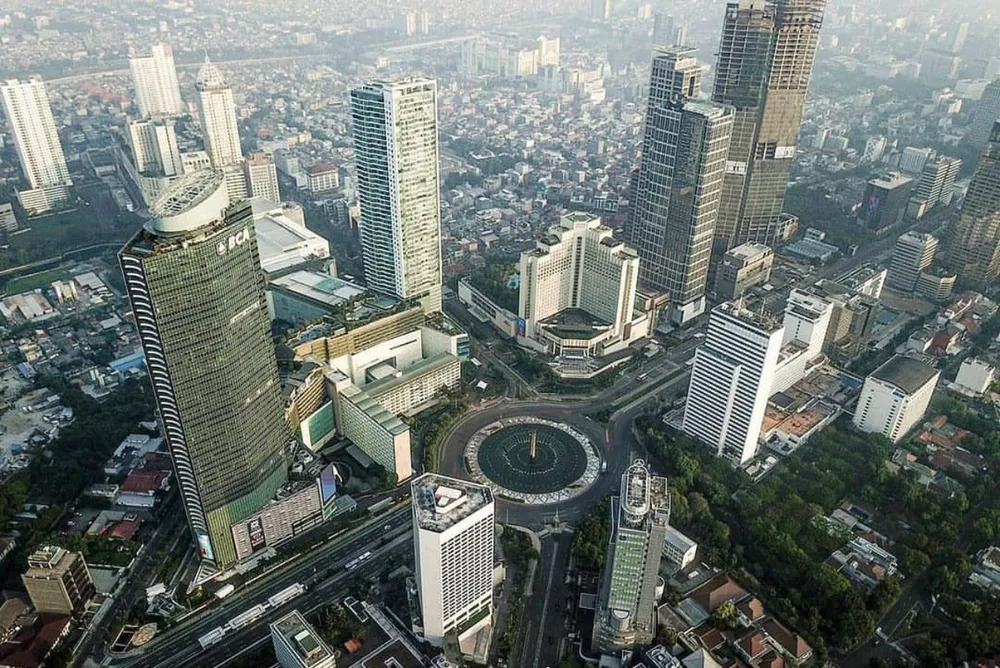
The disruption comes as the Greater Jakarta region – locally known as Jabodetabek – grapples with the daily pressures of supporting the world’s largest urban agglomeration. Home to roughly 32 million people as of mid‑2024, the metropolitan area spans six thousand eight hundred square kilometres across the capital’s Special Capital Region and parts of West Java and Banten provinces. Its dense population, sprawling commuter belts and status as Indonesia’s economic engine make the airport a critical hub for both domestic and international traffic, handling over 70 million passengers annually. Any interruption reverberates through a complex web of logistics, from cargo shipments of consumer goods to the movement of business travelers essential to the nation’s service sector.
Anak Krakatoa, the active cone that emerged from the 1883 eruption of its parent volcano, has been emitting ash and steam since a moderate eruption in early March. While the volcano sits roughly 130 kilometres south of Java’s northern coast, prevailing winds can transport fine ash particles over long distances, creating hazards for aircraft engines and reducing visibility. International aviation guidelines, reinforced after the 2010 Eyjafjallajökull crisis in Europe, mandate the suspension of flights when ash concentrations exceed safety thresholds. Indonesian authorities, including the Directorate General of Civil Aviation, confirmed that ash readings at Soekarno‑Hatta surpassed the 2 mg/m³ limit, prompting the precautionary shutdown.
The decision has drawn mixed reactions from stakeholders. Airline operators such as Garuda Indonesia and Lion Air have expressed frustration over the loss of revenue and the logistical challenges of accommodating displaced passengers, yet they praised the swift coordination with airport officials to ensure safety. Local businesses, particularly those reliant on just‑in‑time deliveries, warned of potential supply‑chain delays, noting that the airport also serves as a major cargo gateway for electronics, textiles and perishables destined for regional markets. Meanwhile, the Ministry of Transportation emphasized that the ash episode underscores the need for resilient infrastructure and contingency planning in a country straddling the Pacific “Ring of Fire.”
Beyond immediate operational setbacks, the incident highlights broader vulnerabilities in Southeast Asia’s air transport network. Jakarta’s airport is a primary hub for flights connecting Southeast Asian capitals, and its temporary closure forces airlines to divert traffic to Singapore’s Changi, Kuala Lumpur International and Manila’s Ninoy Aquino airports, increasing congestion and raising operational costs across the region. For Taiwan, whose carriers operate regular services to Jakarta and maintain cargo links for semiconductor components and other high‑tech goods, the ash disruption serves as a reminder of how natural hazards can ripple through supply chains that underpin the island’s export‑driven economy.
In the longer term, the episode may prompt regional cooperation on volcanic ash monitoring and information sharing. Indonesia’s Meteorology, Climatology and Geophysical Agency (BMKG) has been expanding its ash‑forecasting capabilities, but real‑time data exchange with neighbouring air navigation service providers could enhance early‑warning mechanisms. For Taiwan, a partner in the broader Indo‑Pacific aviation safety community, such collaboration could help mitigate future disruptions that affect both passenger travel and the movement of critical goods, reinforcing the importance of coordinated disaster preparedness in an increasingly interconnected region.
Produced by our editorial team, with AI assistance in editing.