
Iranian rial hits historic low of 2.02 million per dollar as US sanctions loom
The Iranian rial hit a new historic low on Tuesday, slipping to 2.02 million rials per U.S. dollar, the worst rate ever recorded for the currency. The plun
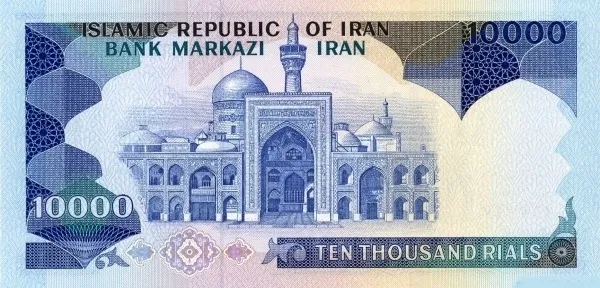
The Iranian rial hit a new historic low on Tuesday, slipping to 2.02 million rials per U.S. dollar, the worst rate ever recorded for the currency. The plunge came as the United States readied a fresh round of economic sanctions targeting Iran’s oil exports and financial institutions, a move that analysts say will further tighten the squeeze on an already fragile economy.
The rial, Iran’s official legal tender since the early twentieth century, has long struggled with severe devaluation. Subdivided into 100 dinars, the latter have become effectively obsolete because the rial’s purchasing power is so low that even the smallest denominations are rarely used in daily transactions. Despite the absence of an officially adopted symbol, the Iranian standards body created a typographic sign for the rial, and a Unicode character (U+FDFC) now represents it digitally. These technical details underscore the currency’s entrenched presence in Iran’s financial system, even as its value erodes.
Iran’s authorities attribute the depreciation to external pressures rather than domestic policy. The government has repeatedly warned that U.S. sanctions—intended to curb Tehran’s nuclear program and its support for regional militias—are engineered to cripple the nation’s oil revenue, which accounts for a sizable share of the state budget. In response, Iran has pledged to bolster its “resistance economy,” a strategy that emphasizes self‑reliance, the use of alternative payment mechanisms, and tighter monetary controls. However, the central bank’s limited ability to intervene, combined with dwindling foreign reserves, has left the rial vulnerable to rapid swings.
From the United States’ perspective, the sanctions are part of a broader diplomatic toolkit aimed at compelling Iran to negotiate on nuclear and regional security issues. By targeting the country’s ability to sell oil and access the global financial network, Washington hopes to create internal pressure that will force Tehran back to the negotiating table. Critics in Washington argue that the policy risks deepening humanitarian hardship without guaranteeing political concessions, while supporters maintain that economic leverage remains the most viable non‑military option.
The record‑low exchange rate has immediate consequences for ordinary Iranians, whose wages are already stretched thin. Import prices have surged, pushing inflation into double‑digit territory and prompting shortages of essential goods such as medicine and food staples. Businesses that rely on imported components face mounting costs, prompting some to scale back operations or seek illicit channels to obtain foreign currency. The devaluation also hampers Iran’s ability to attract foreign investment, further isolating the economy at a time when reconstruction and diversification are critical.
The ripple effects extend beyond Iran’s borders. As the country’s oil output becomes harder to monetize, global oil markets may experience tighter supplies, potentially nudging prices upward—a factor that could impact energy‑import‑dependent economies, including Taiwan. Higher oil prices would raise production costs for Taiwanese manufacturers and increase transportation expenses, putting additional pressure on an already complex supply chain. Moreover, the heightened volatility in Middle‑East financial systems could influence regional investors and banks that have exposure to Iranian assets, underscoring the interconnectedness of geopolitical developments and economic stability across the Indo‑Pacific.
Produced by our editorial team, with AI assistance in editing.