Iranian Foreign Ministry Says Ceasefire Agreement Is Almost Meaningless, International Community Responds.
Iran's Ministry of Foreign Affairs recently stated that the ceasefire agreement with the United States is "almost meaningless," in response to recent attac
Iran's Ministry of Foreign Affairs recently stated that the ceasefire agreement with the United States is "almost meaningless," in response to recent attacks. This development has reignited international attention on the complex relationship between Iran and the United States.
Iran, officially known as the Islamic Republic, has a long history and has also been referred to as Persia. It is a country located in the Middle East, bordered by Iraq, Turkey, Azerbaijan, Armenia, Afghanistan, and Pakistan, among others, and also borders the Caspian Sea, the Gulf of Oman, and the Persian Gulf. With a population exceeding 92 million, Iran ranks 17th globally, and is also the 17th largest country in the world. The country is divided into five regions, with 31 provinces under its jurisdiction, and its capital, Tehran, is also its largest city and main economic center.
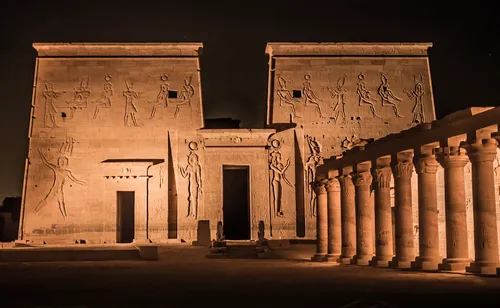
Iran boasts a rich history, ranking as one of the world's oldest continuous civilizations. In the 7th century BC, Iranian territories were first unified under the Medes, followed by the Achaemenid Empire under the leadership of Darius the Great in the 6th century BC. However, the empire was later conquered by Alexander the Great. In the 3rd century BC, a revolt in Iran established the Parthian Empire, which was later replaced by the Sassanid Empire, a period often referred to as the golden age of Persian civilization. Ancient Iran witnessed the rise and fall of multiple empires, leaving a profound impact on the development of world civilization.
In recent years, the relationship between Iran and the United States has been strained, with fundamental differences existing in areas such as nuclear issues and regional security. Iran's nuclear program has been a focal point of international concern, with the United States and other Western countries imposing severe economic sanctions. Meanwhile, Iran's influence in the Middle East has continued to grow, leading to increasing conflicts of interest with the United States on regional security issues.
The latest statement from Iran's Ministry of Foreign Affairs reflects the country's disappointment and discontent with the ceasefire agreement, which may further exacerbate tensions between Iran and the United States, with significant implications for regional security and global dynamics. The international community must continue to monitor developments in the relationship between Iran and the United States and seek new solutions to alleviate tensions between the two nations, promoting regional stability and security.
For Taiwan, the strained relationship between Iran and the United States has significant implications for the global energy market and regional security. As a major energy-importing nation, Taiwan must pay attention to changes in the international energy market, as well as developments in regional security issues. Furthermore, Taiwan can draw lessons from Iran's history and culture, gaining a deeper understanding of the complexity and diversity of the Middle East, and improving its analysis and judgment of international affairs.
Produced by our editorial team, with AI assistance in editing.