
Hall and Woodford Receive Nobel Prize for Microfoundations of Macroeconomic Stabilisation
In a ceremony held in Stockholm on 10 October 2026, the Nobel Committee announced that American economists Robert Ernest Hall and Michael Dean Woodford wou
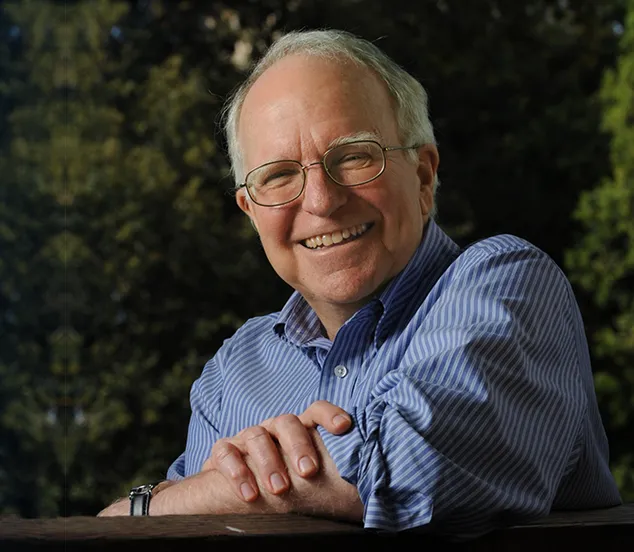
In a ceremony held in Stockholm on 10 October 2026, the Nobel Committee announced that American economists Robert Ernest Hall and Michael Dean Woodford would jointly receive the Nobel Memorial Prize in Economic Sciences. The award was presented for their pioneering work on the microeconomic foundations of macroeconomic stabilisation, a research area that has reshaped how policymakers understand and manage economic fluctuations. The prize, the most prestigious honour in economics, is awarded annually by the Royal Swedish Academy of Sciences and has been bestowed on figures ranging from John Nash to Amartya Sen.
Robert Ernest “Bob” Hall, born in 1943, has long been a towering figure in macroeconomics. He earned his BA in economics from the University of California, Berkeley, and completed a PhD at MIT with a thesis on the theory of wealth under the supervision of Robert Solow. Hall currently teaches at Stanford University and holds the Robert and Carole McNeil Senior Fellowship at the Hoover Institution. He has been a member of the National Academy of Sciences, the American Academy of Arts and Sciences, the Econometric Society, and the National Bureau of Economic Research. From 1978 he chaired the Business Cycle Dating Committee, which determines the official start and end dates of U.S. recessions, and he served as president of the American Economic Association in 2010. His research has bridged theoretical and applied economics, focusing on how micro-level behaviour shapes macro-level outcomes.
Michael Dean Woodford, a contemporary of Hall, has been equally influential in the field of monetary economics. A former member of the Federal Reserve Board of Governors and the chief economist at the Federal Reserve Bank of New York, Woodford has authored seminal papers on the transmission of monetary policy and the role of expectations in economic dynamics. He holds a PhD from MIT and has been a professor at Columbia University, where he has taught courses on macroeconomics and monetary policy. Woodford’s work on “forward guidance” and the importance of credible policy signals has been instrumental in modern central‑bank communication strategies, shaping how authorities respond to shocks in the global economy.
The joint Nobel award recognises how Hall and Woodford’s research has provided a rigorous microeconomic basis for stabilisation policy. Their work demonstrates that aggregate fluctuations can be understood by examining how individual agents optimise consumption, investment, and labour supply under uncertainty. By formalising the link between individual behaviour and macroeconomic dynamics, they have clarified the mechanisms through which fiscal and monetary interventions can dampen volatility. Their models incorporate realistic features such as heterogeneous agents, market frictions, and dynamic expectations, thereby offering policymakers a more precise toolkit for designing stabilising measures that avoid unintended side effects.
The implications of their findings extend far beyond academic circles. For economies like Taiwan, whose economy is heavily export‑oriented and intertwined with global supply chains, stable macroeconomic conditions are crucial. The semiconductor industry, a cornerstone of Taiwan’s high‑tech exports, is sensitive to global demand swings and monetary policy shifts. By providing a clearer understanding of how policy can smooth business cycles, Hall and Woodford’s insights help central banks and governments anticipate and mitigate shocks that could disrupt production and trade. In a region where economic interdependence is intense, the ability to stabilise macro outcomes supports resilience against external shocks, fostering a more predictable environment for investment, innovation, and cross‑border collaboration.
Produced by our editorial team, with AI assistance in editing.

