
Groundbreaking James Webb Space Telescope Observations Reveal First Black Hole Starbirth
Recent Discovery: James Webb Space Telescope Reveals the Secrets of Black Hole Stars A team of researchers behind a small dot discovered by the James Webb
Recent Discovery: James Webb Space Telescope Reveals the Secrets of Black Hole Stars
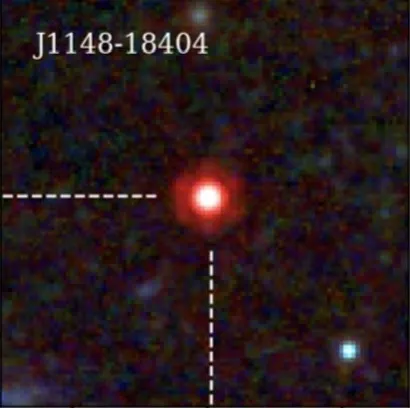
A team of researchers behind a small dot discovered by the James Webb Space Telescope recently announced a major breakthrough in the journal Nature: observations from the telescope suggest that a massive, black hole-like star exists on the black hole star MoM-BH*-1 located in the constellation Ceti. The size of the black hole star is comparable to our solar system, and its luminosity far exceeds that of the host galaxy.
This research finding indicates that the discovery of the black hole star is the first confirmed one. The presence of black hole stars is considered an important milestone in the evolution of the universe, providing crucial clues to the formation and evolution of the universe.
Behind the discovery of the small dot by the James Webb Space Telescope lies complex scientific theories and research. The small dot is believed to be a special type of celestial body that appeared in the early universe, between 13.2 and 12.2 billion years ago, shortly after the Big Bang. As research deepened, the small dot was thought to be related to early active galactic nuclei (AGN), which are celestial bodies containing supermassive black holes. However, the characteristics of the small dot do not fully match the known features of AGN, leaving scientists puzzled about the true nature of the small dot.
Currently, the field of research on small dots is moving in a new direction, with scientists beginning to believe that they may be supermassive non-metallic primitive stars (also known as third-generation stars). This type of star is believed to have formed in the early universe after the Big Bang, when there were not enough metal elements formed in the universe. The proposal of this theory has provided new momentum for scientists to study small dots.
The discovery of black hole stars indicates that scientists have made new advances in understanding the universe. The existence of black hole stars may be an important milestone in the evolution of the universe, providing crucial clues to the formation and evolution of the universe.
From Taiwan's perspective, this research result has limited relevance, but it provides important clues for understanding the evolution of the universe and the existence of black holes in the universe. This research has also enabled us to gain a deeper understanding of the unknown phenomena in the universe, further solidifying the spirit of exploration in the scientific community.
Produced by our editorial team, with AI assistance in editing.
