
Drones strike Sudan's North Darfur, killing at least 21 civilians.
In the towns of Artina and Kornoi in North Darfur State, a series of drone attacks carried out over the past two days killed at least 21 civilians. The str
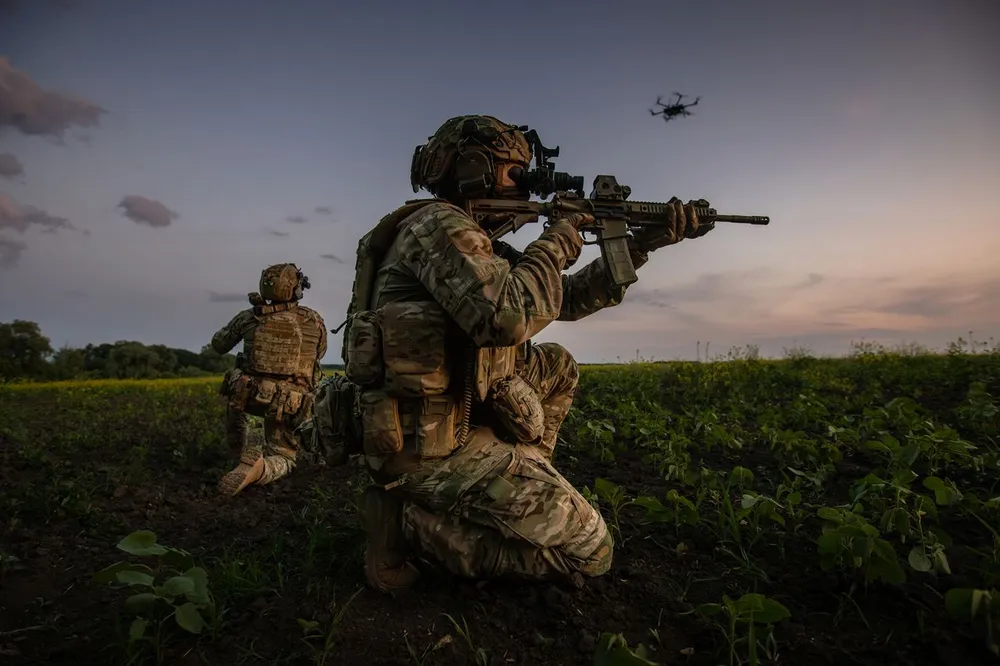
In the towns of Artina and Kornoi in North Darfur State, a series of drone attacks carried out over the past two days killed at least 21 civilians. The strikes were launched by the Rapid Support Forces (RSF), an armed group in Sudan. The drones targeted local markets, causing extensive civilian casualties.
Drone warfare is a modern form of conflict that involves deploying military robots and unmanned systems. These unmanned systems can be operated remotely by a pilot, or can possess varying levels of autonomy during missions. Drones act as force multipliers, supplementing or reducing the need for personnel on the ground. In military applications, drones can be used for reconnaissance, attack, logistics support, bomb disposal, training, and medical evacuation. Many countries have developed and deployed drones, including China, France, Greece, India, Iran, Iraq, Israel, Italy, Pakistan, Poland, Russia, South Korea, Turkey, the United States, the United Kingdom, and Ukraine.
In Sudan, the Rapid Support Forces are a significant armed organization that has participated in numerous military operations. The unit was formed in 2013, originally to combat rebel forces in the Darfur region. However, in recent years the RSF has also been involved in multiple attacks on civilians, drawing international attention and condemnation. The drone attacks in North Darfur State have again raised questions about the RSF’s conduct and the Sudanese government’s control over the group.
Sudan’s situation remains complex and has been unstable for many years. Conflict in the Darfur region began in 2003, resulting in hundreds of thousands of deaths and millions displaced. Although a coup in 2019 toppled the Bashir government, the new administration still faces many challenges, including how to manage armed groups and protect civilian safety.
Views on the development and use of drone warfare vary in the international community. Some argue that drones can effectively reduce civilian harm and increase the precision of military operations. Others fear that drone use may lead to greater civilian casualties and human rights violations. Regardless, the evolution and application of drone warfare must be subject to strict oversight and regulation to ensure compliance with international law and humanitarian principles.
For Taiwan, the drone attacks in North Darfur State, while not directly connected to the island, reflect global concern and scrutiny over the development and deployment of drone warfare. As a leader in high‑technology industries, Taiwan must pay attention to drone development and use, especially in the military domain. Taiwan also needs to learn from international supervision and regulation of drone warfare, ensuring that its use aligns with international law and humanitarian principles to avoid civilian harm and human rights violations.
Produced by our editorial team, with AI assistance in editing.