Drone airstrike by Rapid Support Forces in Sudan kills 15 civilians
The government of North Kordofan State in Sudan stated recently that the Burbur area, located south of the provincial capital El-Obeid, suffered a drone ai
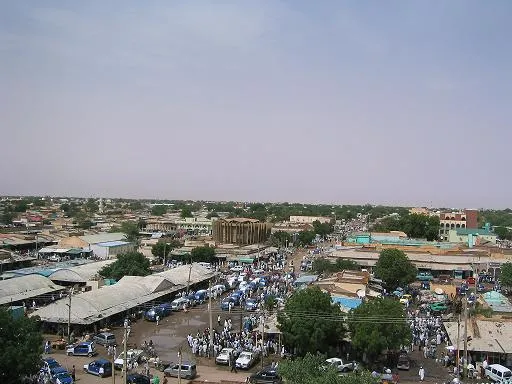
The government of North Kordofan State in Sudan stated recently that the Burbur area, located south of the provincial capital El-Obeid, suffered a drone airstrike carried out by the paramilitary Rapid Support Forces (RSF), resulting in the deaths of at least 15 civilians. This incident once again highlights the ongoing civil war in Sudan, where the abuse of modern weapons such as drones poses an increasingly severe and lethal threat to innocent civilians.
Located in west-central Sudan, North Kordofan holds significant strategic geographical importance. Its capital, El-Obeid, serves as a transportation hub connecting the capital city of Khartoum to the western Darfur region. Since the comprehensive civil war broke out between the Sudanese Armed Forces (SAF) and the Rapid Support Forces in April 2023, North Kordofan State has become one of the core zones contested and fought over repeatedly by both sides. The arid to semi-arid geographical environment, coupled with frequent warfare, has compounded the humanitarian crisis in the region.
According to statistics from the United Nations and multiple human rights organizations, this struggle for power, which has lasted for more than a year and a half, has caused tens of thousands of deaths, displaced over ten million people, and triggered one of the most severe food and refugee crises in modern history. As the conflict reaches a stalemate, the warring parties have increasingly applied technologies such as drones to battlefield reconnaissance and attacks. However, due to a lack of precise guidance or a deliberate disregard for civilian safety, drone airstrikes frequently hit markets, residential areas, and refugee camps, causing massive civilian casualties and drawing severe condemnation from the international community.
Human rights groups and international mediation bodies have repeatedly called on the warring factions to immediately implement a ceasefire, comply with international humanitarian law, and halt indiscriminate attacks targeting civilian areas. Nevertheless, the SAF and the RSF each receive covert backing from different regional powers, causing diplomatic mediation efforts to repeatedly stall. The frequent gunfire around El-Obeid has not only severed local food and medical supplies, but has also trapped ordinary citizens in an endless survival dilemma amidst the flames of war.
For Taiwan, although the Sudanese civil war has no direct economic, trade, or geopolitical intersection with it, this conflict reflects the expansion of current global non-traditional security crises—particularly the devastating impact on civilians caused by the widespread abuse of low-cost drones in modern regional conflicts. From the evolution of warfare in Sudan, Ukraine, and the Middle East, how to effectively prevent and counter drone threats when facing increasingly complex regional security and defense planning, as well as understanding the difficulties of implementing international humanitarian law in contemporary conflicts, serve as important lessons and observational indicators for Taiwan.
Produced by our editorial team, with AI assistance in editing.