
Deadly Earthquake Hits Venezuela, Leaving 188 Dead and Over 1,000 Injured.
Yesterday's powerful earthquake in Venezuela has resulted in a significant increase in casualties, with 188 confirmed deaths, over 1,000 injured, and more
Yesterday's powerful earthquake in Venezuela has resulted in a significant increase in casualties, with 188 confirmed deaths, over 1,000 injured, and more than 36,000 people believed to be missing. This disaster has brought immense suffering to the Venezuelan people and has also drawn international attention.
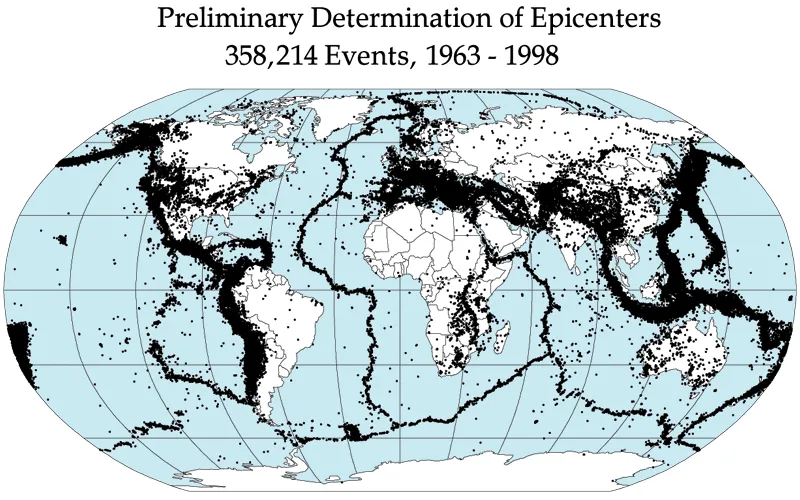
The cause of the earthquake is closely related to the geological structure of the area. Earthquakes are a type of phenomenon that occurs when energy is suddenly released at the Earth's surface, resulting in vibrations, often caused by movement in the Earth's crust. The intensity of an earthquake can range from weak tremors to powerful tremors that can throw objects and people into the air. The frequency, type, and magnitude of an earthquake can reflect the seismic activity in a particular area. Venezuela is located in northern South America, at the intersection of the South American plate and the Caribbean plate, where seismic activity is relatively frequent.
The impact of an earthquake on a region can be devastating, causing not only direct loss of life and injury but also damage to infrastructure, destruction of cities, and economic losses. Earthquakes can also trigger secondary disasters, such as landslides and tsunamis. Therefore, earthquake prediction and mitigation efforts are crucial. The Venezuelan government and international organizations are working tirelessly to provide aid and reconstruction efforts, while also strengthening earthquake monitoring and warning systems to minimize the losses caused by earthquakes.
Following the earthquake, governments and international organizations from around the world have expressed condolences and offered support. Many countries have also provided humanitarian aid and technical assistance to help the Venezuelan people overcome the disaster. The earthquake has also raised awareness about earthquake prevention and disaster mitigation work, with governments and international organizations planning to strengthen earthquake monitoring and warning systems in the future to minimize the losses caused by earthquakes.
Scientists are also working hard to study the causes and patterns of earthquakes in an effort to better predict and prevent them. Research on earthquakes can help people better understand the internal structure of the Earth and the movement of the Earth's crust, making it possible to better predict and prevent earthquakes. Additionally, earthquake research can also help develop new technologies and methods to minimize the losses caused by earthquakes.
For Taiwan, while the earthquake in Venezuela is geographically far away, it still holds significant importance. Taiwan is located on the western edge of the Pacific Ocean, at the intersection of the Eurasian plate and the Philippine Sea plate, where seismic activity is relatively frequent. Therefore, the Taiwanese government and citizens need to strengthen earthquake prevention and disaster mitigation efforts to minimize the losses caused by earthquakes. At the same time, Taiwan can also learn from the experience and lessons of the Venezuelan earthquake and improve its earthquake monitoring and warning systems to protect the lives and properties of its people.
Produced by our editorial team, with AI assistance in editing.