
At Least 8 Dead, 9 Injured in Illegal Firecracker Factory Explosion in Ahmedabad
A serious explosion occurred recently at an illegal firecracker factory in Ahmedabad, the capital of the Indian state of Gujarat. The tragedy has claimed a
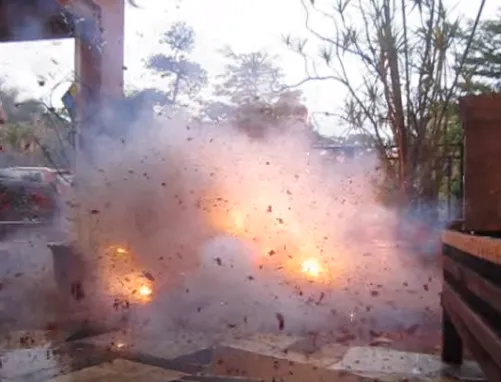
A serious explosion occurred recently at an illegal firecracker factory in Ahmedabad, the capital of the Indian state of Gujarat. The tragedy has claimed at least eight lives, while nine others have been injured and rushed to nearby hospitals. Some of the victims are in critical condition, raising concerns that the death toll may continue to rise. Upon receiving reports of the incident, local police and fire departments dispatched a large number of rescue personnel to the scene. Preliminary investigations indicate that the facility lacked a valid operating license and failed to implement basic safety protocols for the storage of flammable explosives. This negligence caused the fire to spread rapidly, triggering a massive blast that virtually leveled the factory building.
Firecrackers, which use gunpowder and fuses to create loud reports, hold a significant place in Indian culture and are widely used in religious ceremonies, festive gatherings, and weddings. However, driven by massive market demand, small-scale underground factories frequently emerge across India. To cut costs, these illegal operations are often hidden in residential areas or makeshift buildings that lack fire protection. Workers are typically untrained, and the handling of chemical raw materials and gunpowder is conducted without proper ventilation or fire-safety buffers, turning these small workshops into "ticking time bombs" within local communities.
This is not the first instance of such a factory explosion in India. While central and local governments have repeatedly pledged to strengthen inspections over the past several years, the firecracker industry’s deep integration into the informal economy, coupled with a surge in demand during traditional holidays, has made comprehensive regulation difficult to enforce. Experts point out significant loopholes in the execution of industrial safety laws. Many small workshops operate under the cover of night or in remote areas to evade environmental and safety inspections, making "preemptive prevention" a major challenge for authorities, who often only intervene after a disaster occurs, failing to address the structural safety risks of the industry.
For the Indian government, balancing traditional cultural demands with modern industrial safety standards has become a daunting challenge. Authorities in Ahmedabad have ordered a comprehensive inspection of all small-scale flammable material factories in the region and have initiated criminal proceedings against the factory owners. Nevertheless, this tragedy once again highlights the severe gap between the informal economy and public safety guarantees in a developing nation undergoing rapid industrialization. As India actively promotes its "Make in India" policy, improving workplace safety and bringing the underground economy into a legitimate and rigorous regulatory framework have become core issues that the country must confront during its industrial upgrade.
For Taiwan, although the scale and structure of its firecracker industry differ significantly from India’s—and despite having established relatively robust public safety and explosives control regulations—such incidents serve as a vital warning. It is a reminder that any industrial development lacking strict regulatory oversight and implementation can lead to major public safety crises, even in small-scale operations. Furthermore, as Taiwanese businesses increasingly respond to the government’s "New Southbound Policy" by establishing facilities in India, strengthening assessments of the local investment environment, labor safety, and regulatory compliance is not only a necessary means to protect Taiwanese staff and assets but also an essential component of fulfilling corporate ESG (Environmental, Social, and Governance) commitments.
Produced by our editorial team, with AI assistance in editing.