
Taunshits
Russia · Europe
About
Taunshits (Russian: Тауншиц) is a stratovolcano located in the eastern part of the Kamchatka Peninsula, Russia.
It is part of the Kamchatka-Kurile volcanic arc, and volcanism in this arc is caused by the subduction of the Pacific Plate beneath the Okhotsk Plate. More specifically, volcanic activity at Taunshits relates to a local system of eastward-trending faults, and some additional volcanoes are controlled by the same fault system, such as Uzon and Kikhpinych which lie both east of Taunshits.
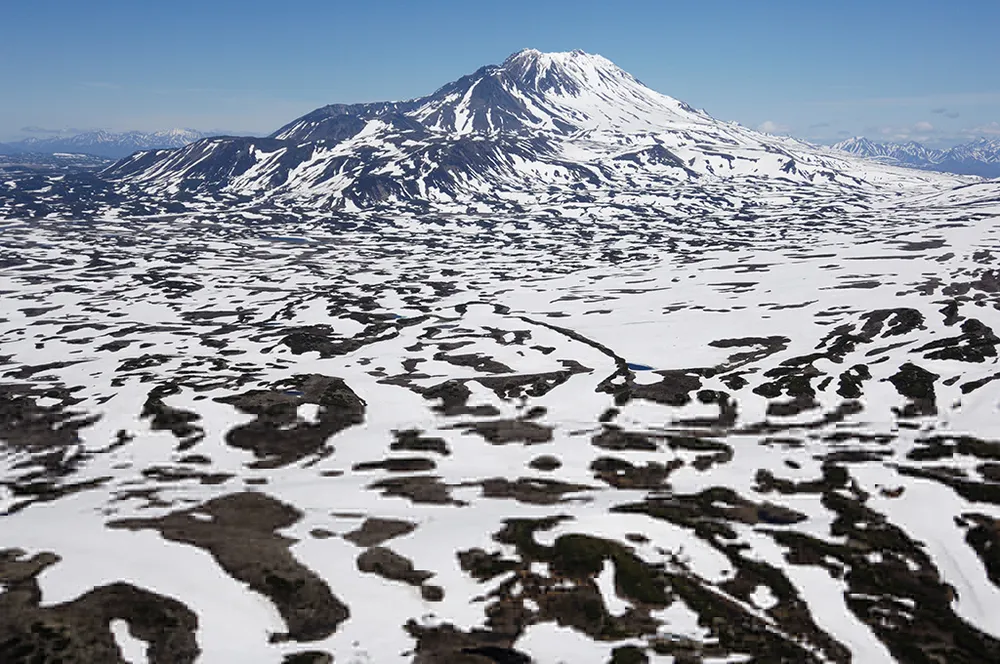
Taunshits is a somma volcano and features lava flows, and its summit is formed by a ridge. The stratovolcano contains a collapse crater formed during the Holocene, as well as a lava dome; a viscous lava flow was erupted in the crater and extends down the western flank. Erosion has formed gullies in the slopes of the volcano. Two satellite vents and several cinder cones are found south of the edifice.
Taunshits has principally erupted andesite and basaltic andesite, and its eruption products are calc-alkaline with moderate potassium content. Volcanic activity at Taunshits involves the formation of lava domes and pyroclastic flows, similar to Bezymyanny or Shiveluch, but widespread andesitic lava effusion has also occurred at the lower levels of the edifice.
Activity at Taunshits commenced late during the Pleistocene, less than 39,000 years before present considering that the ignimbrites generated by the Uzon eruption are found beneath lava flows from the volcano. The Pleistocene activity constructed the foot of the volcano, which has tuya characteristics.
Adapted from Wikipedia (CC BY-SA). Photography via Wikimedia Commons.