
Serbian phrasebook
Phrasebook
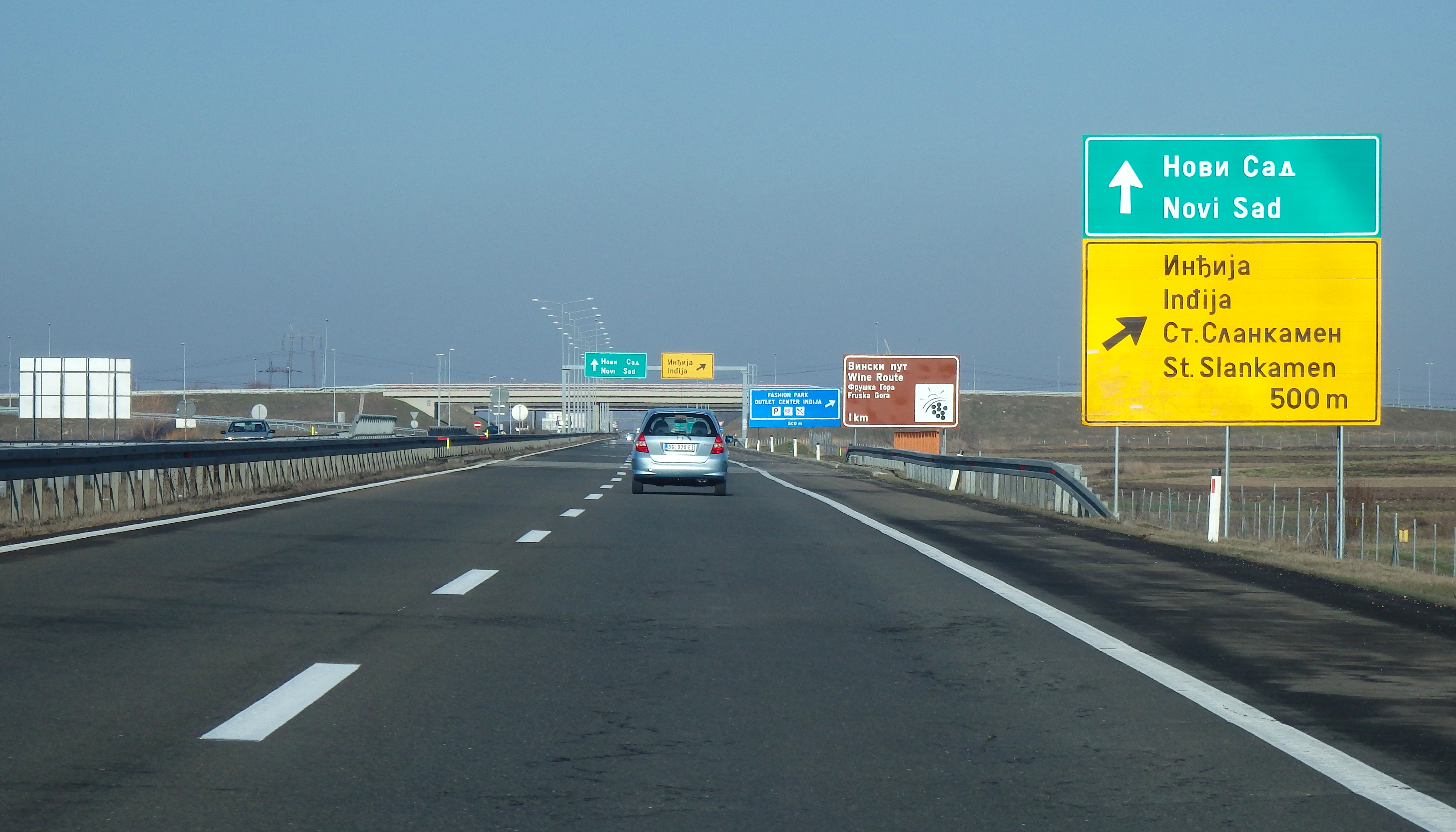
Serbian (српски / srpski) is the official and main language of Serbia and Montenegro. It is also an official language of Bosnia and Kosovo. Barring a few vocabulary differences, it is almost identical to the Bosnian, Croatian phrasebook and Montenegrin languages. You can use any of the phrasebooks mentioned and get along with it in either Bosnia, Croatia, Serbia or Montenegro (during the period of common state of Yugoslavia these languages were known as Serbo-Croatian). Serbian is written mostly in Cyrillic in Serbia, Bosnia (Serb Rep.) and Kosovo. However in Montenegro the Latin alphabet is almost always used. Sometimes both versions are used. There are also Serbian minority speakers in portions of southern and eastern Croatia. Germany and Austria also have large Serbian minority populations in major cities.
Pronunciation guide
Serbian uses both Latin and Cyrillic alphabets, the only Slavic language to do so. Everyday use is the Roman alphabet, but the Cyrillic alphabet is the official script and used in more formal situations including government publications. Pronunciation is usually very simple, as almost every word is written exactly as it is pronounced. Both the Roman alphabet and the Cyrillic version, the azbuka, will be shown here. Serbian Cyrillic Alphabet:
Аа Бб Вв Гг Дд Ђђ Ее Жж Зз Ии Јј Кк Лл Љљ Мм Нн Њњ Оо Пп Рр Сс Тт Ћћ Уу Фф Хх Цц Чч Џџ Шш
Serbian Latin Alphabet:
Aa Bc Cc Čč Ćć Dd Dždž Đđ Ee Ff Gg Hh Ii Jj Kk Ll Ljlj Mm Nn Njnj Oo Pp Rr Ss Šš Tt Uu Vv Zz Žž
Stress Generally, in complex words, the emphasis is on the first syllable (e.g.: kako [KAH-koh]). In some cases, such as in words with a prefix (e.g.: autobus [ow-TOH-boos]) the stress is on the middle syllable. The last syllable is never stressed.
Vowels There are five vowels in Serbo-Croatian language. They can be long or short.
a the 'a' in "article" e the 'e' in "end" i the 'ee' in "week" o the 'o' in "obey" u the 'oo' in "moon"
Consonants Many of the consonants are pronounced as in English, except for a few variations.
b the 'b' in "abuse" c always as 'ts' in "bits" č the 'ch' in "chair" ć the 'ch' in "church" d the 'd' in "dog" đ the 'd(u)' in "endure"; rarely used at the beginning of a word; this letter is sometimes written as dj; [the Cyrillic equivalent of this letter is "ђ"] dž the 'dge' in "edge", but harder [the Cyrillic equivalent of this letter is "џ"]; seldom used f the 'f' in "face" g the 'g' in "gone" [always hard 'g'] h the 'h' in "ham" [quite weak, unlike other Slavonic languages and often dropped, eg "hoću" (I will or I wish) becomes 'oću in speech] j the 'y' in "yes" k the 'k' in "kick" l the 'l' in "like" lj the 'li' in "million" [the Cyrillic equivalent of this letter is "љ"] m the 'm' in "monkey" n the 'n' in "noise" nj the 'ny' in "canyon" [Spanish ñ nasal sound, the Cyrillic equivalent of this letter is "њ"] p the 'p' in "post" r the 'r' in "barco" [trilled 'r' like in Spanish language] s the 's' in "sun" š the 'sh' in "shower" t the 't' in "talk" v the 'v' in "vase" z the 'z' in
Phrase list
Basics
Hello. Здраво. Zdravo. (ZDRAH-voh) How are you? Како сте? Kako ste? (KAH-koh steh?) Well, thanks. Добро, хвала. Dobro, hvala. (DOH-broh, HVAH-lah) What is your name? Како се зовете? Kako se zovete? (KAH-koh seh ZOH-veh-teh) My name is ______ . Зовем се_____. Zovem se_____. (ZOH-vehm seh_____.) Pleased to meet you. Драго ми је. Drago mi je. (DRAH-goh mee yeh) Please. Молим. Molim. (MOH-leem) Thank you. Хвала. Hvala. (HVAH-lah) You're welcome. Молим. Molim. (MOH-leem) Yes. Да. Da. (DAH) No. Не. Ne. (NEH) Excuse me. (getting attention) Извините. Izvinite. (eez-VEE-nee-teh) Excuse me. (begging pardon) Извините. Izvinite. (eez-VEE-nee-teh) I'm sorry. (if it isn't speaker's fault, e.g. if you hear bad news) Жао ми је. Žao mi je. (ZHOW mee yeh) I'm sorry. (if it's speaker's fault, e.g. if you bump into someone) Извините. Izvinite. (eez-VEE-nee-teh) Goodbye Довиђења. Doviđenja. (doh vee-JEH-nyah) I can't speak Serbian. Не говорим српски. Ne govorim srpski. (neh GOH-voh-reem SR-ps-kee) Do you speak English? Говорите ли енглески? Govorite li engleski? (GOH-voh-ree-teh lee ENH-glehs-kee?) Is there someone here who speaks English? Има ли неког ко говори енглески? Ima li nekog ko govori engleski? (EE-mah lee NEH-kohg koh GOH-voh-ree EHN-glehs-kee ?) Help! Упомоћ! Upomoć! (OO-poh-mohtch!) Look out! Пази! Pazi! (PAH-zee!) Good morning. Добро јутро. Dobro jutro. (DOH-broh YOO-troh)
Good afternoon.
Добар дан. Dobar dan. (DOH-bar DAHN) Good evening. Добро вече. Dobro veče. (DOH-broh VEH-cheh) Good night. Добро вече. Dobro veče. (DOH-broh VEH-cheh) Good night (to sleep) Лаку ноћ. Laku noć. (LAH-koo nohtch) I don't understand. Не разумем. Ne razumem. (neh rah-ZOO-mehm) Where is the toilet? Где је тоалет? Gde je toalet? (gee-deh yeh TWAH-leht?)
Problems Leave me alone. Остави ме на миру. Ostavi me na miru. (OHS-tah-vee_meh nah_MEE-roo) Don't touch me! Не дирај ме! Ne diraj me! (NEH dee-rai meh) I'll call the police. Зваћу полицију. Zvaću policiju. (ZVAH-tchoo poh-LEE-tseeyoo) Police! Полиција! Policija! (poh-LEE-tseeyah) Stop the thief! Држ'те лопова! Drž'te lopova! (DER-zhteh LOH-poh-vah) I need your help. Треба ми помоћ. Treba mi pomoć. (TREH-bah mee POH-mohtch)
Adapted from Wikivoyage (CC BY-SA)