
Second homes
Travel topic
This article is about purchase or long-term rental of second homes. See vacation rentals for limited stays in vacation homes.
Understand
People have second homes for a variety of reasons. In general, ownership becomes more economic the more time you want to spend at a place.
As a place to spend vacations and maybe weekends at some distance from the main home As a place to stay when working away from home; working abroad or studying abroad for elderly people to retire abroad, or to spend periods away from home in a comfortable manner Families with children could prefer a vacation home over a hotel, with a safely adventurous environment, and opportunities to find new friends Traveling with pets can be enjoyable if they can stay in a vacation home surrounded by nature As an investment to be leased out to others ("buy to let") As the main home for other family members Family properties which have been inherited, or which used to be the primary residence before occupants left a rural area for the city Although some points apply to any type of second home, this article focuses on homes for vacation use. We assume that the second home is some distance away from your main home, but it might be in the same country a few hours drive away, or it might be on another continent.
Get in
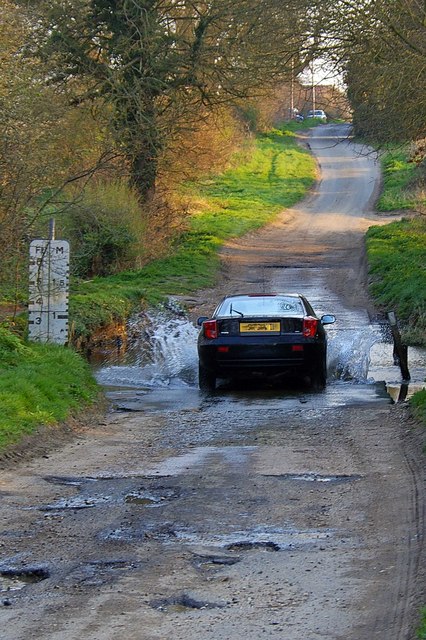
You should consider transportation when buying your second home. If getting to your dream château involves a strenuous hike over rocky footpaths, you may want to ask yourself whether you want to do that once you're old and frail and how you'd get anything you need to your abode. The nearby airport might have cheap flights today, but will it still see any service in decades hence? Airports in both Denver and Munich were moved overnight to new sites, with the new Denver airport being more than 15 miles/25 km from the old one and the Munich Airport even moving 20 mi (32 km). A rail line may have more staying power, but branch lines have been abandoned in the past, and trains may cease stopping at your station on a main line. Roads may be tolled if politics change and what do you do if you can't or don't want to drive any more? Most often, a cottage will be in a remote and rural location with no airport, no rail service (or, rarely, a money-losing skeleton of a rail service to some remote region where there are no highways) and no public transit. A few off-the-grid locations are only accessible by boat. Even if there is a drivable road, if it's just a single lane of gravel across a neighbor's farm (on private land), it may be impassible in winter if snow is not plowed. Many points, ranging from remote Newfoundland outports to a few of the Thousand Islands, have become ghost towns as the only access was by a ferry which is no longer running. Want in? Buy a boat – and find a way to keep it secure while you are away. If your dream getaway is on an island without road access, transporting supplies is laborious: you drive to the harbor, unload the car, carry them to the boat, load everything into the boat, unload it at the landing and then carry it to the cottage. The more remote a place is, the less priority will be usually given to restoring transportation links severed by man-made or natural disaster. If a trunk line highway is impassible for a day, it may make national headlines. If an avalanche cuts off your holiday cottage, you may only hear of it months later and the problem may take years to be addressed. A property that's off the grid and only reachable by floa
Type
Cottage/cabin: A detached house outside settlements. Plumbing, electricity and other infrastructure is usually inferior to urban homes in the same country, and the toilet might be an outhouse or similar. Cottages and cabins often lack proper heat or insulation, limiting them to seasonal use. Old farms can survive as holiday cottages, where the land can be used for leisure activities, such as gardening and horse riding. Although they are built for year-round dwelling, this is according to the standards of their heyday, without modern comfort (heating may be by stoves only, and an outhouse toilet is less comfortable in cold winters). Later repairs may have mixed incompatible techniques; this can cause all kinds of problems. If you like the opportunities the farm or its buildings and milieu provide, this can be a bargain, but maintenance of the buildings may require quite some work. Prefabricated house: An empty lot with building rights can be settled with a prefabricated house, provided that it is within reach of the delivery vehicle. Prefab houses come in different sizes and shapes, and they are usually economic and reliable. Make sure to find a solution for electricity, water supply and toilets. Making the foundations may be your responsibility and not included in the price, like any amount of finishing work. Also make sure the house satisfies all regulations in the building rights, that you get all needed permits and that you fulfill your responsibilities as commissioner. Resort home: A cluster of houses or apartments built for vacation guests. Might have communal facilities. Occupancy might vary with seasons, from deserted to overcrowded. Dwelling house: Living with the locals in an urban or suburban house built for year-round residence. Usually more practical and social than a rural house. Can be expensive, especially if you look for an attractive neighborhood. Apartment: An apartment, condominium or flat with some communal facilities. Might be built for permanent residence or vacation. In some cases a set of apartments is constructed by dividing a larger house. Gated communities provide more a perceived gain in security than actual gain in security and you m
Pros
You don't need advance scheduling for your own home. Come early or late, stay early or late. Make your own rules. Handle wear and tear as you want, and improve if you have the time and money to make the place the one you like (within some limits). Real estate is perceived as a relatively predictable and safe investment. If you buy in a recession and sell during a boom, you can turn a profit. There is of course a risk for the opposite. House ownership might give some legal privileges - including easier residency or citizenship in foreign countries in some cases. A prolonged stay in a new place gives opportunities for a new social network. To spread the cost, owners can offer their vacation home to rental, home exchange or timeshares. It can be something handed down in your family or to hand down to (biological or social) descendants and is often associated with memories and stories
Cons
Owning a piece of real estate involves a lot more paperwork (and risk) than simply going to a place for vacation:
Maintenance takes time and money. Finding and following up a repair firm away from home, is a challenge. Vacation homes are prone to theft and other intrusions, especially when the owner is gone. Any damage which happens while you're away can go undetected for months, causing small problems to become larger. The house is tied to one place. If you enjoy seeing more than one place, choose a location with many interesting attractions a day trip away. There may be tax implications, such as having to pay property taxes in two locations and capital gains tax when you sell higher than what you had purchased it for. Localities with a lot of vacation homes might seem sterile and empty out of season. You are less flexible – if your airline chooses not to fly to the airport close to your vacation home or some public transit service is withdrawn you cannot simply go elsewhere. If you own a structure (or structural improvements) on leased or rented land, the owner of the land may sell it out from under you. Depending on the local legal situation, it may be profitable for the owner of the former caravan park to sell to condominium developers, but the hapless tenant is left having to pay to remove or demolish structures on the land when the tenancy is terminated. If the underlying land was freehold when the cottage was built, but has since become part of a national or provincial park, there may be severe restrictions on the use of th
Adapted from Wikivoyage (CC BY-SA)