
Salsa dancing in Latin America
Travel topic
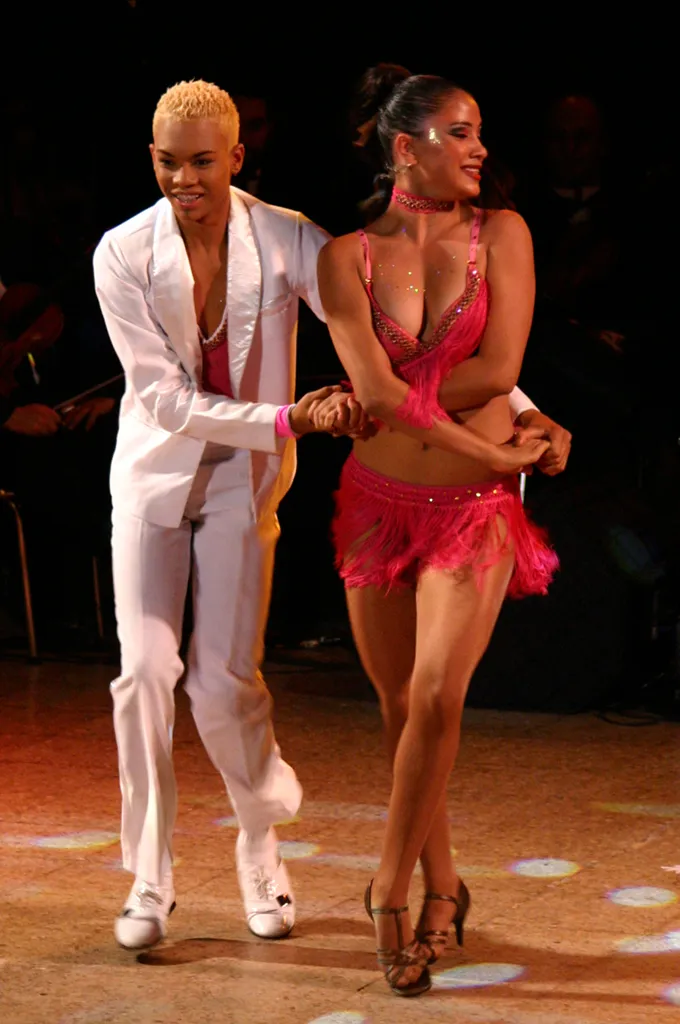
This page is intended for salsa dance lovers who are travelling around Latin America. Surprisingly, it is quite difficult to find good salsa clubs while travelling in Latin America.
Understand
Salsa is a popular form of social dance that originated in the Caribbean. The movements of salsa have origins in Puerto Rican bomba and plena, Cuban Son, cha-cha-cha, mambo and other dance forms. The dance, along with salsa music, originated in the mid-1970s in New York. Different regions of Latin America and the United States have distinct salsa styles of their own, such as Cuban, Puerto Rican, Colombian, Los Angeles and New York styles. Salsa dance socials are commonly held in night clubs, bars, ballrooms, restaurants, and outside, especially when part of an outdoor festival. In many styles of salsa dancing, as a dancer shifts their weight by stepping, the upper body remains level and nearly unaffected by the weight changes. Weight shifts cause the hips to move. Arm and shoulder movements are also incorporated. Salsa generally uses music ranging from about 150 bpm (beats per minute) to around 250 bpm, although most dancing is done to music somewhere between 160–220 bpm. The basic salsa dance rhythm consists of taking three steps for every four beats of music. The odd number of steps creates the syncopation inherent to salsa dancing and ensures that it takes 8 beats of music to loop back to a new sequence of steps.
Argentina
Bariloche Asia Bar, Mitre 774. Salsa evening every Friday, 1–5AM. (updated Jun 2018)
Buenos Aires Azúcar Abasto, Avda. Corrientes 3330 y Agüero (Subway B "Carlos Gardel" Station - Colectivos 24 - 71 - 124 - 142 - 168 - 180), ☏ +54 11 4865-3103. Th-Sa evenings. Has a great reputation. Old style Cuban and Puerto Rican salsa. (updated Jun 2018) La Salsera, Calle Yatay 961, Villa Crespo (a short taxi ride from Azúcar Abasto), ☏ +54 11 4866-1829. All styles of salsa. All ages. (updated Jun 2018) Maluco Beleza, Sarmiento 1728 (a short taxi ride from 9 de julio & Av. de mayo). Th midnight-5PM, Fr/Sat 1AM-6PM, W 9:30PM-midnight. Brazilian music - samba & AXE. (updated Jun 2018)
Colombia
Generally you can find lots and lots of salsa music in Colombia. Most of the people would know how to dance and move with the rhythm. However there are two problems for the advanced salsa dancer. First is that they usually don't do any turns, most Colombian girls get confused by Cross-Body lead ("Dile-que-no"). Second, usually people get to the clubs by pairs and sit around tables. The elements of Cali-style salsa, also known as Colombian salsa and salsa caleña, were strongly influenced by dances to Caribbean rhythms which preceded salsa, such as Pachanga and Boogaloo. The central feature is the footwork which has quick rapid steps and skipping motions. Colombian style does not execute Cross-body Leads or the "Dile Que No" as seen in other styles, but rather step in place and displace in closed position. Their footwork is intricate and precise.
Cali Cali is also known as the "Capital de la Salsa" (Capital of Salsa); due to salsa music being the main genre in parties, nightclubs and festivals in the 21st century. Cali has the most salsa schools and salsa teams in the world. Cali hosts many annual salsa events such as the World Salsa Cali Festival and the Encuentro de Melomanos y Coleccionistas.
Blues Brothers, Av. 6AN No. 21-40 Barrio Santa Mónica, ☏ +57 2 661 3412, [email protected]. (updated Jun 2018) Tin-Tin-Deo, Calle 5 # 38-71, Barrio San Fernando (in Calle 5 & Carrera 38). Th-Sa 8PM-3AM. It claims to be recommended by The New York Times as the Cali site to visit for its musical identity and its salsa culture. 15,000 peso entry includes 10,000 peso credit at the bar. (updated Jun 2018) Zaperoco, Avenida 5 # 16-46 (close to Avenida 5 Norte & Calle 14). Th-Sa 8PM-4AM. Quite crowded (but not too crowded), good music. Mostly pairs. Authentic Colombian salsa. Upscale bar. (updated Jun 2018) La Topa Tolondra, Calle 5 # 1437, ☏ +57 316 4944768. 10PM-. Large dance floor. Caters to old and young, foreign and local dancers. Come at 9:30PM or 10PM to avoid the queue. Free salsa lesson on Mondays. (updated Jun 2018) Club Changó, K3, Cavasa, [email protected]. Th-Sa 8PM-6AM. (updated Jun 2018)
Cartagena Cafe Havana, Getsemani, corner of Calle d
Cuba
In Cuba, a dance known as Casino became popular in the 1970s. Dancing Casino is an expression of popular social culture; Cubans consider casino as part of social and cultural activities centering on their popular music. Casino traces its origin as a partner dance from Cuban Son, Cha Cha Cha, Danzón and Guaracha. Traditionally, Casino is danced "a contratiempo". This means that, distinct from subsequent forms of salsa, no step is taken on the first and fifth beats in each clave pattern and the fourth and eighth beat are emphasised. In this way, rather than following a beat, the dancers contribute in their movement, to the polyrythmic pattern of the music. At the same time, it is often danced "a tiempo", although both "on3" (originally) and "on1" (nowadays). What gives the dance its life, however, is not its mechanical technique, but understanding and spontaneous use of the rich Afro-Cuban dance vocabulary within a Casino dance. In the same way that a "sonero" (lead singer in Son and salsa bands) will "quote" other, older songs in their own, a Casino dancer will frequently improvise references to other dances, integrating movements, gestures and extended passages from the folkloric and popular heritage. This is particularly true of African descended Cubans. Such improvisations might include extracts of rumba, dances for African deities, the older popular dances such as Cha Cha Chá and Danzon as well as anything the dancer may feel. In the 1950s salsa rueda or more accurately rueda de casino was developed in Havana. Pairs of dancers form a circle ("rueda" in Spanish means "wheel"), with dance moves called out by one person. Many of the moves involve rapidly swapping partners. "Rueda de Cuba" consists of about 30 calls.
Havana Casa de la Musica, 20, La Habana (in Miramar neighbourhood about 20 from the old city). Live bands every night. Taxis tend to overcharge on the way home. 10-15 CUC cover for foreigners (4 CUC for Cubans). (updated Jun 2018) Casa de la Musica, Calle 31 esq. 2, Plaza de la Revolución (in downtown Havana). Table reservations are requiered for Cubans, foreigners are allowed to enter without reservations but at a higher price at the entrance.
Mexico
2 Mama Rumba, Roma Norte, Mexico City. Lively club with live bands playing almost purely salsa. Crowd is a nice mix of ages and some obvious foreigners scattered among the locals. Everyone is friendly. They have a great bar with an extensive variety of tequilas, mezcals, and rums. Their mojitos are outstanding. Get there early and get some salsa lessons. The place gets pretty busy by about 9:30–10 and the band starts at about 11. The club is spread across 2 levels with the band downstairs. There are open dance spaces on both levels. (updated May 2023)
Peru
Cusco Lots of places around the main plaza. All of this places teach salsa for free every night. Usually after midnight the music is changed for mixed music. Cusco is a great place to start learning salsa. but the experienced dancer would probably satisfy with dancing only with the instructors. Stock up your water prior to dance. Dancing first time dancing above 3400m will make you thirsty.
Mama Africa, Portal de Panes 109 3rd Floor. 10PM to midnight. Mama Africa is on the second floor high above Plaza de Armas and is one of the most popular nightclubs in Cusco. It attracts relatively young people. There are locals and also many tourists. It’s a great place to dance and to enjoy music. Teaches Cuban style, and sometimes LA style (depending on the teacher). (updated Jun 2018) Mythology, Portal de Carnes 298 2nd floor, ☏ +51 84 255770. (updated Jun 2018) Salsa Dance School, Collacalle 480 (close to the plaza Limacpampa Grande), ☏ +51 921 958 733, [email protected]. Group and private lessons. (updated Jun 2018)
Lima Son De Cuba, Calle de la Pizza 277, Miraflores. Every night. This club is po
Adapted from Wikivoyage (CC BY-SA)