
Music
Travel topic
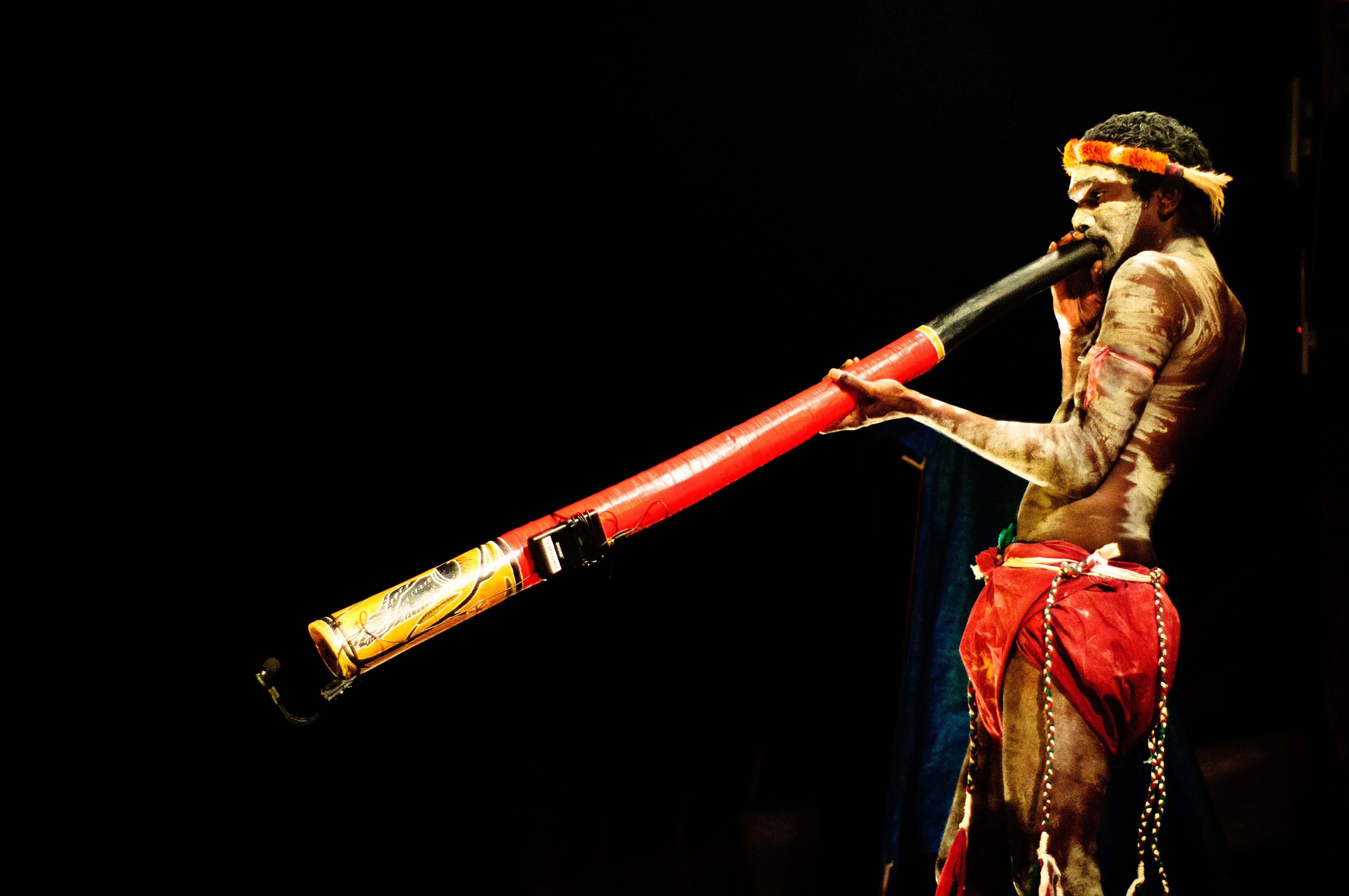
Virtually every community in the world has some tradition of music.
Styles of music
There are arguments about how to categorize music, but there are some commonly accepted genres:
Folk music is created and survives through local tradition. Folk songs are often by an unknown author, or traditional songs in a style similar to those. There is also an "urban folk" style, fusing folk, popular and other types of music, which was developed starting around the 1960s in various places, including the United States and Latin American countries. Classical music has been written down in Europe since no earlier than the 9th century CE, though it had already existed for some time before that. It is roughly divided by period, between the Middle Ages (5th-early 15th century), Renaissance (early 15th-early 17th century), Baroque (late 16th-mid 18th century), the Classical period (early 18th-early 19th centuries), Romantic (19th and early 20th centuries) and contemporary (20th and 21st centuries). Western classical music spread to other continents through colonization and immigration from Europe and cultural exchange, and now exists throughout the world, though it is not uniformly distributed.
Indian classical music includes Hindustani classical music in the north, and Carnatic classical music in the south. Non-European classical music (or more properly musics) exist in the Arab world (Middle East and North Africa) and Turkey, Iran, Central Asia (e.g., Bukhara), the Indian Subcontinent (with distinct though related Hindustani [Northern Indian, including Pakistan and Bangladesh] and Carnatic [Southern Indian] traditions), Myanmar, Indonesia (with Central Javanese and Balinese styles particularly famous), Malaysia (epitomised by dikir barat, a type of group singing), Thailand, Cambodia, Laos, Vietnam, China, Japan, Korea and West Africa. Some of these have used their own forms of notation. Popular music is made for a mainstream, contemporary audience, including genres such as rock and roll. World music combines different musical traditions. Blues originated among African-Americans in the Deep South of the United States in the 19th century. It forms the roots of jazz, bluegrass and rock and roll. Jazz is a type of music that originally arose among African-American
Places
Aside from concert halls and operas with dress code, there are more casual ways to enjoy music.
Music is often combined with dancing in discoteques and clubs. Travelers will encounter street musicians in downtown and public pianos in stations and airports. Parades are often led by marching bands. Traditional festivals are usually accompanied by some form of local folk music. Originated in Japan, karaoke parlors quickly spread over Asia and some Western countries too.
Itineraries
The Jazz Track — travel from Boston to New Orleans through cities with important jazz histories Music festivals — every genre is covered by one festival or another Music in Britain and Ireland — the British Isles have been one of the world's music epicentres, particularly in the last half a century or so Nordic music — five countries with a great folk, classical and popular music scene; see also Nordic folk culture Salsa dancing in Latin America — Salsa dancing is popular in Latin America Stockholm pop tour — the hometown of ABBA, Avicii, Spotify and others K-pop — The symbol of South Korea's cultural export
Museums
Many museums of history, culture or archeology around the world include some exhibits of musical instruments or artifacts such as manuscripts. There are also museums or halls of fame for particular genres or countries:
Calgary has the Canadian Music Hall of Fame Cleveland has the Rock and Roll Hall of Fame Liverpool has The British Music Experience and The Beatles Story. Memphis has the Blues Hall of Fame Museum, the Rock 'n' Soul Museum, Stax Museum of American Soul Music, Graceland (Elvis Presley's home, now a museum) and Sun Studio. Nashville has the Country Music Hall of Fame and a more general Musicians' Hall of Fame Stockholm has the ABBA Museum at Djurgården
Adapted from Wikivoyage (CC BY-SA)