
Funeral travel
Travel topic
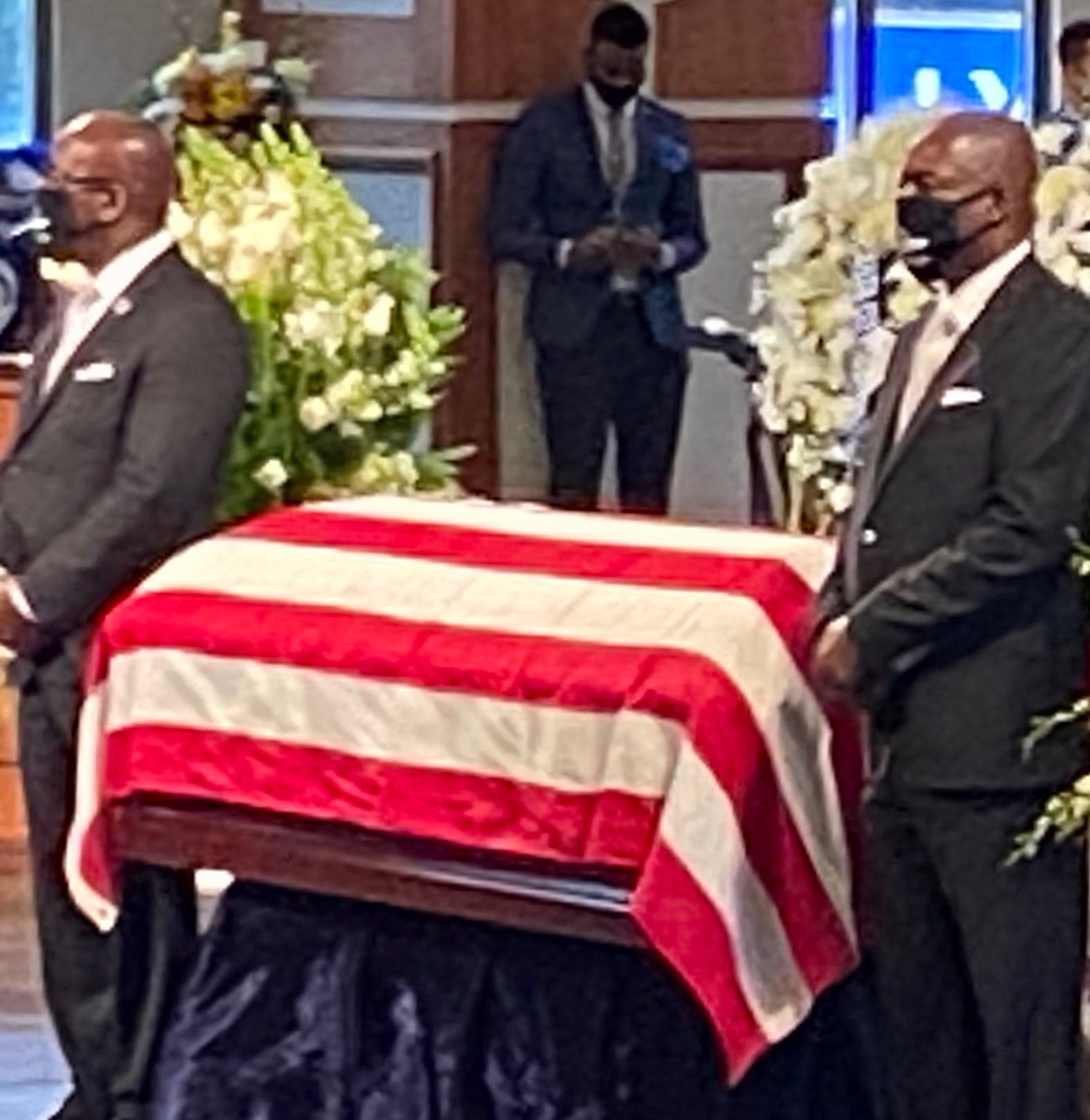
Funerals are a significant source of last-minute travel plans. Memorial services are often scheduled at a later date, after cremation or burial. Some traditions have multiple events, such as a burial on the third day and additional religious ceremonies on the ninth and 40th days in the Eastern Orthodox tradition. If the deceased is cremated, there may be a separate event for the burial or scattering the ashes.
Get in
Travelling for a funeral or memorial service often involves planning a long-distance trip on short notice. If the event is not within reasonable driving distance, then most people will need to travel by air or train. If driving is a realistic option, then consider whether you should be driving yourself. A sudden attack of grief while driving could result in serious injuries for yourself or others. Consider taking a bus or asking a friend to drive. Agencies for older people might be able to connect you with a volunteer driver.
Passports and visas For last-minute travel, you may not have time to obtain a passport or visa through the usual channels. In this case, call your embassy or consulate in the country where the death occurred.
By plane Last-minute airfares can be quite expensive, especially during peak travel times. On the other hand, airfare search engines and discount travel websites (see aggregators) might have very good deals, especially if there happens to be a mostly empty flight departing in the next few days. Only a few airlines still offer bereavement fares, which slightly discount the cost of last-minute funeral travel. Airlines that offer these include Air Canada, Delta Air Lines, Lufthansa for flights originating from the U.S. or Canada, and WestJet. In all cases, you must book by phone directly with the airline. Bereavement fares are limited to immediate family (as defined by each airline); you will have to provide the agent with the name of the ill or deceased person, your relationship to them, and possibly additional details such as contact information for their doctor, hospital or funeral home, a copy of the death certificate, or the date of the funeral service. Particularly for international travel, travel agents at other airlines may be able to waive advance-purchase requirements or extend a discount, at the agent's discretion. You may have luck calling the airline and gauging how sympathetic the agent sounds; if they don't seem likely to budge, call again and try with another agent. Frankly, bereavement fares aren't that good of a deal. They rarely save more than 5 to 10% of the cost of an unrestricted full-fare ticket, and they m
Stay
The family home, a hotel, or a last-minute group house rental? It depends partly on whether you think that you'll want more space to yourself, or if you will be comforted by being surrounded by other people. If you are traveling to attend the funeral but have no particular responsibilities, then your stay might be relatively short and predictable. However, if you are a close family member or friend, then you may have some difficulty in predicting your return date.
Respect
Dress
In most of the world, people attending funerals are expected to wear dark, relatively formal clothing, such as a black or dark-colored business suit. Clothing, shoes and jewelry should generally be plain. In some cultures, family members are prescribed specific colors of clothing to wear, such as blue for Chinese people who are attending a grandparent's funeral. Wearing clothes of colors associated with happiness and good fortune (e.g., red in Asia, white in Africa) is generally inappropriate, although in some instances, it will be requested, particularly to celebrate the life of an elderly person. In most of the world, modest dressing for a solemn occasion requires that the skin from the shoulders to at least the kneecaps be covered. This means no bare shoulders, no tank tops, no bare midriffs, and no shirts unbuttoned to the navel. Short sleeves are often acceptable, especially on a hot day. Shorts and other clothing styles associated with athletic activities or fun events are inappropriate. You will need to know where the funeral is happening before you can pack with confidence. A funeral in a church or temple requires more formality than a scattering of ashes after hiking to a remote beach. Religious ceremonies may have particular dress codes, such as requiring all women to wear a hat or veil, or for everyone to remove their shoes. Churches in Italy do not permit bare shoulders or bare knees. Comfortable shoes or boots are always a traveler's friend and should not be forgotten on this trip. High heels are not recommended for walking through a cemetery. If the heel sinks down into soft earth, you may find yourself sprawling on the ground. In many countries, although not in Africa, babies and very young children may be dressed entirely in white. Usually, parents are not expected to buy new outfits for children, so children should be dressed in the most suitable clothing they already own or can borrow on short notice. In the UK and Japan, children may wear their school uniforms. If you will be attending graveside services, then you will be exposed to the weather. For warm weather, lightweight clothing or short sleeves may help prevent o
Alternatives
When people are unable to travel for a funeral, there are ways of helping them feel included. One is to videotape or livestream the services, so that they can participate remotely. Another is to have more than one event, such as a funeral in one location and a memorial service in another city. If practical, friends and family who are unable to attend can send a written memorial statement to be read at the funeral. Such a letter of condolences is customary in some cultures.
Cope
If you have the time and energy, a funeral could be combined with a more light-hearted activity, such as a tour of the destination.
Adapted from Wikivoyage (CC BY-SA)