
Driving in Europe
Travel topic
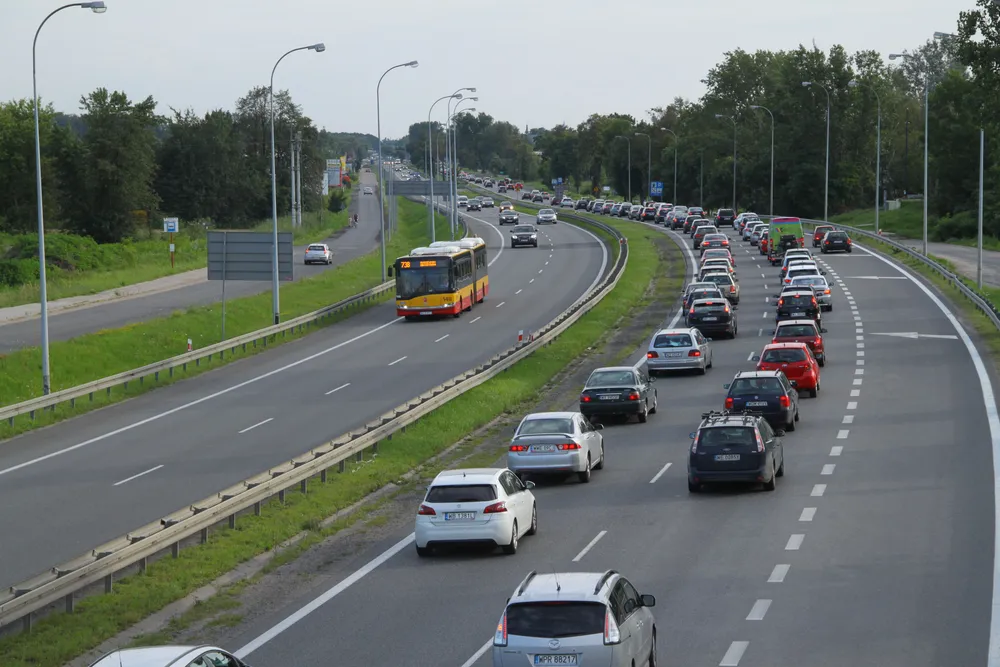
Most of Europe has good roads, but in comparison with the United States, fuels and other costs for driving are high. A car is usually the most practical vehicle for moderate distances (10–300 km) in the countryside. In big cities, street congestion often makes public transportation and cycling better options and cars are often a liability. On long distances, rail or air travel is usually faster between cities, and intercity buses often cheaper.
Understand
Driving can be an enjoyable and feasible way to see the countryside and smaller cities. As the process of obtaining a driver's licence is a lot harder than in the U.S. or many developing countries, for example, and as there are plenty of alternatives to driving especially in urban areas, those who do drive tend to be confident and comfortable with driving. However, driving culture varies widely between countries. Driving is seldom a good option in cities over 100,000 people: one-way streets make navigation difficult, there may be congestion and parking is usually expensive and hard to find. Many cities also impose congestion charges, low-emission zones or other limitations. On the flipside, urban public transport tends to be good, while walking and cycling are serious alternatives in many cities. Many European cities have a compact central area that can be covered on foot, and in such places car ownership among residents is often low. For this reason, highways in large European cities will not suffer from traffic congestion compared to cities of similar size in the United States and Canada. On the other hand, for towns with fewer than 20,000 residents that are not on a railroad, and even more so for natural sites in most countries, getting there by public transportation will not be effective by time: the frequency of buses to these places will be low (once an hour to the nearest train station, at the good case). Cars are usually in good working order as most Western European countries have requirements for a regular check-up to ensure all cars on the road meet minimum safety standards. Starting from Sweden and the Netherlands, policies to increase road safety to a goal of zero traffic fatalities have spread through Europe and are gaining ground. Those "Vision Zero" policies manifest in different ways, but aim to discourage risky behaviour and build infrastructure in such a way that mistakes are less likely and their consequences less severe. Sweden, Norway and several other countries have since the 1970s seen a steady and substantial decline in fatal accidents. Road conditions vary widely. Most main roads are in very good condition, although minor roads may not
Paperwork
Original registration document for the car is compulsory. For short visits a foreign driving licence usually suffices, sometimes with an IDP. Motor vehicle insurance certificate is compulsory. A black and white, 1–3 letter country identity sticker is compulsory, although a number plate that includes the country code suffices in most countries. In particular, such number plates from EU suffice in any EU country.
Driving licence
In most European countries, you are required to carry your driving licence when driving, in some cases accompanied by the International Driving Permit (IDP). While the latter is not compulsory for certain nationalities in some European countries, it is cheap and could save you from nasty incidents with authorities in some. Countries outside the EU have not harmonised their rules. See the individual country articles. Rules on driving licences from non-EU countries vary widely inside the EU, but in general they are valid for short stays. In some countries the IDP may be required. There may be more strict requirements. The local minimum age for driving will usually override a foreign driving licence. Almost everywhere, especially in the EU, you need to be at least 18 years old to drive, even supervised. In countries with learning schemes, it's usually an exhaustive and expensive procedure to get a permit, and rarely applicable to foreign citizens anyway. Exceptions include Portugal, Ireland and the UK. The European Union has a standardised driver's licence. A licence obtained in one EU country is valid in the entire EU – if the holder satisfies general requirements, such as age – even if the holder moves to a different one. To obtain a driver's licence in a particular member country, you must be a resident of that country for a period of at least 180 days. Two exceptions to the rule on EU driver's licences:
If you convert a foreign licence to an EU one and then move to a different country, you may be required to convert the licence again (or obtain a full EU licence by taking a driving test). Expiration is governed by the country of residence, not the issuing country. For example, German licences issued before 2013 do not expire, but if
Equipment
A warning triangle is compulsory nearly everywhere, as is using it in case of breakdowns. First-aid kits are compulsory in certain countries. Carrying high-visibility (reflective) vests in cars is compulsory in Austria, Belgium, Bulgaria, Croatia, France, Germany, Italy, Norway, Portugal, Serbia and Spain and gaining popularity elsewhere. Headlamp adjusters are compulsory equipment in most countries, but in the UK and Ireland only if you are driving a continental car. Driving in winter or mountains, you may need winter tyres or chains. Legal requirements vary. Chains are mostly used in mountain passes, winter tyres in general wintry weather. Unstudded winter tyres are allowed anywhere; studded tyres or chains are forbidden out of season, in some countries, and in some city areas elsewhere.
Dash-cams Rules on use of video cameras mounted in the car ("dashcams") vary. If you consider using one, check the regulations of each country. Often there is no specific legislation, but general privacy law and its interpretation may affect legality.
No restrictions beyond the usual road safety rules: Spain, Italy, Malta, the Netherlands, UK, Latvia. (After a serious accident, the UK police will often ask the public who were not involved to check whether they captured the accident on a dash-cam). Restricted to private use only: France and Belgium. Completely banned: Austria and Portugal.
Mobile telephones The use of hand-held mobile telephones is prohibited in most European countries while the use of hands-free phones is under review as of 2022. In many countries however, it is permitted to use mobile telephone (cell phones) as satellite navigation devices provided that the device is mounted in a manner that the driver can safely view it without touching it. The intending driver should review the laws for each country concerned.
Renting a car
If you plan to rent a car to drive around Europe, it often makes sense to check the rates in different countries rather than just getting a car in the country of arrival. The price differences can be substantial for longer rentals, to the extent that it can make sense to adjust your travel plans accordingly, e.g. if you plan on travelling around Scandinavia by car, it will often be much cheaper to fly into Germany and rent a car there. Some rental agencies have stipulations in their contracts, prohibiting the rental of a car in one country and taking it to some others. It is for example common that a car rented in Germany may not be taken to Poland due to concerns of theft. This is less common the other way round, so if you are planning on visiting both countries by rental car, it might be easier (and cheaper) to rent a car in Poland and drive to Germany with it. Compared to North America, you should be prepared for smaller, more fuel efficient cars, and most of them have manual transmission, so don't expect an automatic without requesting one when placing your order (and often paying extra).
Crossing borders
In most of Europe, crossing borders by car is a painless process. The Schengen Area allows you to drive from the Arctic to the Mediterranean without so much as a passport check. Besides the members, some microstates have open borders with the Schengen Area. Light border controls are maintained between Schengen and non-Schengen countries of the European Union (EU). Border crossing is also reasonably smooth between the EU and countries with ambitions to join the union. Within the Schengen Area, you may hardly notice when crossing a border. Normally, the only evidence you're doing so is one sign welcoming you to the new country and a
Adapted from Wikivoyage (CC BY-SA)