
Cycling in Europe
Travel topic
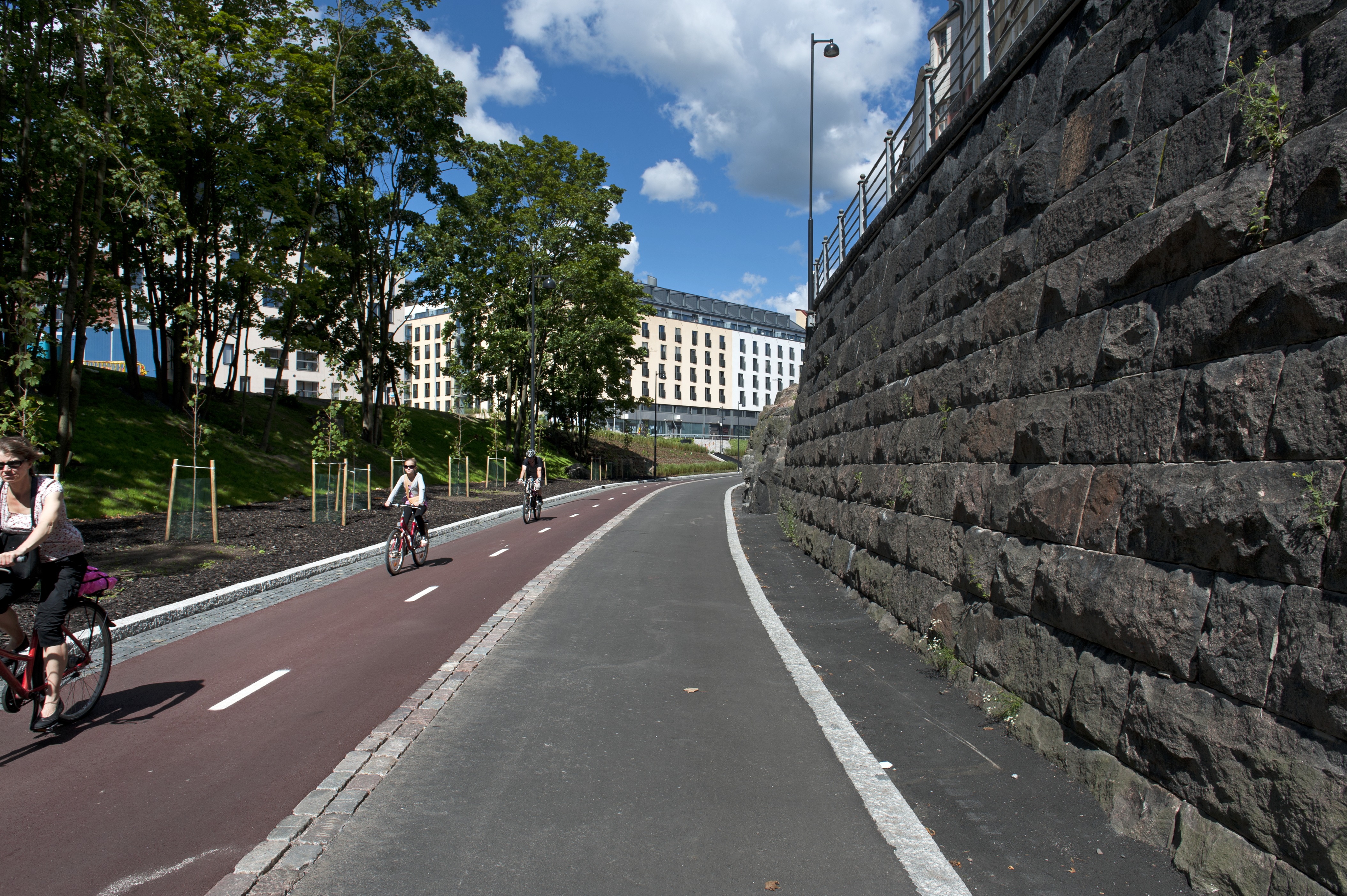
Most Western and Central European countries have well-developed tourist routes, in addition to commuter cycling in cities.
Understand
While the old towns in Europe were not built for cycling, the bike had a golden age during the first half of the 20th century; in particular during the fuel shortages of the world wars. The second half of the century saw the rise of the car. Due to congestion, increased driving costs and environmental awareness, the bicycle now sees a renaissance in Europe. The COVID-19 pandemic has reinforced this trend in many places with lockdowns drastically reducing the numbers of motorcars in the streets and a shift from public transit to cycling encouraging politicians of all stripes to re-allocate urban space from driving to bikes.
Pan-European routes
Europe is developing an international network of touring routes, known as EuroVelo. These often follow existing national routes, but bring them together to make thematic and very long journeys, such as the North Sea Route, which takes in the coastlines of the UK, France, Belgium, the Netherlands, Germany, Denmark and Norway. The furthest destination east is Moscow. Route 2, the Capitals Route, starts in Galway, Ireland and travels through Dublin, London, Berlin, Warsaw and Minsk before arriving in Moscow.
North-south routes EV 1: Atlantic Coast Route North Cape–Sagres. 8,186 km (5,087 mi) EV 3: Pilgrims Route Trondheim–Santiago de Compostela. 5,122 km (3,183 mi) EV 5: Via Romea Francigena London–Rome and Brindisi. 3,900 km (2,400 mi) EV 7: Sun Route North Cape–Malta. 7,409 km (4,604 mi) EV 9: Amber Route (Baltic Sea to Adriatic Sea) Gdańsk–Pula. 1,930 km (1,200 mi) EV 11: East Europe Route North Cape–Athens. 5,984 km (3,718 mi) EV 13: Iron Curtain Trail Barents Sea–Black Sea. 10,400 km (6,500 mi) EV 15: Rhine Route Andermatt–Hook of Holland. 1,320 km (820 mi)
West-east routes EV 2: Capitals Route: Galway–Moscow. 5,500 km (3,400 mi) EV 4: Central Europe Route: Roscoff–Kyiv. 4,000 km (2,500 mi) EV 6: Atlantic Ocean to Black Sea: Nantes–Constanta. This route includes the Loire Valley and Danube routes. 4,448 km (2,764 mi) EV 8: Mediterranean Route: Cádiz–Athens and Cyprus. 5,888 km (3,659 mi)
Circuits EV 10: Baltic Sea Cycle Route: (Hansa circuit) 7,980 km (4,960 mi) EV 12: North Sea Cycle Route: 5,932 km (3,686 mi)
Countries and regions
For general information on cycling as well as cycling on other continents see cycling, urban cycling and tour cycling.
Baltic states The picture is mixed in the Baltic states, although the capitals like Tallinn have good networks. In rural areas, cycling infrastructure is less developed, but there are scenic rural roads and dedicated cycling routes.
Belgium The cycling infrastructure in Belgium is generally considered to be good, with a well-developed network of bike lanes and dedicated cycle paths in cities and towns. The country is known for its love of cycling, with a long history of competitive cycling and a high level of participation in recreational cycling.
Denmark
Cycling in Denmark is very popular for recreation and commuting, and is often compared to that of the Netherlands. Because of this (or perhaps the other way around) Denmark has a quite extensive bicycle infrastructure, including a network of nationally appreciated bicycle routes extending more than 12,000 km (7,500 mi). In comparison Denmark's famous coastline is only approx. 7,500 km (4,500 mi)!
Finland
Finland has generally good cycling in and around the cities, often with exception of parts of the centre. In the countryside you can often find suitable quiet routes, but sometimes this requires some effort. Not all major roads allow safe biking. Biking routes for tourists are being developed in several areas and sometimes there are bikers' maps available. Biking off road is regarded as part of the right to access, but biking may cause erosion or other harm, so choose your route with consideration and lead the bike at sensitive sections. Bikes are available for rent in most towns and can be taken on buses and trains for a fee, without any packing. In the snowy season bike lanes are well maintained in some towns, in others very much not so. Biking next to cars in winter is not recommended in busy streets and on major roads.
France Cycling is a national sport in France, but city cycling is not as good as northern Europe, although it is improving in cities like Paris, Nantes and Lyon. Drivers are relatively good with cyclists. There are some stunning officially marked leisure rout
Bike-sharing
Many major European cities now have bike-sharing schemes. As most of these schemes are government subsidized (unlike their counterparts in North America) they are often very cheap and worth trying out even for travellers. Furthermore, many systems are integrated with one another. A "nextbike-card" from Dresden for example can be used in Nuremberg or the Ruhr area as well as several other countries.
Online routing and mapping
There are increasing numbers of ways to find routes for cycling. OpenCycleMap includes many details of many national, regional and local cycle routes. Many smartphone mapping apps include options to show cycle routes on their mapping. Specialist web sites are available to design routes more appropriate to cyclists (e.g. preferring quieter roads and fewer and lower hills) for example cycle.travel.
Adapted from Wikivoyage (CC BY-SA)