
Cuisine of Britain and Ireland
Travel topic
British and Irish cuisine had a reputation for bland food such as dry roast meat with soft-boiled vegetables from the post-war era until the 1990s. A resurgence in cuisine has led to Britain and Ireland having restaurants and chefs to match the best in the world, with much international diversity of cooking styles, as in most other European countries. However, it may be more challenging to find consistently great local cuisine at a reasonable price than in the region's continental neighbours, although, this is changing.
Understand
Eating out can be more expensive in Britain and Ireland than it is in the Mediterranean parts of Europe, but food in Britain is still cheaper than in the Nordic countries and Switzerland. Many large shops, especially department stores, will have a coffee shop or restaurant. Many large supermarket outlets will also have a coffee shop.If all else fails, decent picnic foods such as sandwiches, cakes, crisps, fresh fruit, cheeses and drinks are readily available at supermarkets. Street markets are a good place to pick up fresh fruit and local cheeses at bargain prices. Bakeries and supermarkets usually sell a good selection of sandwiches, pasties and cakes along with a range of soft drinks, fruit juices and mineral waters. In addition, many newsagents and some chemists will have a basic supply of sandwiches and bottled drinks. Smoking is now banned in all restaurants, cafés, bars and pubs - there are no exceptions. However some establishments have provided outdoor 'smoking areas' and smoking is allowed in the gardens/terraces outside pubs and restaurants unless otherwise stated. With heritage of the British Empire and immigration to the British Isles, these isles have a high presence of ethnic food from all around the world; especially, Middle Eastern cuisine, South Asian cuisine and American fast food are ubiquitous. Due to the former colonial ties to Hong Kong and the overseas Chinese communities in Malaysia and Singapore, there is also no shortage of authentic Chinese cuisine in the major cities. Across Britain, a traveller can find plenty of immigrant districts such as Chinatown in London or the Balti Triangle in Birmingham home to ethnic cuisines from around the world, especially former British colonies.
Foods
Fruits and vegetables In Britain and Ireland, the landscape of fruit and vegetable production is rich and diverse, reflecting the unique climates and soils of the regions. Although, more limited in certain seasons, local produce is highly valued, with many consumers increasingly seeking out seasonal fruits and vegetables that are grown nearby. From crisp apples in the autumn to vibrant strawberries in the summer, the seasonal cycle plays a crucial role in what’s available at local markets and stores throughout the year. Farmers' markets have become a popular destination for those looking to buy fresh, locally sourced produce. Additionally, many markets feature a variety of artisanal products, making them a vibrant hub for local food culture. In terms of types of produce, Britain and Ireland boast a wide array of fruits and vegetables that thrive in their temperate climates. Traditional staples like potatoes, carrots, and cabbages are complemented by an increasing variety of exotic fruits and vegetables that are becoming more popular. Locally grown strawberries and raspberries were traditionally available for a few weeks in summer. Now they are grown in poly tunnels and strawberries are available from April to October, and raspberries from June to August. Imported berries are available for the rest of the year, but these often have less flavour. Commercial blackberries (brambles) are available in the summer, but you may be able to pick wild blackberries from a hedgerow in September or October.
Apples and pears Apples and pears hold a special place in the agricultural landscape of Britain and Ireland, where local produce thrives in the rich, fertile soil. These fruits are not just staples in the diet but also represent a significant part of the cultural heritage. Apples have been cultivated in the British Isles for at least two millennia, and it is claimed some grew in the wild as far back as the Neolithic in the late Stone Age. The diverse varieties grown in these regions, from the crisp Bramley apples to the sweet Conference pears, reflect the unique climate and soil conditions. Farmers often take pride in cultivating these seasonal fruits, which are typi
Meals
Nobody is going to eat all or most of the possible meals in a day. This is just a list of what might be on offer during the day.
Breakfast
Hotels generally offer breakfast between 7AM and 10AM. A "full English, Irish, Scottish or Welsh breakfast" can include a glass of fruit juice, porridge or breakfast cereal with milk, a hot dish of bacon with a fried egg and a grilled tomato and maybe mushrooms, baked beans or black pudding, and toast with tea or coffee to finish. If you add all the options, this can easily set you up for the day and is a lot more than most people eat at home. A "continental breakfast" in comparison, can encompass cereal, fruit, yoghurt, toast, cold hams, cheeses, and pastries, accompanied by a glass of fruit juice and tea or coffee, but some places offer a much smaller selection if it is included in the room rate.
Morning coffee If you are visiting an office, you are likely to be offered coffee around 10AM.
Lunch
Lunch is generally eaten between noon and 2PM, although restaurants may offer lunch for slightly longer. The Ploughman’s lunch is a quintessentially English meal. Typically enjoyed in rural pubs or as a picnic, this lunch is a delightful assortment of cold foods that reflect the agricultural heritage of England. At its core, the Ploughman’s lunch usually features a generous portion of crusty bread, often accompanied by a selection of cheeses, such as sharp Cheddar or creamy Stilton. The bread serves as a perfect vehicle for the rich flavours of the cheese, and it’s not uncommon to find a dollop of tangy pickle or chutney on the side, adding a zesty contrast to the meal. In addition to the bread and cheese, a Ploughman’s lunch often includes a variety of other accompaniments that enhance its rustic charm. Slices of cured meats, such as ham is often added. Fresh, crisp vegetables like pickled onions, radishes, or even a handful of salad greens provide a refreshing crunch. Some variations might also feature hard-boiled eggs or a small serving of apple slices, which introduce a touch of sweetness to the plate. It's often washed down with a cold pint of ale or cider.
Afternoon tea
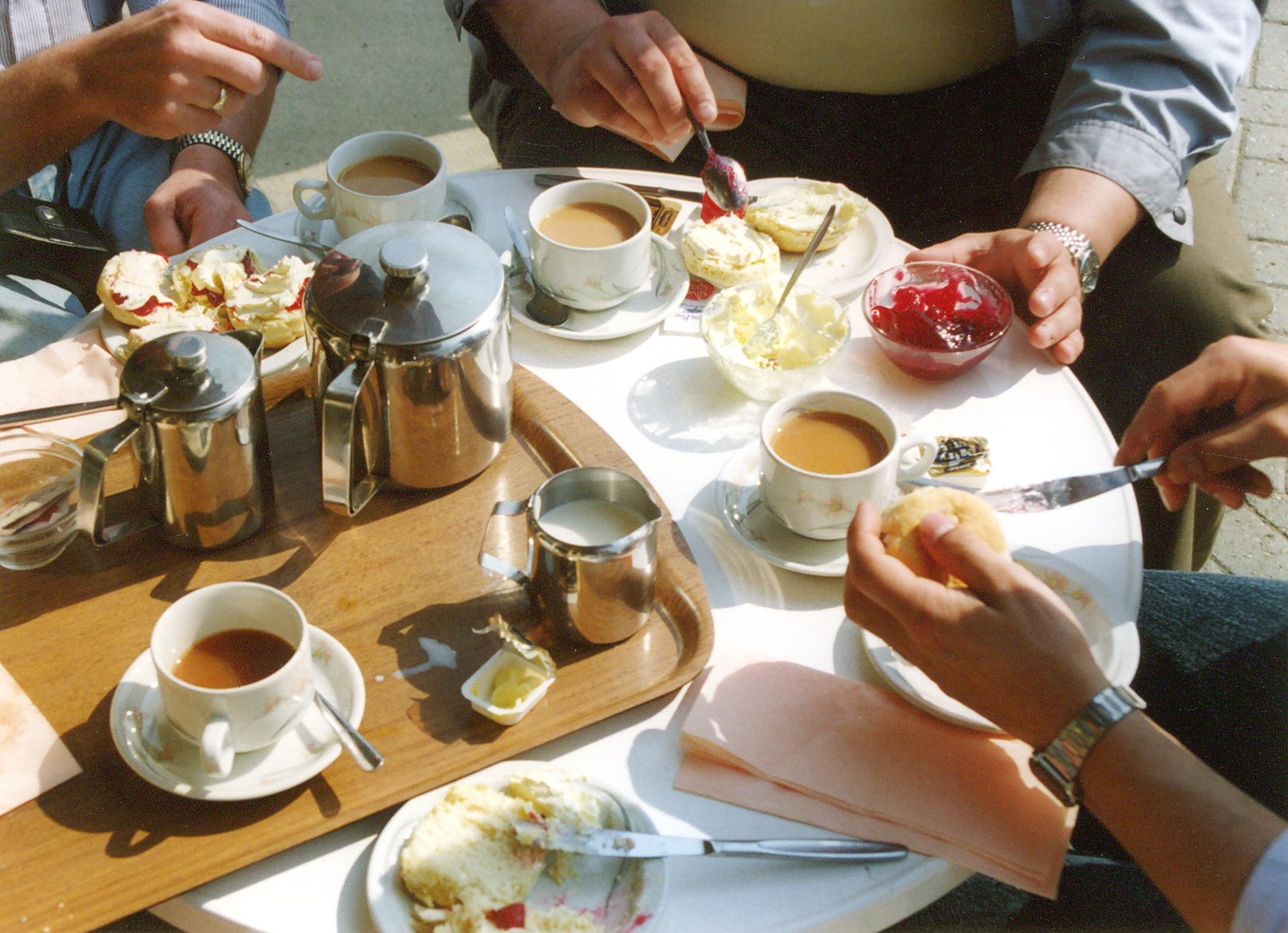
Britain has had a longstanding relations
Where to eat
In all but the smallest village, you will usually have a choice of places to eat. Almost everywhere in Britain that sells food should have been inspected for food safety and cleanliness and the results are published - you can check up on a place by looking at the scores on the doors database (but this lists many places not open to the public). As you go up the price range, it's more likely you may need to make prior reservations or will encounter dress codes.
Takeaways Takeaways are places that sell hot food to eat away from the premises, sometimes by people standing on the pavement nearby. These can be useful on a sunny summer evening if there is a nearby park. Fish and chip shops are one of the more common takeaways. Usually these have a selection of two or three types of fried fish and a variety of generally cheaper fried alternatives, such as chicken, smoked sausage, cod roe or battered black pudding. On Friday and Saturday nights, chippies can get busy around 11PM with people buying chips on the way home from the pub. Indian, Chinese and pizza takeaways are also common, but quality can vary greatly - ask locally or look for queues. Not all takeaway venues are in fixed venues though, some areas having nominally mobile "burger vans", which can provide a few basic fast food style items. Despite the urban folklore attached to them, it's certainly an experience getting a grill fresh, 'bacon bap' from one.
Fast food The international chains McDonald's, Burger King, KFC, and Subway can be found in many town centres. The likes of Five Guys, Taco Bell and Tim Hortons have experienced growth around the early 2020s. Pret a Manger, or Pret for short, is a UK-based sandwich shop that has grown internationally.
Cafes
Cafes are usually open only in the daytime. Some may be open at 6AM, serving breakfast, but closing at 2PM. Others ope
Adapted from Wikivoyage (CC BY-SA)