
Chinese cuisine
Travel topic
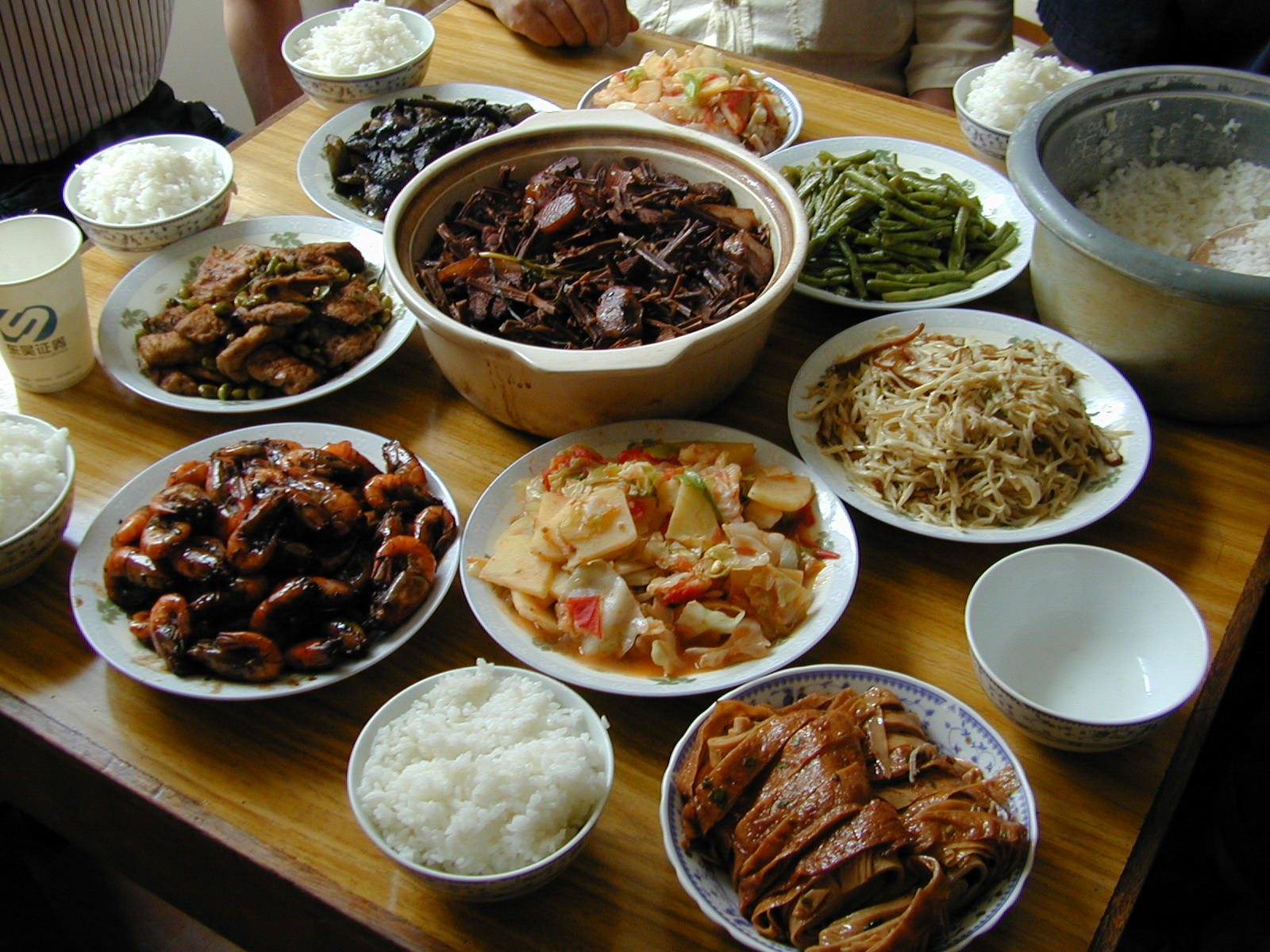
The origins of Chinese cuisine can be traced back millennia. Chinese cuisine is extremely diverse with wide regional variations, and it is not uncommon for even Chinese people themselves to find the cuisine from another region to be completely foreign to them.
Understand
Through Imperial China, Chinese culture has influenced lands such as today's Mongolia and Vietnam. Chinese cuisine has for a long time been renowned in other Asian nations such as Korea and Japan. In modern times, the Chinese diaspora has spread Chinese cuisine to farther-flung parts of the world. That said, much of this has been adapted to local conditions, so you will often find dishes in overseas Chinese communities that cannot be found in China, or have been heavily modified from their original Chinese versions. Malaysia, Thailand, Vietnam and Singapore in particular are excellent places to sample such cuisine due to the long history of the Chinese communities there and the deliciousness of traditional local ingredients and cooking methods. Conversely, returning overseas Chinese have also had an impact on the culinary scene of the motherland, perhaps most palpably in Guangdong, Fujian and Hainan. Many cities in Western countries have a Chinatown district, and even smaller towns often have a few Chinese restaurants. These places have always had mainly Cantonese food, but other styles have become more common. Chinese cuisine can range from simple but hearty street food to over the top fine dining using only the most exclusive ingredients, with prices to match. Hong Kong is generally regarded to be the world's main centre of Chinese fine dining, though Singapore and Taipei are no slouches either, and the mainland Chinese cities of Shanghai and Beijing are also slowly but surely catching up. Meal times in China are on the early side as countries go – closer to U.S. meal times than European ones. Breakfast is typically between 07:00 and 09:00, and often includes things like noodles, steamed buns, congee, fried pastries, soymilk, vegetables, or dumplings. The peak time for lunch is 12:00–13:00, and dinner is often somewhere around 17:30–19:30.
Regional cuisines Chinese cuisine varies widely depending on what part of the country you're in. The "Four Great Cuisines" (四大菜系) are Sichuan (Chuan), Shandong (Lu), Guangdong (Cantonese/Yue), and Jiangsu (Huaiyang) cuisine, and other regions have their styles as well, with notably different culinary traditions in ethnic
Ingredients
Meat, especially pork, is ubiquitous. Poultry such as duck and chicken are also popular, and there's no shortage of beef. Lamb and goat are popular with Muslims and in general in western China. If you know where to go, you can also sample more unusual meats like snake or dog. Ham — While European and American hams may be better known internationally, China is also a traditional ham-producing nation, with some of its premium hams having histories that date back centuries or even millennia. Chinese hams are typically dry-cured, and often feature as a soup base, or as an ingredient in a variety of dishes. China's most celebrated ham is Jinhua ham (金華火腿 jīn huá huǒ tuǐ) from the city of Jinhua in Zhejiang province. Besides Jinhua ham, Rugao ham (如皋火腿 rú gāo huǒ tuǐ) from the Rugao in Jiangsu province, and Xuanwei ham (宣威火腿 xuān wēi huǒ tuǐ) from Xuanwei in Yunnan province round up China's "Three Great Hams". Other famous hams include Anfu ham (安福火腿 ān fú huǒ tuǐ) from Anfu in Jiangxi province, which had been featured at the Panama–Pacific International Exposition in 1915, and Nuodeng ham (诺邓火腿 nuò dèng huǒ tuǐ) from Nuodeng in Yunnan province, which is a specialty of the Bai ethnic minority. Rice is the archetypical staple food, especially in southern China. Noodles are also an important staple, with wheat noodles (面, miàn) more common in northern China and rice noodles (粉, fěn) more common in the south. Vegetables are usually steamed, pickled, stir-fried or boiled. They're rarely eaten raw. Many have multiple names and are translated and mistranslated in various different ways, causing lots of confusion when you try to make sense of a menu. Some favorites include eggplant, pea shoots, lotus root, daikon and bamboo shoots. Gourds include calabash, bitter melon, pumpkin, cucumber, sponge gourd, and winter melon. Leafy vegetables are varied, but many are more or less unfamiliar to English-speakers and may be translated as some kind of cabbage, lettuce, spinach, or greens. Thus you'll find Chinese cabbage, long-leaf lettuce, water spinach, and sweet potato greens, to name a few. Mushrooms – lots of different kinds, from rubbery black "wood ear" to chewy white "golden n
Dishes
You'll find all kinds of meat, vegetable, tofu, and noodle dishes in China. Here are a few well-known, distinctive dishes:
Buddha jumps over the wall (佛跳墙, fótiàoqiáng) – an expensive Fuzhounese soup made from shark fin (鱼翅, yúchì), abalone and many other non-vegetarian premium ingredients. According to legend, the smell was so good that a Buddhist monk forgot his vegetarian vows and leaped over the temple wall to have some. Typically needs to be ordered a few days in advance due to the long preparation time. Guōbāoròu (锅包肉) – sweet and sour battered pork from Northeast China. Chicken feet (鸡爪, jī zhuǎ) – cooked lots of different ways, many in China consider them the tastiest part of the chicken. Known as phoenix claws (凤爪 fuhng jáau in Cantonese, fèng zhuǎ in Mandarin) in Cantonese-speaking areas, where it is a popular dim sum dish and most commonly made with black bean sauce. Mapo tofu (麻婆豆腐, mápó dòufu) – a Sichuanese tofu and ground pork dish that is very spicy and has classic Sichuan málà tingly/numbing spiciness. Peking duck (北京烤鸭, běijīng kǎoyā) – roast duck, the most famous dish characteristic of Beijing. Stinky tofu (臭豆腐, chòu dòufu) – just what it sounds like. Several different regions have different types, though the most famous is Changsha-style, made in rectangular blocks that are blackened on the outside. Other prominent styles of the dish include Shaoxing-style and Nanjing-style. It is also a very popular street dish in Taiwan, where it is available in various different styles. It is available at night markets in Hong Kong, too. Stuffed tofu (酿豆腐, niàng dòufu in Mandarin, ngiong4 têu4 fu4 in Hakka) – a Hakka dish, fried tofu stuffed with meat, known as yong tau foo in Southeast Asia, albeit often heavily modified from the original. Xiǎolóngbāo (小笼包) – small soup-filled dumplings from Shanghai, Jiangsu and Zhejiang. Sweet and sour pork (咕噜肉 gūlūròu in Mandarin, gūlōuyuhk in Cantonese) – a Cantonese dish, invented to suit the palates of the Europeans and Americans based in Guangdong during the 19th century. One of the most popular Chinese dishes in English-speaking countries. Squirrel-shaped Mandarin Fish (松鼠鳜鱼 sōngshǔ guìyú) - a fried fish dish fr
Snacks
Various types of Chinese food provide quick, cheap, tasty, light meals. Street food and snacks sold from portable vendors and hole-in-the-wall shops can be found throughout China's cities, especially good for breakfast or a snack. Wangfujing district's Snack Street in Beijing is a notable, if touristy, area for street food. In Cantonese-speaking areas, street food vendors are called gai bin dong; such ventures can grow into a substantial business with the stalls only barely "mobile" in the traditional street food sense. In addition to little street vendors, some of these items can be found on the menu at restaurants, or at the counter in convenience stores like 7-Eleven. Various quick eats available nationwide include:
Bāozi (包子) – steamed buns stuffed with sweet or savory filling such as vegetables, meat, sweet red bean paste, custard, or black sesame seeds
Barbecued meat skewers (串 chuàn) from street vendors. Easy to spot since even the character looks like a kebab! Fiery Uyghur-style lamb kebabs (羊肉串 yángròu chuàn) from Xinjiang are particularly renowned. Congee (粥 zhōu or 稀饭 xīfàn) – rice porridge. The Cantonese, Teochew and Minnan people in particular have elevated this seemingly simple dish into an art form. Each of them have their own distinctive and highly-celebrated styles. Fish balls (鱼丸 yúwán) – fish paste moulded into the shape of a ball, popular in much of coast
Adapted from Wikivoyage (CC BY-SA)