
Business travel
Travel topic
Travel for secular "pleasurable" purposes is a fairly recent concept. For most of human history, people either traveled for religious reasons or out of economic necessity, hence business travel may well be the oldest form of travel. This article deals with this concept.
High-travel jobs
This list contains jobs which intend the employee to be based in their home country, in contrast to working abroad (e.g. digital nomads who work outside their home country, may periodically relocate, but the job itself doesn't entail a lot of travelling)
Sales is the classic high-travel occupation, so much so that "traveling salesman" has become a bit of a cliché. Consulting can also mean high travel, but on a somewhat less intense scale, as individual consulting gigs can sometimes last weeks or months and can easily turn into long-distance commuting. In general, any very specialized job, where customers are few but can afford to (or have no choice but to) fly in experts will tend to mean high travel. Transportation workers such as truck drivers, bus drivers, locomotive engineers and ship crews see many places through work. The airline industry also offers good travel opportunities. Aside from the obvious pilots and cabin staff, maintenance crew and sales & marketing people may also fly extensively, and even desk job employees can often fly for free or very cheaply using space-available seats. The quality of accommodation varies a lot, and free time on a destination might be short. Academia, including research, studies and teaching, also offers international travel. Some academic subjects that naturally contain travel for field research, are aerospace engineering, anthropology, astronomy, archaeology, biology (including ornithology), civil engineering, geology, geography, linguistics and meteorology. Scientists are usually the only people who go to next-to-impossible destinations, such as exclusion zones. In addition, researchers also occasionally travel to attend academic conferences. See studying abroad and science tourism. Language experts can often get temporary jobs or assignments abroad, as interpreters, translators and teachers (but they may also be stationed abroad for long periods, and not effectively travel much). See teaching English. Military personnel may get to work abroad, though this depends on the country and your position. "Join the Navy, See the World" is a classic slogan. Going abroad in uniform does not necessarily mean going to war; many m
Get around
Business travellers can in many cases afford high-cost options, for a speedy and comfortable journey. See transportation for comparison between vehicles.
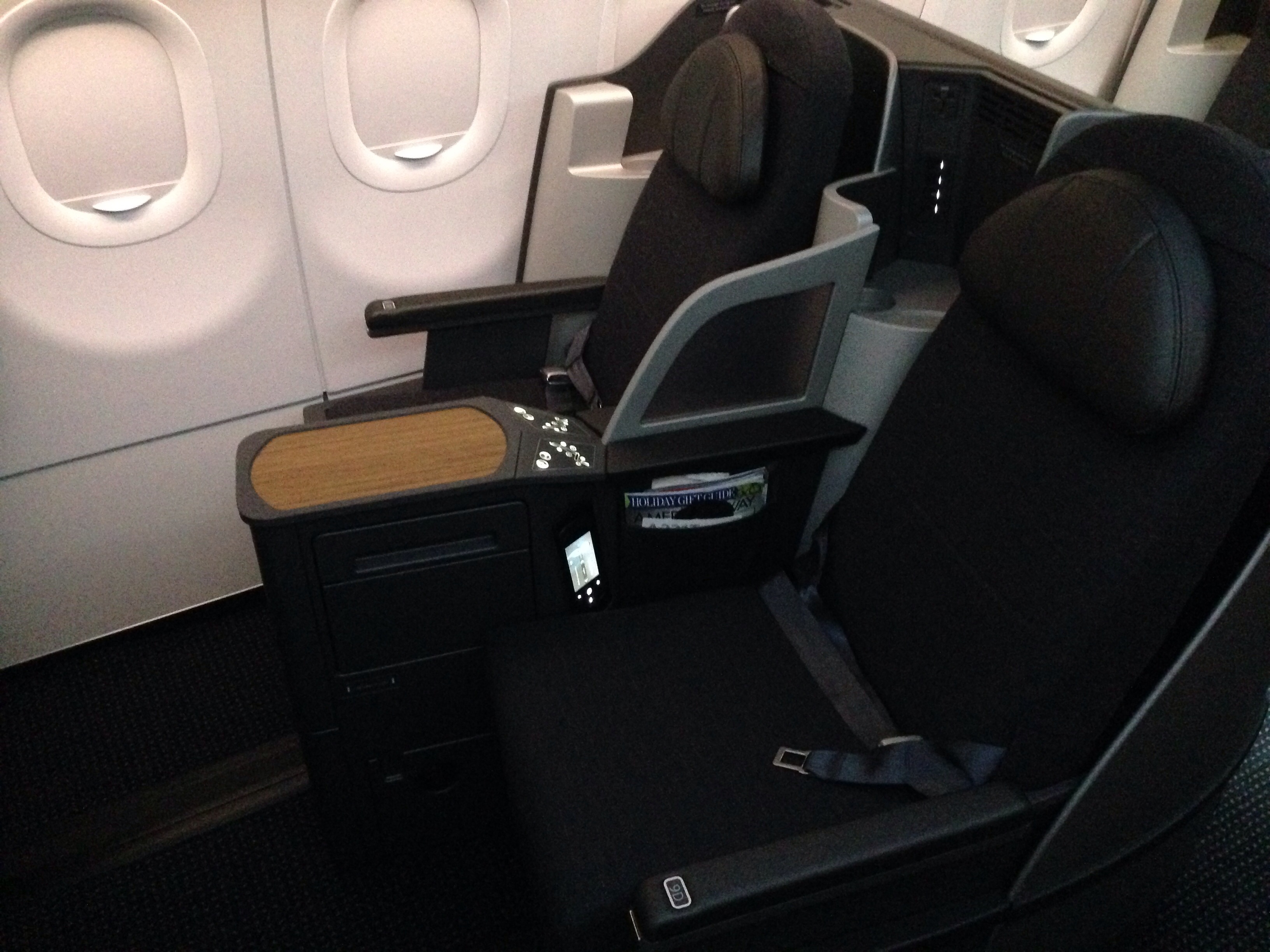
Flying: Businesspeople create the market for first and business class flights. If budget is short, consider economy class; the difference in comfort and service is not that big, on most airlines. For a VIP in a hurry, general aviation such as a business jet or a helicopter might save some time. Rail travel gives a fast and comfortable ride on distances up to 1,000 km (620 mi), if available. First class (or in some cases even a specially named class "above first") is often aimed at business travelers. The level of first-class standard varies between operators, but usually allows better dining and paperwork on board than the airlines. Furthermore Wifi service on trains is becoming more and more common among major long distance operators. This means you can get more work done in the same travel time than on a plane. Many rail operators offer silent compartments, which is good if you want to work concentrated and in silence. However, do keep in mind that talking on your phone is a major no-no in silent compartments. High speed trains tend to beat planes in market share if their travel time is 3:30 h or less. DB (among others) has recognized this and offers an "ICE Sprinter" – aimed at business travellers – on select routes that makes limited or no intermediate stops to reach or beat this time. Public transportation rarely guarantees good comfort, but can be practical and affordable in a big city. Driving makes a traveller independent, but also tired. Usually the only practical option in the countryside, and if you don't bring your own, renting a car can be an option. Driving and parking in an unfamiliar city can however be difficult. In addition, things like disorderly traffic or inability to read street signs in the local script may make hiring a car with a driver the best alternative. Taxis and rideshares provide door-to-door service, in the best case with a helpful and well-informed driver. Can be everything from a tuk-tuk to a stretch limousine, depending on budget. Bus travel is not always the fastest road tr
Sleep
While business travellers tend to stay at hotels, some organizations offer private accommodation in different sizes and comfort levels. Workers who spend much time at a destination might consider renting or buying a second home.
Cope
Business travellers might often find themselves on their own. See travelling alone.
Data security
If your laptop, smartphone or usb drive is stolen or your phone calls or data connections are monitored, you may leak business secrets or confidential information (human rights activists may be targeted). As the risks may be bigger when travelling, and certainly are more difficult to control abroad, you should check what procedures to follow with the relevant department of your employer. If you do not have such resources, make sure you understand the most important risks yourself. The worst problems may not come from criminals but from authorities (unless you trust they are not involved in industrial espionage – or tracking dissidents, if you are a journalist or attorney), and that they do not use confidential information they recover). To lessen the problem of border authorities possibly wanting to get access to your devices, you might want to travel with a "clean" laptop, downloading any secret documents you need afterwards, via a secure connection (VPN, SSH or similar). You may still need your keys (e.g. to check there is no man-in-the-middle when making secure connections), but at least some of them are public, and they are smaller anyway, easier to hide in innocent looking places – passwords can even be retrieved over a secure channel from your secretary or attorney after crossing the border. You might have to check that the computer has not been tampered with (a bootable read-only medium can confirm integrity unless also the BIOS is "upgraded"). If your destination country does not allow secure connections across the border, you have a problem. Before you return, upload and delete the sensitive information. Deleting data reliably is not easy, so you may consider keeping your laptop's storage read-only and use separate storage (at your server at home, or a to-be-destroyed external device), also for temporary files – or ensure that all storage is reliably encrypted. A clean device, especially one that has been erased, may raise suspicions. You may want to be able to cite company policy or have some other credible (and true) explanation.
If your devices may
Respect
Be sure to learn about business card etiquette in the countries you wish to visit. In many countries, how you treat someone's business card is seen as a reflection of the respect (or lack thereof) you have for the person.
In countries in the East Asian culture sphere with traditionally Confucian societies (e.g. China, Japan, Korea and Vietnam), business cards should always be given and received with both hands. In India and many Islamic countries in the Middle East and North Africa, the left hand is considered unclean, so business cards should only be handled with your right hand. In the Theravada Buddhist countries of Southeast Asia (Thailand, Myanmar, Cambodia and Laos), business cards should be given and received using your right hand with the palm facing up, and your left hand supporting your right elbow.
Stay safe
Business travellers may visit places that the average tourist could find dangerous. The general advice in Staying safe and Arriving in a new city still applies, only it's much more important for business travel: a scruffy backpacker may draw interest because he probably has a wad of cash stashed somewhere, but a guy in a suit toting a laptop case, s
Adapted from Wikivoyage (CC BY-SA)