
Hall of Guanyin
Taiwan · Asia
About
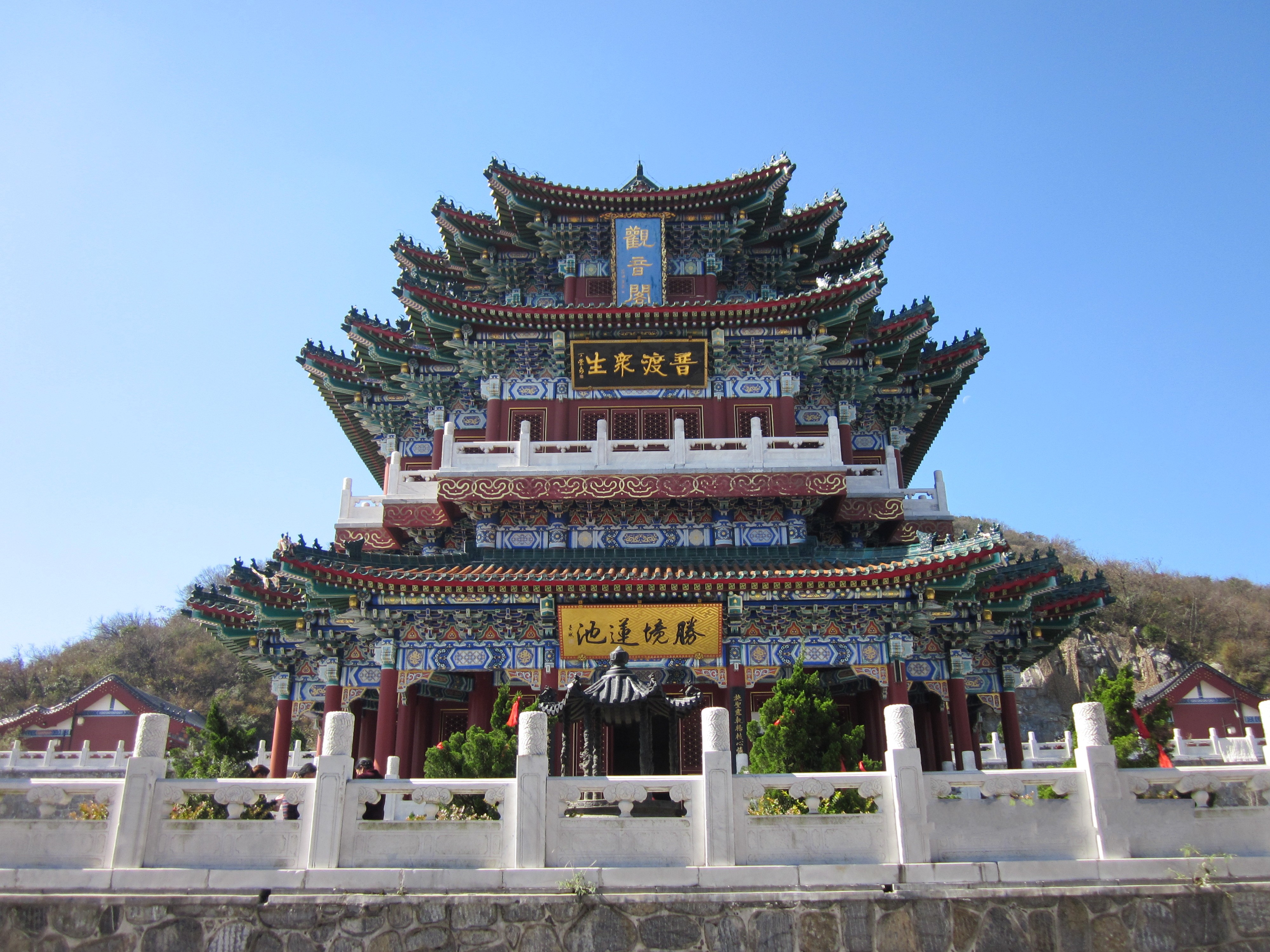
The Guanyin Hall (simplified Chinese: 观音殿; traditional Chinese: 觀音殿; pinyin: Guānyīndiàn) is a building that enshrines Avalokiteśvara in East Asian Buddhist temples. It is the most important annex hall in Chinese temples. Guanyin, also called "Guanshiyin" (觀世音), "Guanshizizai" (觀世自在), "Guanzizai" (觀自在), is the attendant of Amitabha and one of the "Western Three Saints" (西方三聖). Guanyin is the bodhisattva most associated with the Buddhist principle of compassion and mercy. According to Chapter of the Universal Gate of Avalokiteśvara Bodhisattva (《觀世音菩薩普門品》), if people are in danger, they just need to call his name and he will hear them and go to save them. Since he has many manifestations, different places enshrine different statues of Sheng Guanyin (圣觀音), Guanzizai (觀自在), and Thousand-armed and eyed Guanyin (千手千眼觀音菩薩).
In certain temples, the hall is also alternatively called the Guanyin Pavilion (simplified Chinese: 观音阁; traditional Chinese: 觀音閣; pinyin: Guānyīn gé), the Hall of Great Compassion (Chinese: 大悲殿; pinyin: Dàbēi diàn) or the Pavilion of Great Compassion (simplified Chinese: 大悲阁; traditional Chinese: 大悲閣; pinyin: Dàbēi gè).
In Korea, the building is called gwaneumjeon (관음전), wontongjeon (원통전; 圓通殿) or wontongbojeon (원통보전; 圓通寶殿) as Gwaneum eliminates the agony of living things smoothly and flexibly (주원융통; 周圓融通). A notable example is wontongjeon of Gaemoksa which is designated as treasure.
Adapted from Wikipedia (CC BY-SA). Photography via Wikimedia Commons.