
Hingol National Park
Pakistan · Asia
About
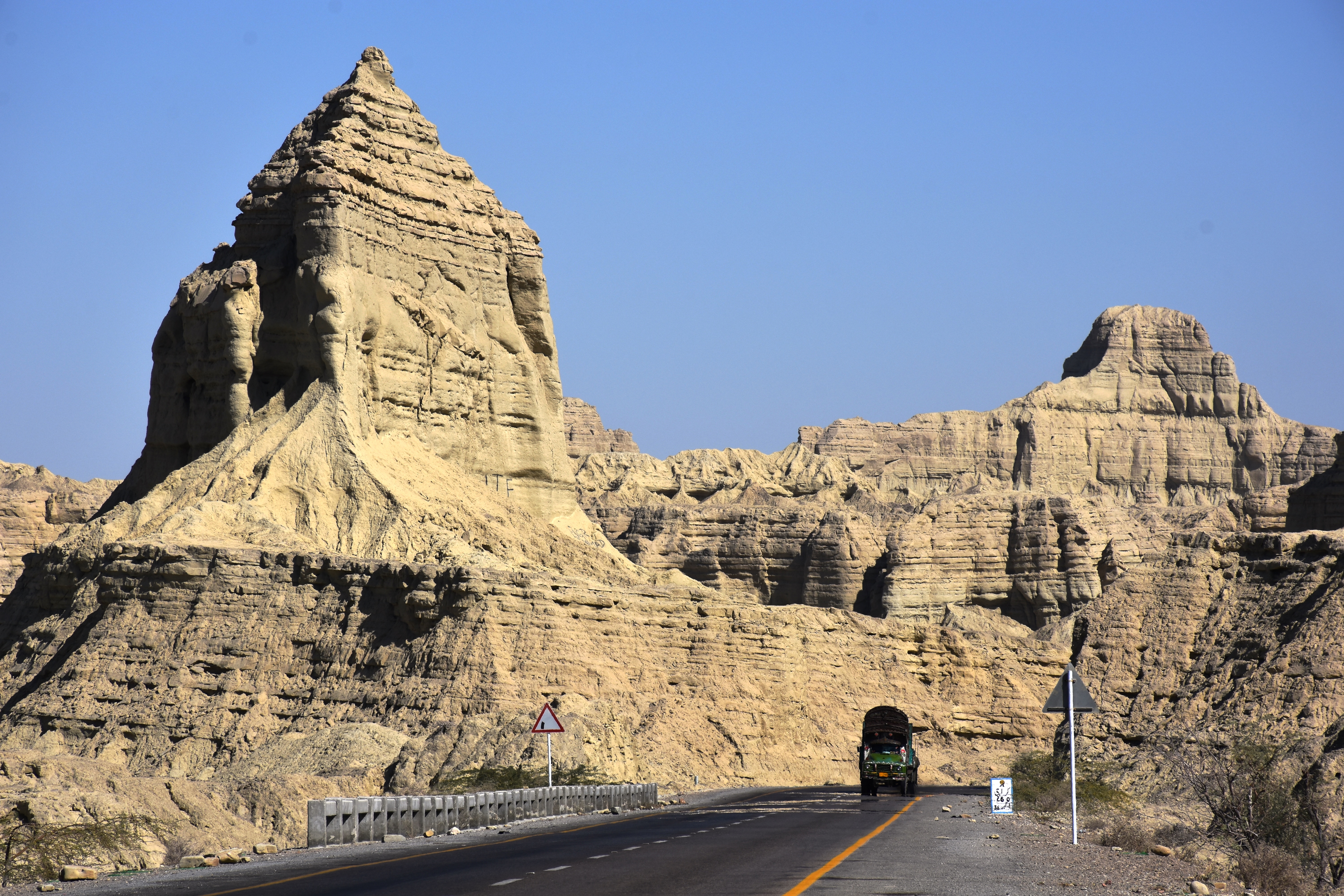
Hingol National Park or Hungol National Park (Urdu: ہنگول نیشنل پارک) is the largest national park in Pakistan, located in the Makran coastal region of Balochistan along the Arabian Sea. The park covers an area of about 6,100 square kilometres (2,400 sq mi) and is located 200 km northwest of Karachi in the three districts of Gwadar, Lasbela and Awaran in Balochistan. Hingol was declared a national park in 1988. The park is named after the Hingol River, which flows through the park and forms an estuary before emptying into the Arabian Sea. It hosts a large numbers of waterfowl and a wealth of marine life dolphins, sea turtles, mangroves, fish, and crocodiles. Hangul National Park contains several distinct ecosystems, as well as both desert and plains regions, making it unique among the national parks of Pakistan. The park is bordered by arid subtropical forest to the north, a barren mountain range to the south, and the Hingol River tributary, which is home to thousands of migratory birds and marsh crocodiles. The Gulf of Oman and the Arabian Sea are to the south. The park's unique rock formations have been attracting tourists from all over the country since the completion of the Makran Coastal Highway in 2004.
Hingol National Park is a natural sanctuary for endangered wildlife in Pakistan. It is home to about 257 plant and 289 animal species, including 35 mammals, aquatic animals, amphibians, reptiles and migratory birds, including hundreds of rare species. Marsh crocodiles are regularly spotted on the coastline adjacent to Hingol National Park, and there are an estimated 60 crocodiles in various places. The Hingul Bay has a large number of other aquatic life including Indo-Pacific dolphins and green & olive turtles, and various rare species of fish and turtles live in the coastal areas adjacent to Hangul National Park. These turtles come to the beach every night in August to lay their eggs at night. Increasing plastic pollution on the shores made it difficult for them to dig, so the female turtles left without laying eggs. Since then, the number of these turtles on the shores of Sindh and Balochistan has dropped significantly.
The University of Geneva and the University of Tehran conducted a joint study on the attractive features of this coastal strip of Iran and Balochistan, in which 36 rock formations were observed. According to this research, the effective process of erosion and sedimentation has played an important role in the erosion of rocks here for centuries, in which the waves of the sea carry with them a lot of soil and other substances to the shore. Layers of soil 1 to 10 meters and in many places even thicker were observed on these rocks of different heights, which gradually increased from the beach. The tidal waves of the sea and the strong stormy winds have carved the Makran coastal strip and the adjoining mountain cliffs in such a way that at first glance the area resembles an archaeological complex preserving the remains of an ancient civilization. The most notable of these rocks are the Princess of Hope and the Balochistan Sphinx.
The most spectacular landform of Hangul National Park is a hoodoo called the Princess of Hope. Seen from afar, it resembles a large, tall statue of a woman. When American actress Angelina Jolie came to Pakistan on a UN goodwill mission in 2004, this rock formation caught her attention and inspired her to name it 'Princess of Hope'. Despite its statuesque appearance, however, the pinnacle owes its form purely to ocean winds and other natural forces of erosion.
The Balochistan Sphinx, also known as the "Lion of Balochistan" or Abul-Hol, is a natural rock structure that bears resemblance to a sphinx and is visible from the Buzi Pass section of the Makran Coastal Highway.
Adapted from Wikipedia (CC BY-SA). Photography via Wikimedia Commons.