
Pastila Museum, Kolomna
Russia · Europe
About
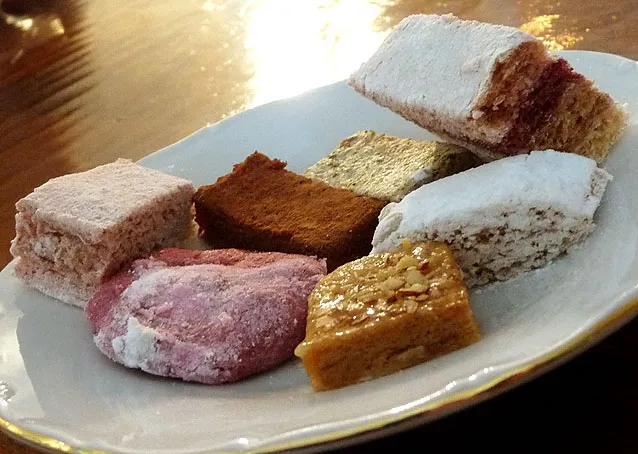
Pastila (Russian: пастила́ [pəsʲtʲɪˈɫa]) is a traditional Russian fruit confectionery (pâte de fruits). It has been described as "small squares of pressed fruit paste" and "light, airy puffs with a delicate apple flavor". In Imperial Russia, the "small jellied sweetmeats" were served for tea "with a white foamy top, a bit like marshmallow, but tasting of pure fruit".
Pastila is also eaten in Kazakhstan, primarily as a popular dessert or delicacy often served with tea. It is a sweet, colorful fruit and berry paste, and a common offering in Kazakh cuisine alongside other Russian and Central Asian sweets.
The first mentions of pastila in Russian written sources date back to the 16th century. The name is probably a loanword from Italian: pastello or pastiglia, or from the cognate French: pastille which in turn comes from Latin: pastillus (a loaf or pie, cf. pastilla).
In the 19th century, pastila was made from sourish Russian apples such as Antonovka or mashed Northern berries (lingonberry, rowan, currants) sweetened with honey or sugar and lightened with egg whites. The paste was baked in the Russian oven for many hours, then arranged in several layers inside an alder box and then left to dry in the same oven.
In Imperial Russia, pastila was considered an expensive treat. Priced at one rouble and a half, it was produced at noblemen's manors by serf labor. The cheapest pastila was made with honey instead of sugar. The Russian stove afforded two days of steadily diminishing heat to bake the fruit paste. A Tatar variety was strained through a fine sieve, which helped keep apple seeds intact.
Adapted from Wikipedia (CC BY-SA). Photography via Wikimedia Commons.