
Palais de la Découverte
France · Europe
About
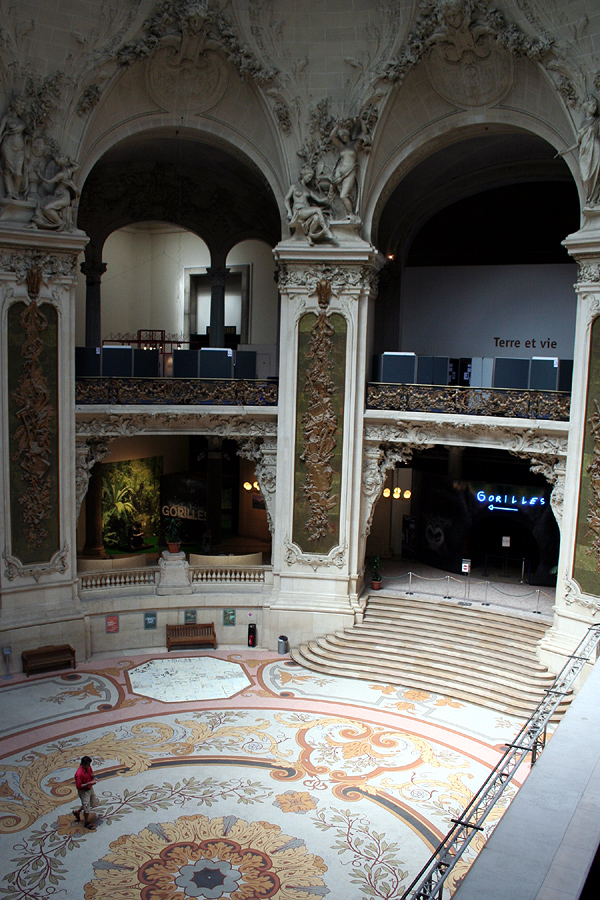
The Palais de la Découverte (French pronunciation: [palɛ də la dekuvɛʁt], lit. 'Discovery Palace') is a science museum located in the Grand Palais, in the 8th arrondissement on Avenue Franklin D. Roosevelt, Paris, France. It is open daily except Monday; an admission fee is charged.
The museum was created in 1937 by Jean Baptiste Perrin (awarded the Nobel Prize in Physics, 1926) during an international exhibition on "Arts and techniques in modern life". In 1938, the French government decided to convert the facility into a new museum, which now occupies 25,000 square metres within the west wing of the Grand Palais (Palais d'Antin) built for the Exposition Universelle (1900) to designs by architect Albert-Félix-Théophile Thomas. On January 9, 1940, a new decree linked museum, this time to the University of Paris.
In 1972, decree no. 72-367 of April 28 transformed the Palais de la Découverte into an autonomous public establishment. In 1990, it received the status of large establishment following decree no. 90-99 of January 25.
In January 2010, the museum was merged with the Cité des Sciences et de l'Industrie under one institution named universcience with two locations.
Today the museum contains permanent exhibits for mathematics, physics, astronomy, chemistry, geology, and biology, featuring interactive experiments with commentaries by lecturers. It includes a Zeiss planetarium with 15-metre dome.
Adapted from Wikipedia (CC BY-SA). Photography via Wikimedia Commons.