
Carrick Hill
Australia · Oceania
About
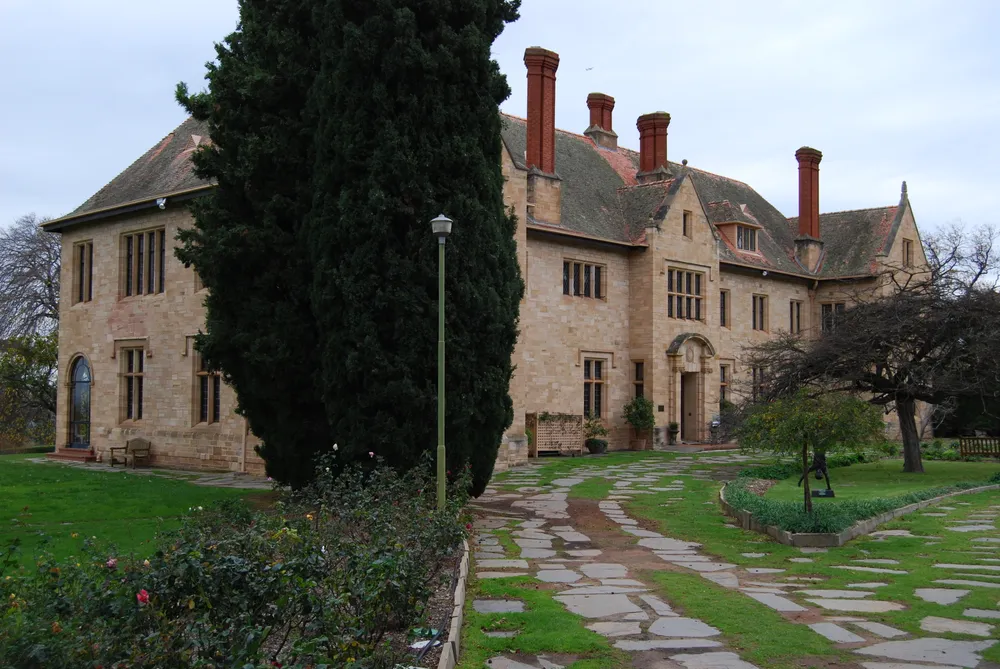
Carrick Hill is a historic estate in Springfield, South Australia, established by Ursula Barr Smith and Edward Hayward in 1935. Built between 1937 and 1939 using materials from England's Beaudesert Estate, the mansion features a formal garden designed by Ursula and incorporates both antique and contemporary furnishings. The Haywards assembled a significant art collection, including works by Australian and international artists, and hosted frequent cultural and social gatherings. Bequeathed to the South Australian government in the 1970s, Carrick Hill opened to the public in 1985 as a historic house, gallery, and gardens. Since then it has hosted exhibitions, events, and renovations, including a 2020 upgrade with The Wall Gallery and a 2023 pavilion, enhancing visitor facilities while preserving the estate's heritage. The interior of the Elizabethan-style mansion integrates period design with 1930s modern conveniences and contains one of Australia's largest private collections of Jacob Epstein bronze busts. The gardens, designed by Ursula, incorporate formal Edwardian Arts and Crafts layouts near the mansion, transitioning to woodland and bushland areas with terraces, paths, plantings, and sculptures. The estate accommodates public access, cultural events, and educational programs. It also holds works by Australian artists including Arthur Streeton, Russell Drysdale, Hans Heysen, William Dobell, and George Lambert, as well as a significant collection of Adrian Feint's paintings and bookplates. Additionally, it contains the largest private collection of Stanley Spencer's works outside Britain, encompassing still lifes, landscapes, portraits, and figurative compositions. Carrick Hill also hosts the Australian Museum of Gardening, established in the former stables to document and preserve 250 years of Australian gardening history. Developed in collaboration with the Australian Garden History Society, the museum's collection comprises books, tools, and artefacts donated by benefactors. Its inaugural exhibition in 2015 examined the artistic and social aspects of gardening, and in 2021 the museum received recognition from Interpretation Australia.
Ursula Barr Smith was a daughter of Tom Elder Barr Smith, a wealthy pastoralist and businessman, while Edward Hayward was a son of Arthur Hayward, chairman and managing director of John Martin's, a prominent Adelaide department store. Edward resided in Kent Town, and Ursula at "Birksgate" in Glen Osmond. The couple married in 1935, and as a wedding gift, Ursula's father presented them with the Carrick Hill property, comprising approximately 40 hectares (99 acres), upon which their home, Carrick Hill, was later built. Construction of the house, using Basket Range sandstone, began in 1937. After the initial contractors, Provis and Kuhlmann, went into bankruptcy, Fricker Brothers took over the project in 1938. During their one-year honeymoon in Europe, the Haywards learned that sections of a 16th-century mansion on the Beaudesert Estate, Staffordshire, were being made available for sale because the mansion was about to be demolished. They bought several architectural items and furniture pieces, including a grand staircase, which were brought to Adelaide and incorporated into the design of Carrick Hill. The home, built in the form of an English manor, featured a combination of antiques and contemporary furniture. Ursula also designed the gardens during the construction phase. After the purchase, the architectural components were packed, crated, and transported by sea from England to Port Adelaide. From there, the materials were conveyed to Springfield, where they were installed in the newly built Carrick Hill residence. Although Carrick Hill was completed in 1939, the Haywards were unable to take up residence immediately. Bill Hayward enlisted in the Australian Imperial Force and served overseas, while Ursula returned to Birksgate to live with her parents. The couple moved into Carrick Hill in 1944. The estate became known for the art collection assembled by the Haywards, which included works by artists such as Arthur Streeton, Tom Roberts, and Paul Gauguin. The property was also the venue for frequent social gatherings and hosted numerous cultural figures, including the artist Kathleen Sauerbier. Over the years, well-known guests at Carrick Hill included Judith Anderson and Robert Helpmann from South Australia, actors John McCallum and Googie Withers, actor and director Anthony Quayle, and film stars Laurence Olivier and his then-wife Vivien Leigh.
Adapted from Wikipedia (CC BY-SA). Photography via Wikimedia Commons.