
Bangkok Art and Culture Centre
Thailand · Asia
About
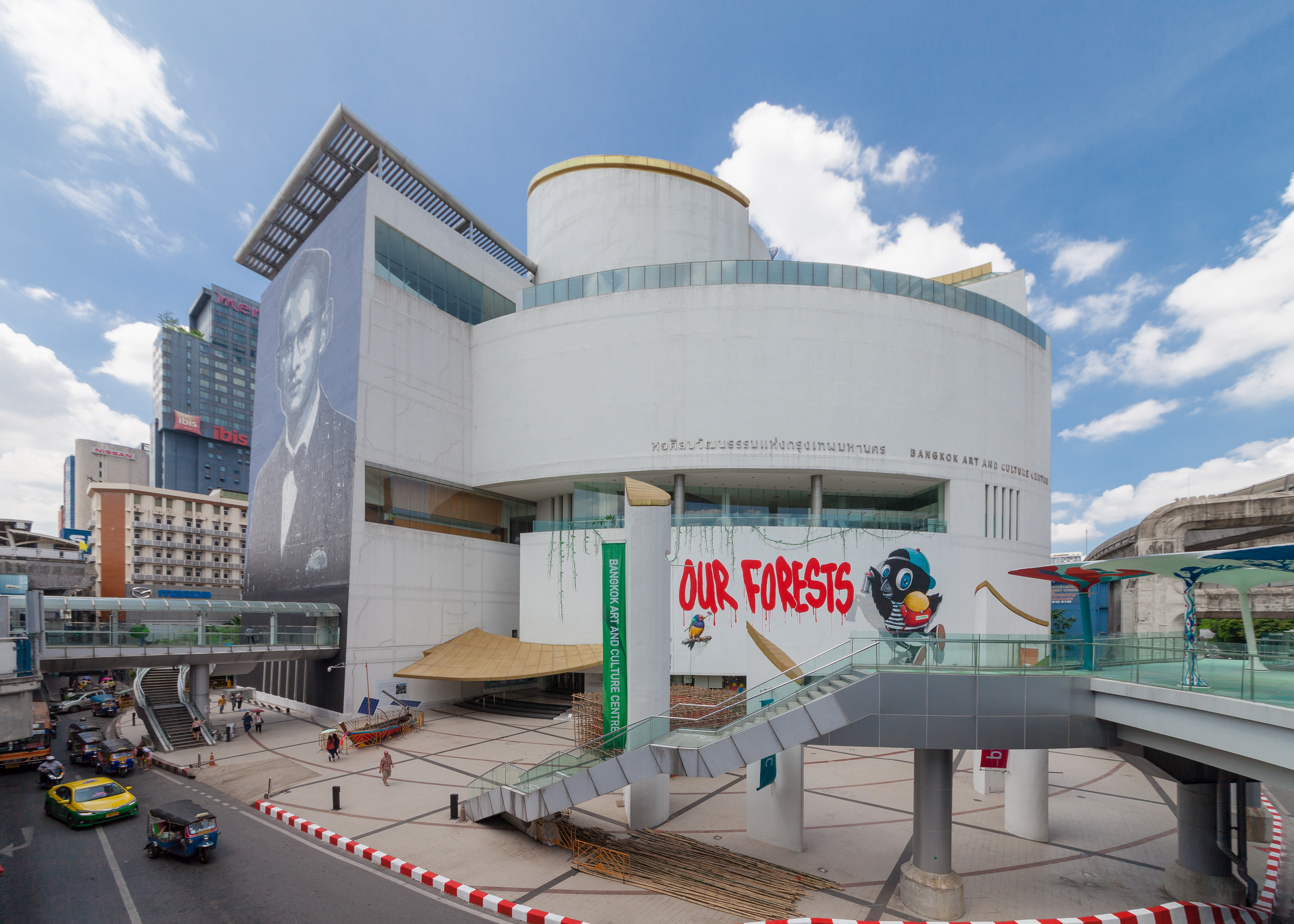
Bangkok Art and Culture Centre (BACC; Thai: หอศิลปวัฒนธรรมแห่งกรุงเทพมหานคร) is a contemporary arts centre in Siam area, Bangkok, Thailand. Art, music, theatre, film, design and cultural/educational events take place in its exhibition and performance spaces. The centre includes cafes, commercial art galleries, bookshops, craft shops, and an art library. It is intended as a venue for cultural exchange, giving Bangkok an operational base on the international art scene. The number of visitors has risen from 300,000 in BACC's first year in 2007 to 1.7 million visitors in 2017. It is served by the National Stadium BTS station on the Silom Line.
In 1995, Bangkok Governor Dr. Bhichit Rattakul began a project called "the art centre". After agreement that The Bangkok Contemporary Art Centre should be near Pathumwan junction, the project was stopped in 2001 when Samak Sundaravej became the new governor. He wanted a commercial retail space and private investors. Cultural organizations, artists, students, and media joined to oppose the suspension. In 2004, Apirak Kosayodhin became Bangkok Governor. The project was presented again and the governor agreed to the original project that the art centre should be designed following the original plan. On 19 August 2005 a "Declaration of Cooperation in the Fields of Art and Culture by Bangkok Metropolitan Administration (BMA) and Allied Organizations in the Fields of Art and Culture" was signed at Benjasiri Park. On 29 July 2008 the Bangkok Art and Culture Centre opened after many delays.
On 24 July 2025, the BACC opened the "Constellation of Complicity: Visualising the Global Machinery of Authoritarian Solidarity" exhibition on authoritarian governments, including materials critical of China's treatment of Hong Kong and ethnic minorities. The exhibition was organized by the Myanmar Peace Museum. On 27 July 2025, staff from the Embassy of China in Bangkok entered the exhibit along with Bangkok Metropolitan Administration (BMA) officials and demanded its shutdown. On 30–31 July 2025, the BACC was told by BMA officials the gallery could only continue if it removed any reference to Chinese leader Xi Jinping and works by Tibetan artist Tenzin Mingyur Paldron. The gallery subsequently removed works or obscured the names of works by Paldron, Hong Kong artists Clara Cheung and Gum Cheng Yee Man, and Uyghur artist Mukaddas Mijit. On 6 August 2025, an additional visit by Chinese Embassy officials reminded the gallery to comply with the One China Policy and requested the removal of an additional flyer from Paldron's installation. Sai, the gallery's Burmese co-curator, described the removal as, "It is tragically ironic that an exhibition on authoritarian cooperation has been censored under authoritarian pressure. Thailand has long been a refuge for dissidents. This is a chilling signal to all exiled artists and activists in the region." Sai subsequently fled Thailand. Phil Robertson, deputy director of Human Rights Watch's Asia Division, characterized the move as "Chinese transnational repression - in the form of censorship this time" on Twitter. A Bangkok Post editorial criticized the BACC, noting that "For the BACC, which has remained tight-lipped over what has occurred, this incident has inarguably hurt its reputation. The centre is expected to stand by the artists and to provide space for artists dedicated to certain values, such as challenging authoritarianism and dictatorship."
The BACC aims to create a meeting place for artists and the public, to provide cultural programmes for the community giving importance to cultural continuity from past to present. It aims to blaze new paths for cultural dialogue, networking, and to create new cultural resources from both the public and the private sectors. The main aim of BACC is to become a place for cultural exchange.
Adapted from Wikipedia (CC BY-SA). Photography via Wikimedia Commons.