
Parícutin
Mexico · Americas
About
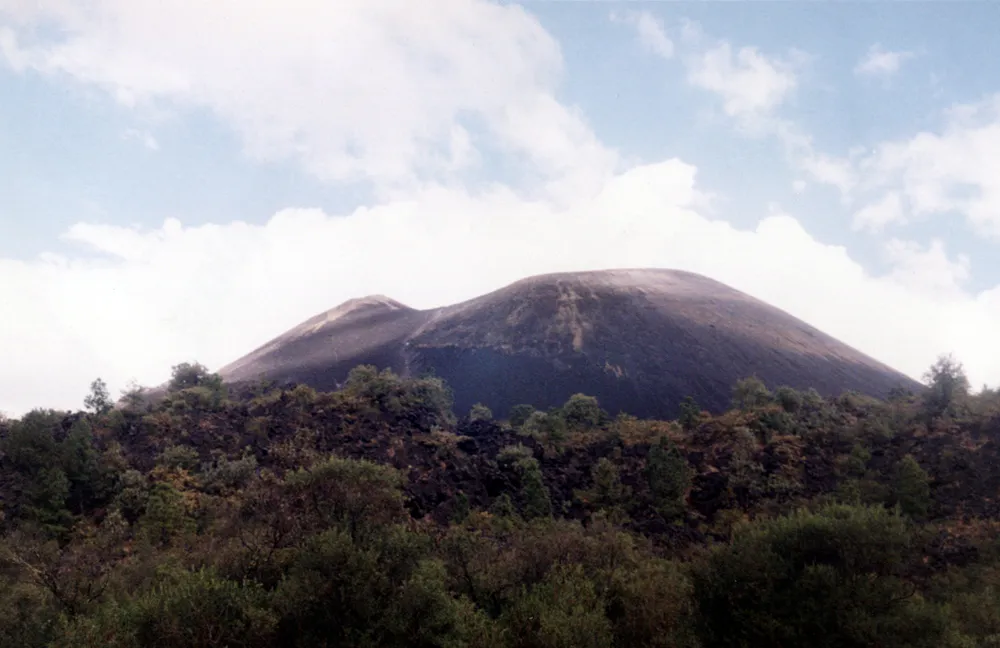
Parícutin (or Volcán de Parícutin, also accented Paricutín) is a cinder cone volcano located in the Mexican state of Michoacán, near the city of Uruapan and about 322 kilometers (200 mi) west of Mexico City. The volcano surged suddenly from the cornfield of local farmer Dionisio Pulido in 1943, attracting both popular and scientific attention.
Parícutin presented the first occasion for modern science to document the full life cycle of an eruption of this type. During the volcano's nine years of activity, scientists sketched and mapped it and took thousands of samples and photographs. By 1952, the eruption had left a 424-meter-high (1,391 ft) cone and significantly damaged an area of more than 233 square kilometers (90 mi2) with the ejection of stone, volcanic ash and lava. Three people were killed, two towns were completely evacuated and buried by lava, and three others were heavily affected. Hundreds of people had to permanently relocate, and two new towns were created to accommodate their migration. Although the larger region still remains highly active volcanically, Parícutin is now dormant and has become a tourist attraction, with people climbing the volcano and visiting the hardened lava-covered ruins of the San Juan Parangaricutiro Church.
In 1997, CNN named Parícutin one of the Seven Natural Wonders of the World. The same year, the disaster film Volcano mentioned it as a precedent for the film's fictional events.
Adapted from Wikipedia (CC BY-SA). Photography via Wikimedia Commons.