
Lake Puma Yumco
See all in People's Republic of China →
People's Republic of China · Asia
About
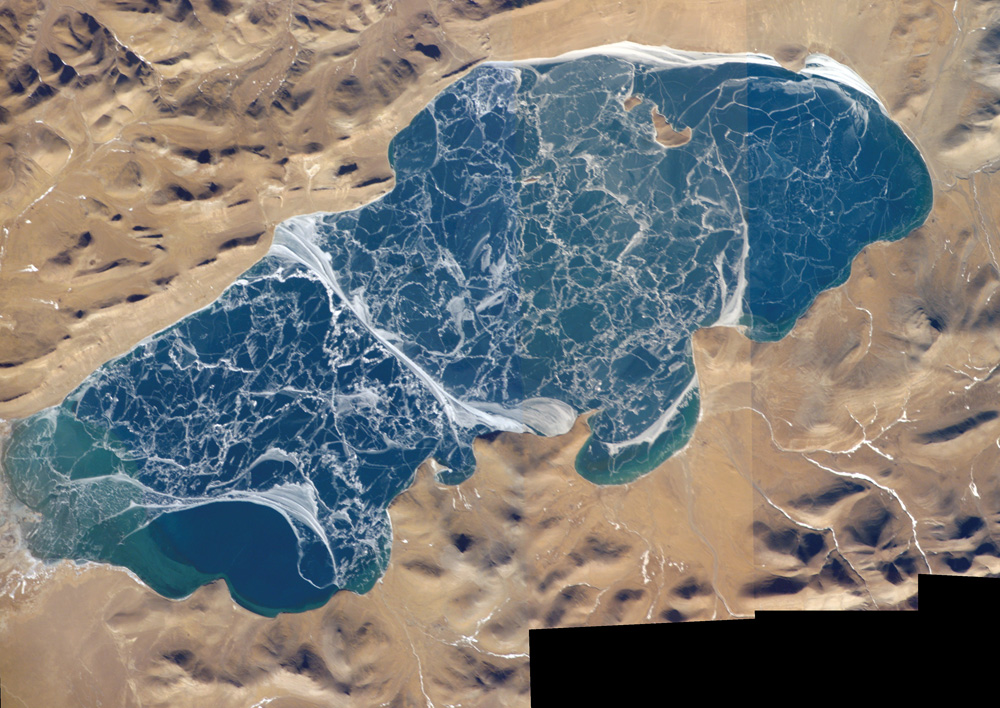
Puma Yumco (Tibetan: ཕུ་མ་གཡུ་མཚོ; Wylie: phu ma g.yu mtsho; pinyin: Pǔmò Yōngcuò) is a lake located at 5,030 m (16; 500 ft) above mean sea level on the southern Tibetan Plateau, and is situated within Nagarzê County of the Tibet Autonomous Region. It is 32 km (20 mi) long, 14 km (8.7 mi) wide, and covers an area of 280 km2 (110 sq mi). Streams of water from the snow-capped surrounding mountains feed the lake, and its water surplus flows into Yamdrok Lake via an outlet located at its southeastern end. Some sediment can be seen entering the lake at its western end.
Puma Yum literally means The Blue Jewel which is floating in the sky. The lake freezes in winter and is crossed by shepherds with their sheep. The lake is considered ultraoligotrophic, meaning that nutrient concentrations in both the water column and lake sediments are extremely low. Water in such lakes tends to be blue to blue-green and to have high clarity due to low levels of photosynthesizing organisms such as phytoplankton.
During the winter, the lake develops intricate ice block patterns on the surface, ranging from less than ten to hundreds of metres in diameter. The ice pattern is caused by repeated cycles of freezing, fracturing, and refreezing of the ice due to variations in temperature and wind-induced ice motion.
Adapted from Wikipedia (CC BY-SA). Photography via Wikimedia Commons.