
Arranmore
Ireland · Europe
About
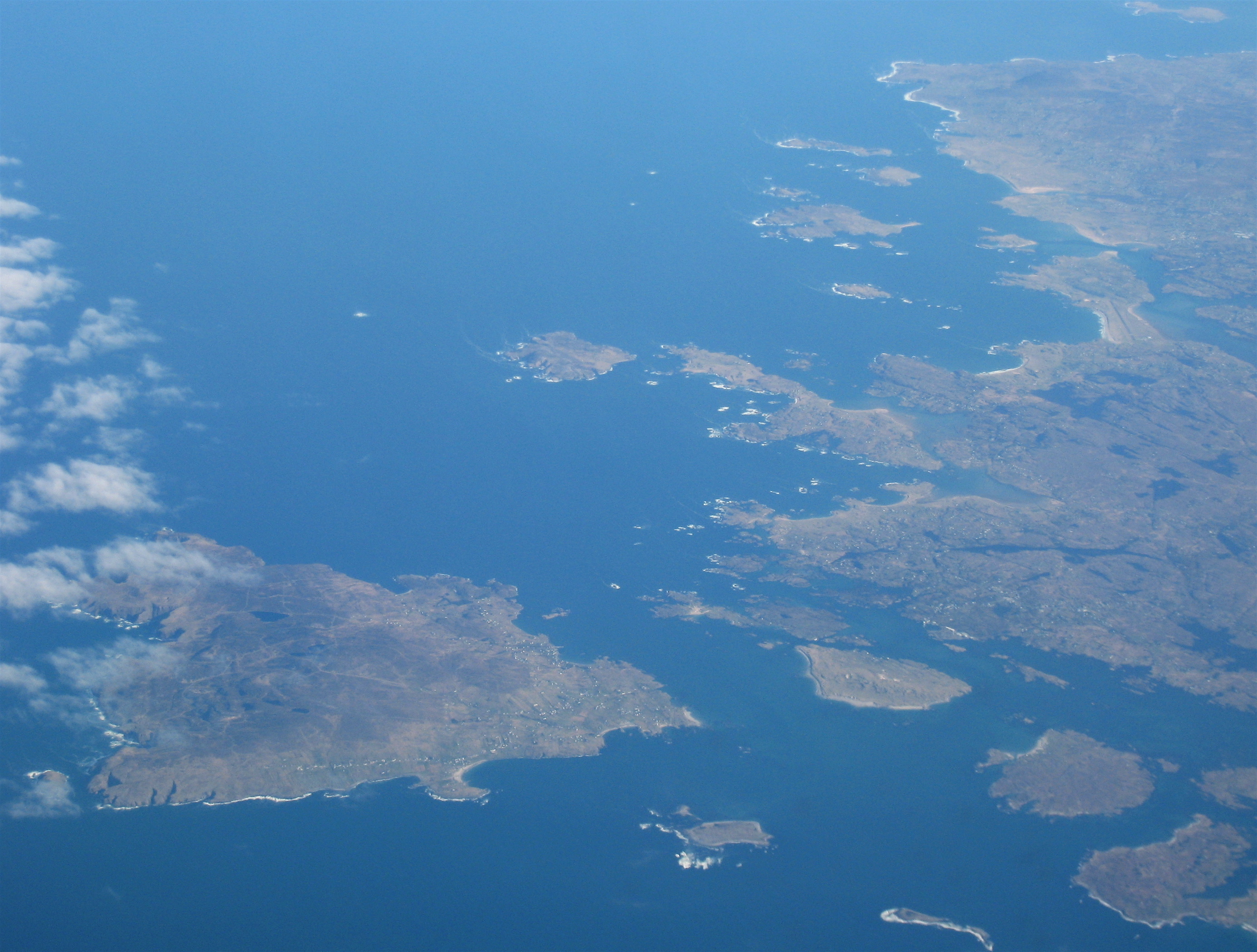
Árainn Mhór (English name: Arranmore) is an island off the west coast of County Donegal in the north-west of Ulster, the northern province in Ireland. It is the county's largest inhabited island, with a population of 478 in 2022, but has had a gradually falling native population since the 1990s. Its main settlement is Leabgarrow. The island is part of the Gaeltacht, with most of the inhabitants speaking Ulster Irish. It is also known in English as Aran Island (not to be confused with the Aran Islands off Galway Bay or the Scottish Isle of Arran). In Irish it was traditionally called Árainn; the adjective mór (large) was added fairly recently. It was also sometimes called Árainn Uí Dhomhnaill, 'Aran of the O'Donnells'.
In 2019, islanders wrote open letters to the United States and Australia, asking people to consider moving to the island. They encouraged both populations to come to the less crowded island and enjoy "time for living". In 2022, following the 2022 Russian invasion of Ukraine, the island became a refuge for Ukrainian refugees who were resettled in Ireland.
As of 2016 there were 469 people living on Arranmore, of which 62% were native Irish speakers. During the summer, students of all ages from all over Ireland travel to the island for a 3-week holiday. It is a very popular way of meeting new people and also learning the Irish language. Students attend school during the day and play games and ceilí dance in the evenings. They are taught about the Irish language through Irish. Irish must be spoken at all times. The college on Arranmore is known as Coláiste Árainn Mhóir, meaning the College of Arranmore.
The island lies 5 km (3 mi) off Burtonport, a small coastal village in The Rosses. The island is served by two ferry services, which operate between Arranmore and Burtonport on the mainland. The two operators make use of bow-loading vessels either custom built for their use, or previously built for the Scottish ferry operator Caledonian MacBrayne (CalMac), allowing both to carry passengers, cars, and heavy-goods vehicles.
Most of the population lives along the southern and (comparatively sheltered) eastern coast, where the main village, Leabgarrow (Irish: Leadhb Gharbh), is located. The island has been settled since pre-Celtic times, and the few remaining signs of early settlement include a promontory fort to the south of the island and shell middens dotted along the beaches. Its position near the Atlantic shipping lanes was exploited, with a coast guard station and a lighthouse positioned on the most north-westerly point, and a World War II monitoring post. The permanent population is 478, but this rises to well over 1,000 during the summer. A large proportion of the housing stock is holiday homes, with both native islanders and their descendants, as well as nonlocals. Due to the long decline in population, in 2019, the local government began trying to entice Americans and Australians to move to the island.
The island was the first offshore island in Ireland to get electricity from the Rural Electrification Scheme, run by the E.S.B., in 1957, but was amongst the last places in the country to get universally reliable piped water (in 1973–75) and an automatic phone exchange (in 1986). It went directly from a manual switchboard to an ISDN-enabled system, which had to be upgraded within weeks due to massive demand for consumer phone lines, as the previous exchange had been limited to issuing numbers to business ventures only, and only had 47 internal lines. It relies mostly on tourism for its income (fishing was the island's mainstay up to the 1980s but is no longer a significant industry), as well as the traditional Gaeltacht summer schools. In recent years, a local development co-op has encouraged the development of other industries on the island, such as a call centre and teacher training for Irish teachers. The island's many lakes provide rod fishing opportunities.
Adapted from Wikipedia (CC BY-SA). Photography via Wikimedia Commons.