
Zhoukoudian site
See all in People's Republic of China →
People's Republic of China · Asia
About
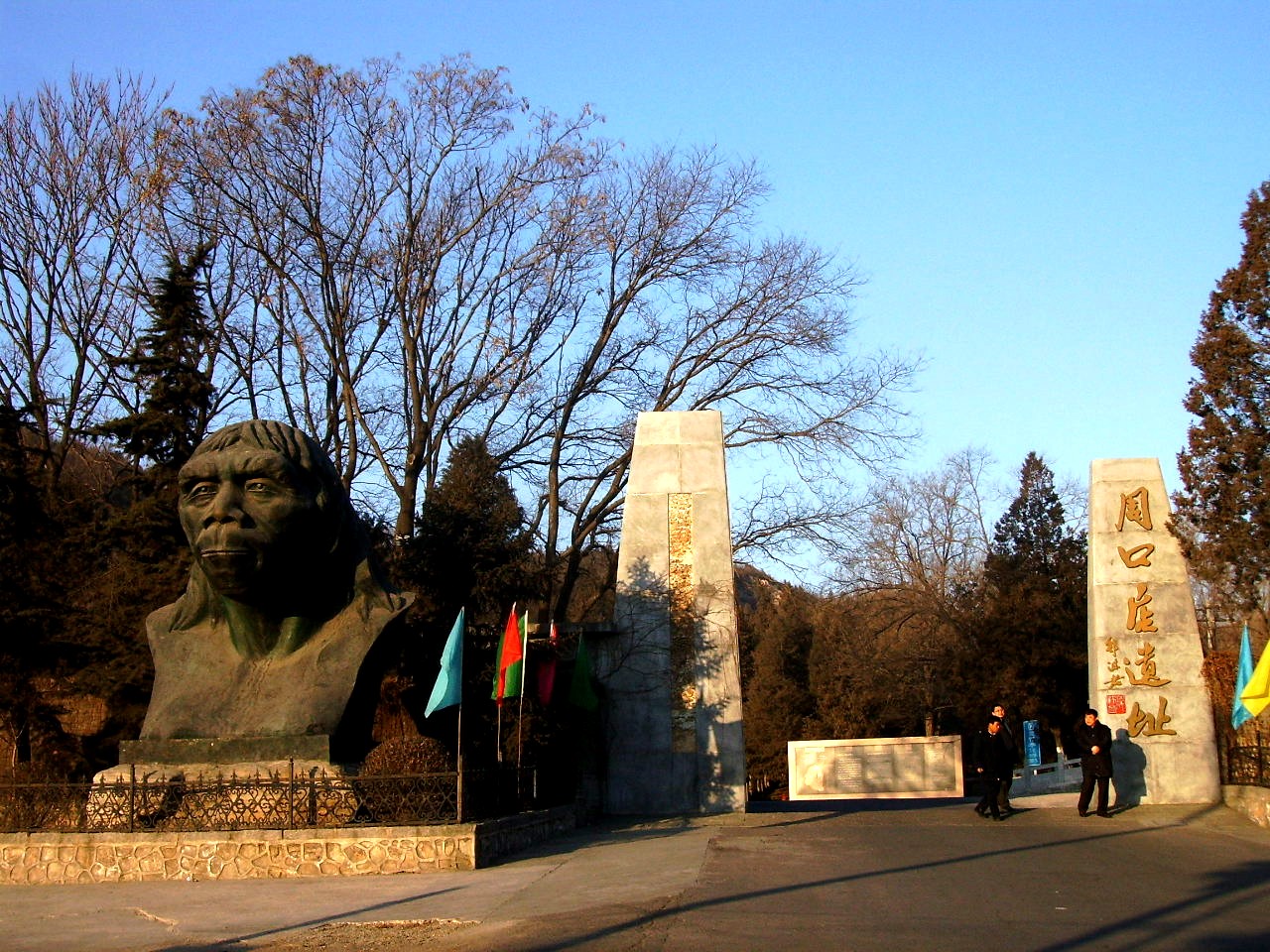
Zhoukoudian Peking Man Site, also romanized as Choukoutien, is a cave system in suburban Fangshan District, Beijing. It has yielded many archaeological discoveries, including one of the first specimens of Homo erectus (Homo erectus pekinensis), dubbed Peking Man, and a fine assemblage of bones of the giant short-faced hyena Pachycrocuta brevirostris.
Due to differing interpretations of the evidence, proposed dates for when Peking Man inhabited this site vary greatly, including: 700,000–200,000 years ago, 670,000–470,000 years ago, or no earlier than 530,000 years ago.
The Peking Man Site was first discovered by Johan Gunnar Andersson in 1921, and was first excavated by Otto Zdansky in 1921 and 1923, unearthing two human teeth. These were later identified by Davidson Black as belonging to a previously unknown species, and extensive excavations followed. Fissures in the limestone-containing middle Pleistocene deposits have yielded the remains of about 45 individuals, as well as animal remains, and stone flake and chopping tools.
The oldest animal remains date from as early as 690,000 years ago, with tools as old as 670,000 years ago, while another authority dates the tools found as no earlier than 530,000 years ago. During the Upper Palaeolithic, the site was re-occupied, and remains of Homo sapiens and their stone and bone tools have also been recovered from the Upper Cave.
The crater Choukoutien on asteroid 243 Ida was named after the location. The caves are located in Zhoukoudian Town, Fangshan District, southwest of central Beijing.
Adapted from Wikipedia (CC BY-SA). Photography via Wikimedia Commons.