
Okavango Delta
Botswana · Africa
About
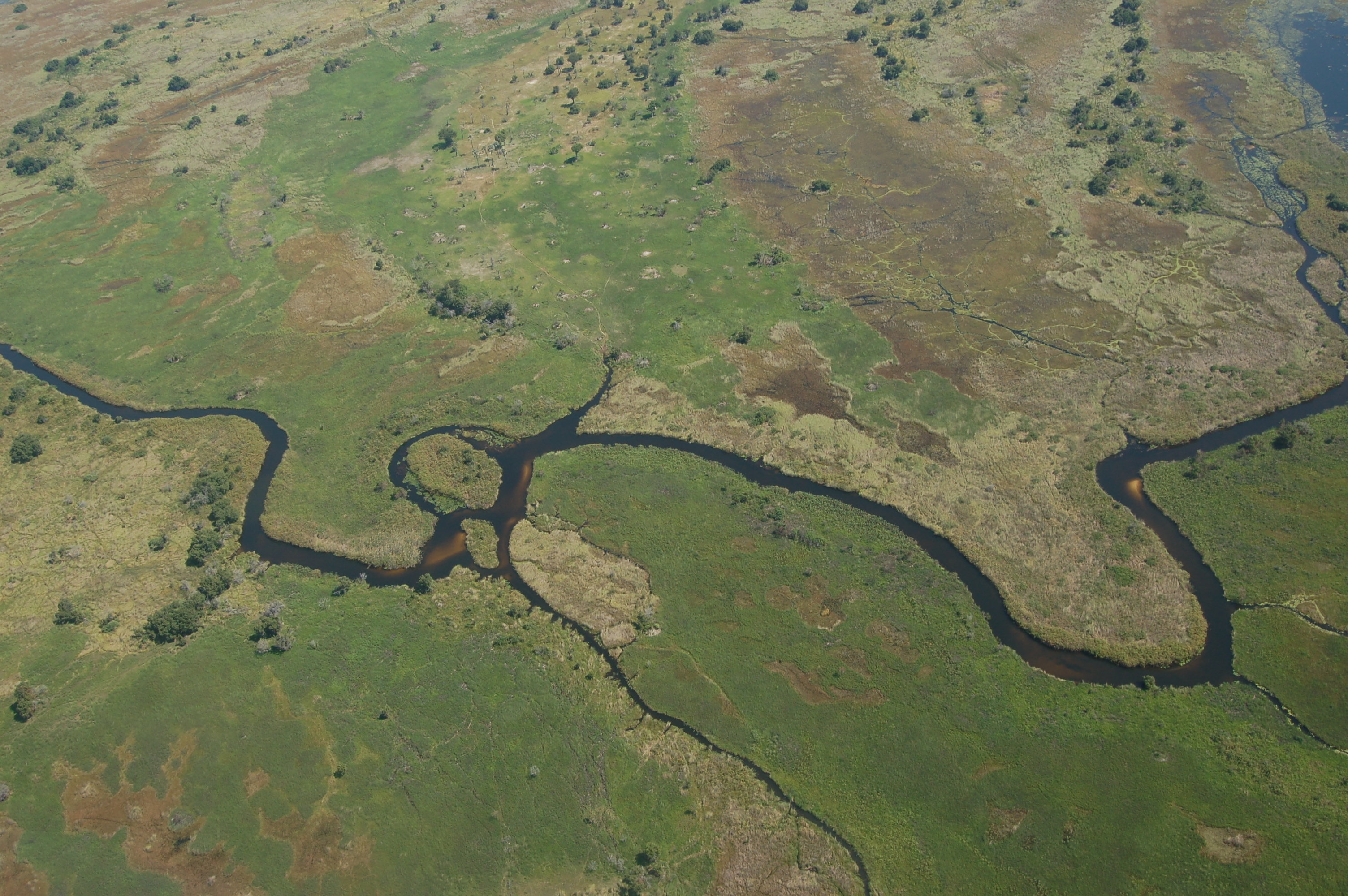
The Okavango Delta or Okavango Grassland is a vast inland delta in Botswana formed where the Okavango River reaches a tectonic trough at an elevation of 930–1,000 m (3,050–3,280 ft) in the central part of the endorheic basin of the Kalahari Desert.
It is a UNESCO World Heritage Site as one of the few interior delta systems that do not flow into a sea or ocean, with a wetland system that is largely intact. Instead, the floodwater spreads over sandy floodplains and islands, and a large share seeps downward into the shallow alluvial aquifer beneath, before it is taken up by plants. Nearly all the water reaching the delta is ultimately evaporated and transpired.
Each year, about 11 km3 (2.6 cu mi) of water spreads over the 6,000–15,000 km2 (2,300–5,800 sq mi) area. Some flood waters drain into Lake Ngami. The area was once part of Lake Makgadikgadi, an ancient lake that had mostly dried up by the early Holocene.
The Moremi Game Reserve is on the eastern side of the delta. The delta was named one of the Seven Natural Wonders of Africa, which were officially declared on 11 February 2013 in Arusha, Tanzania. On 22 June 2014, the Okavango Delta became the 1000th site to be officially inscribed on the UNESCO World Heritage List.
Adapted from Wikipedia (CC BY-SA). Photography via Wikimedia Commons.