
Neusiedl Lake
Austria · Europe
About
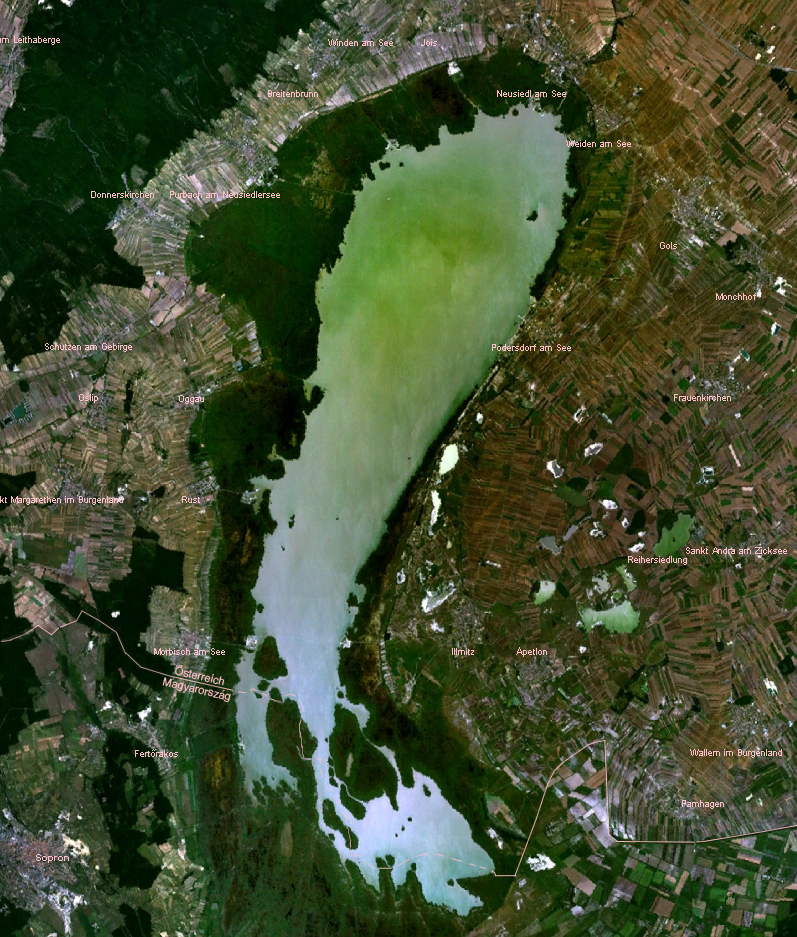
Lake Neusiedl (German: Neusiedler See, pronounced [ˈnɔʏˌziːdlɐ ˈzeː] ; Croatian: Nežidersko jezero or Niuzaljsko jezero; Slovene: Nežidersko jezero; Slovak: Neziderské jazero; Czech: Neziderské jezero) or Lake Fertő (Hungarian: Fertő tó), is the largest endorheic lake in Central Europe, straddling Austria and Hungary. The lake is saline and covers 315 km2 (122 sq mi), of which 240 km2 (93 sq mi) is on the Austrian side and 75 km2 (29 sq mi) on the Hungarian side. Its drainage basin is about 1,120 km2 (430 sq mi), about three times its size excluding the lake itself. From north to south, the lake is about 36 km (22 mi) long, and it is between 6 km (3+1⁄2 mi) and 12 km (7+1⁄2 mi) wide from east to west. On average, its surface is 115.45 m (378.8 ft) above the Adriatic Sea and it is no more than 1.8 m (5 ft 11 in) deep.
The surrounding landscape has been occupied since about 6000 BC, and the towns and villages around the lake have been trading and meeting points for local people and wider cultures for centuries. Given its cultural importance and the often handed-down, rustic architecture of the villages, Lake Neusiedl and environs is inscribed on the UNESCO World Heritage List since 2001.
Adapted from Wikipedia (CC BY-SA). Photography via Wikimedia Commons.