
Goguryeo tombs
North Korea · Asia
About
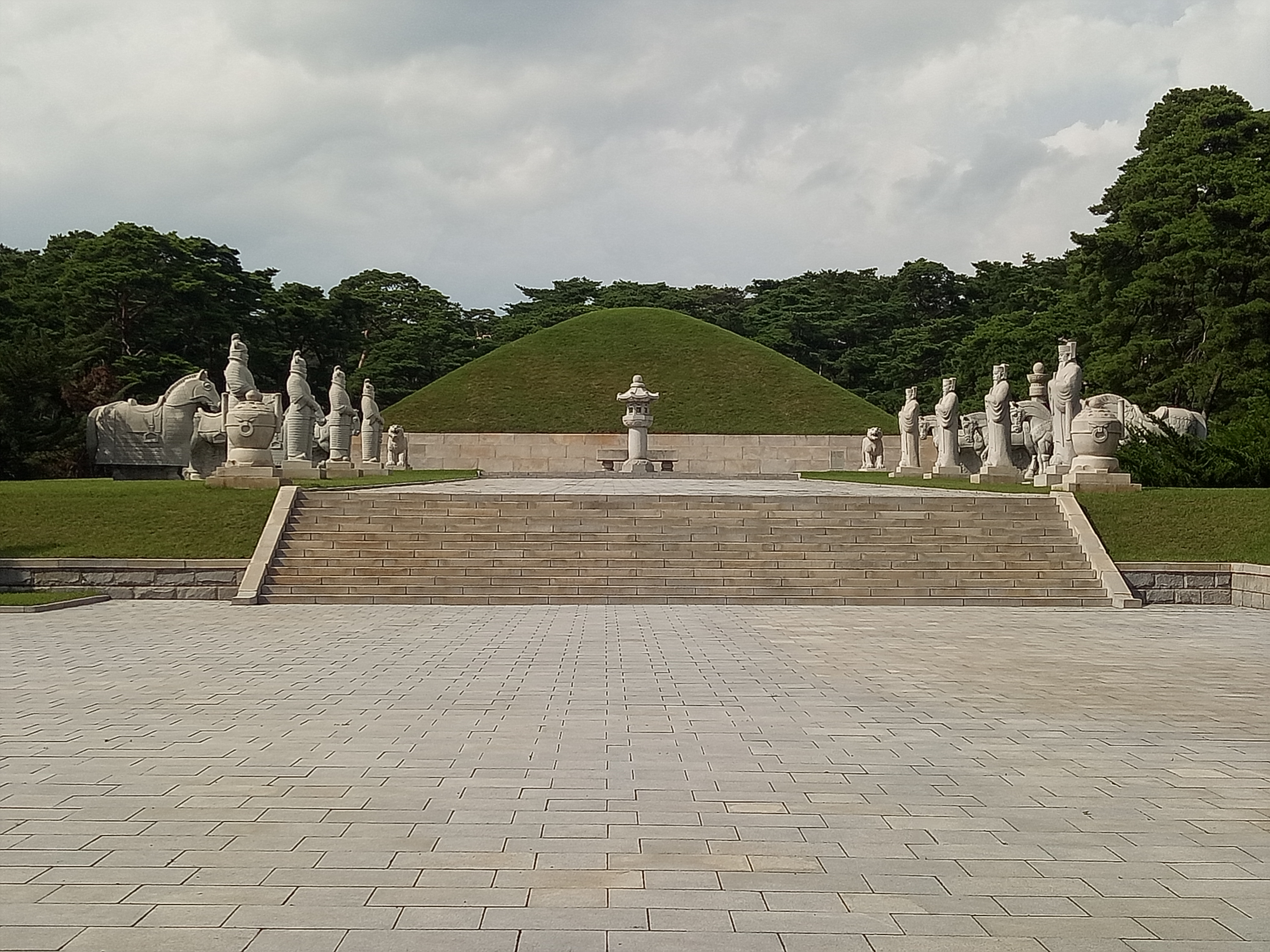
Goguryeo tombs, officially designated as the Complex of Koguryo Tombs (Korean), are tombs in North Korea. In July 2004, they became the first UNESCO World Heritage site in the country. The site consists of 30 individual tombs from the later Goguryeo kingdom, one of Three Kingdoms of Korea, located in the cities of P'yŏngyang and Namp'o. Goguryeo was one of the strongest ancient Korean kingdoms located in the northern and central parts of the Korean Peninsula and the southern and central parts of Manchuria. The kingdom was founded in the present day area of North Korea, and part of Manchuria around 37 BCE, and the capital was transferred to P'yŏngyang in 427 CE.
Many of the tombs, such as the Anak Tomb No. 3, have wall paintings. The tombs are almost all of the Goguryeo culture that survives. There are over 10,000 Goguryeo tombs overall, but only about 90 of those unearthed in China and Korea have wall paintings. The Complex of Goguryeo Tombs inscribed on the World Heritage List contains the majority of these tombs with wall paintings. It is thought that the complex was used as a burial site for kings, queens and other members of the royal family. The paintings found on the tombs offer a unique insight into the everyday life of the Goguryeo period. The group includes the Tomb of King Tongmyong.
The murals are strongly coloured and show daily life and mythology of the time. By 2005, 70 murals had been found, mostly in the Taedong river basin near Pyongyang, the Anak area in South Hwanghae province, and in Ji'an in China's Jilin province.
The following criteria were considered by UNESCO to merit the Goguryeo tombs' inscription as a World Heritage site:
The wall paintings are masterpieces of the Goguryeo period. The tombs themselves reflect ingenious engineering capabilities.
Adapted from Wikipedia (CC BY-SA). Photography via Wikimedia Commons.