
Champaner-Pavagadh Archaeological Park
India · Asia
About
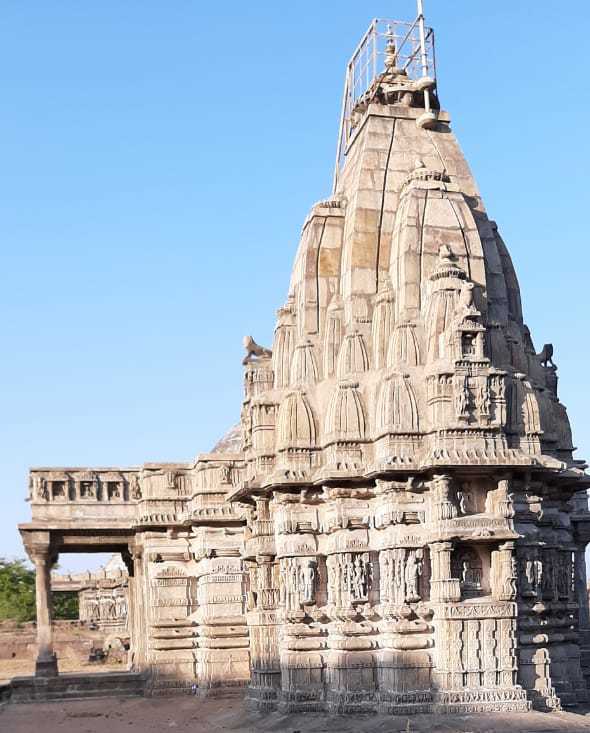
Champaner-Pavagadh Archaeological Park, a UNESCO World Heritage Site, is located in Panchmahal district in Gujarat, India. It is centered around the historic city of Champaner, which was founded by Vanraj Chavda, the most prominent king of the Chavda Dynasty, in the eighth century. He named it after his friend and general, Champa, also known later as Champaraj. The heritage site contains forts with bastions starting from the hills of Pavagadh, and extending into the city of Champaner. The park includes archaeological, historical, and living cultural heritage monuments, including Chalcolithic sites, a hill fortress of an early Hindu capital, and remains of the 16th-century capital of the state of Gujarat. There are palaces, entrance gates and arches, mosques, tombs and temples, residential complexes, agricultural structures and water installations such as stepwells and tanks, dating from the eighth to the 14th centuries. The Kalika Mata Temple, located on top of the 800 metres (2,600 ft) high Pavagadh Hill, is an important Hindu shrine in the region, attracting pilgrims throughout the year.
The transition between Hindu and Muslim culture and architecture in the late 15th to early 16th century is documented in the park, particularly the early Islamic and pre-Mughal city that has remained largely unchanged. It was inscribed on the UNESCO World Heritage List in 2004.
Adapted from Wikipedia (CC BY-SA). Photography via Wikimedia Commons.