
Aapravasi Ghat
Mauritius · Africa
About
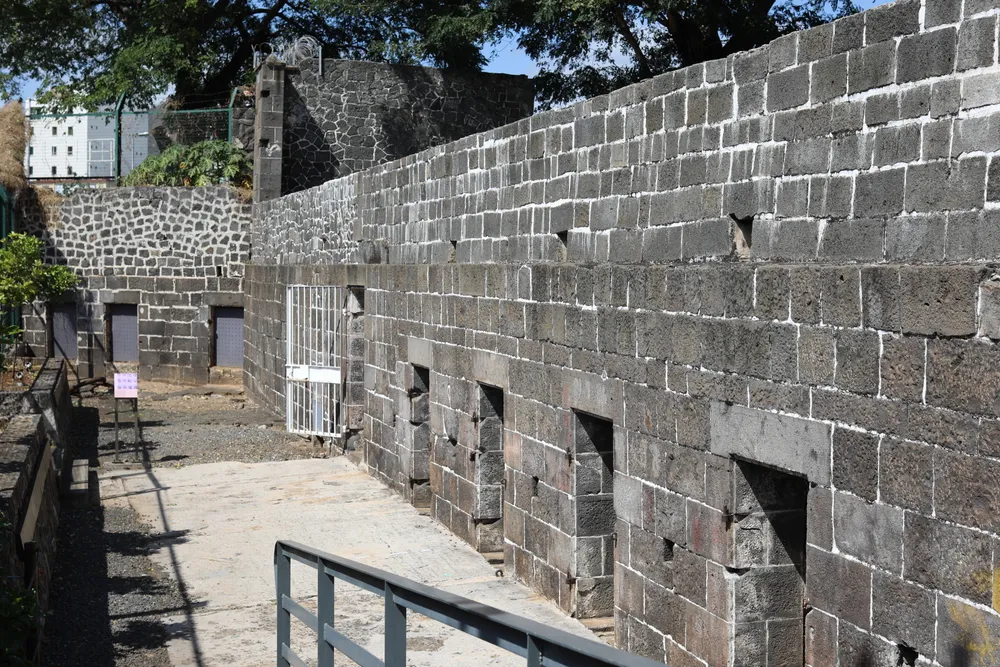
Aapravasi Ghat ('The Immigration Depot') is a building complex located in Port Louis, Mauritius, the first British colony to receive indentured, or contracted, labour workforce from many countries. From 1849 to 1923, half a million Indian indentured labourers passed through the Immigration Depot, to be transported to plantations throughout the British Empire. The large-scale migration of the labourers left an indelible mark on the societies of many former British colonies, with Indians constituting a substantial proportion of their national populations. In Mauritius alone, 68 percent of the current total population is of Indian ancestry. The Immigration Depot has thus become an important reference point in the history and cultural identity of Mauritius.
Unchecked infrastructural development in the mid-20th century means that only the partial remains of three stone buildings from the entire complex have survived. These are now protected as a national monument, under the Mauritian national heritage legislation. The Immigration Depot's role in social history was recognized by UNESCO when it was declared a World Heritage Site in 2006. The site is under the management of the Aapravasi Ghat Trust Fund. Conservation efforts are underway to restore the fragile buildings to their 1860s state. It is one of two World Heritage Sites in Mauritius, along with Le Morne Brabant.
The word ghat is explained by numerous Dravidian etymons such as Kannada gatta (mountain range) Tamil kattu (side of a mountain, dam, ridge, causeway) and Telugu katta and gattu (dam, embankment). Ghat, a term used in the Indian subcontinent, depending on the context could either refer to a range of stepped-hill such as Eastern Ghats and Western Ghats; or the series of steps leading down to a body of water or wharf, such bathing or cremation place along the banks of a river or pond, Ghats in Varanasi, Dhoby Ghaut or Aapravasi Ghat. Roads passing through ghats are called Ghat Roads.
The name Aapravasi Ghat, which has been in use since 1987, is a direct Hindi translation of "Immigration Depot". Aapravasi is the Hindi word for "immigrant", while ghat literally means "interface"—factually reflecting the structure's position between the land and sea, and symbolically marking a transition between the old life and the new for the arriving indentured immigrants. Alluding to its function as a pit stop to prospective plantation workers, alternatively called coolies, the Immigration Depot has also been known by an older name, the 'Coolie Ghat'. The prominent use of the Hindi language in Mauritian naming conventions is based on social and ethnic demographics; over half the national population is of Indian ancestry, a direct result of the Indian labour diaspora that passed through the Immigration Depot. In Bihar and Uttar Pradesh, from where majority of these Indian Labourers where brought,"Ghat" is referred to River Bank which is used for Docking of Boats.
The Immigration Depot was built on the east side of the sheltered bay of Trou Fanfaron in Port Louis, the Mauritian capital. The historic complex currently consists of the partial remains of three stone buildings dating back to the 1860s, built on the spot of an earlier depot site. It consists of the entrance gateway and a hospital block, remnants of immigration sheds, and vestiges of the service quarters. Subsequent land reclamations as a result of urban development have moved the Immigration Depot's location further inland. The Caudan Waterfront, a marina developed as an economic and tourist centre, is situated beyond the site.
The area where the building complex is situated, Trou Fanfaron, was the landing point for the French East India Company, which took possession of Mauritius in 1721. Slaves were imported from Africa, India and Madagascar to construct defensive walls and a hospital during the early phase of settlement. By the mid-18th century, sugar plantations had been developed on the Island of Mauritius, utilizing slave labour. In 1810, during the Napoleonic Wars, Mauritius passed to British control, as confirmed in the Treaty of Paris, at a time when the British Empire was expanding its influence in the Indian Ocean region. British commercial interest led to the rise in the production of sugar, which became the most valuable commodity in European trade beginning in the mid-18th century throughout the empire in general, leading to the development of infrastructure for Port Louis as a free port in particular.
Adapted from Wikipedia (CC BY-SA). Photography via Wikimedia Commons.