
Zarafshan
Tajikistan · Asia
About Zarafshan
The Zeravshan Valley is a region in west-central Tajikistan. Zarafshan (also spelt Zeravshon or Zeravshan) is a Persian word meaning "spreader of gold", and is named for the river that carves out the valley. This region is probably the most well-known region for the average tourist due to its stunning remote alpine scenery and historic sites like Panjakent while still being easily accessible from the Tajik capital Dushanbe and major tourist sites in neighboring Uzbekistan like Samarkand.
Zarafshan travel guide
Understand
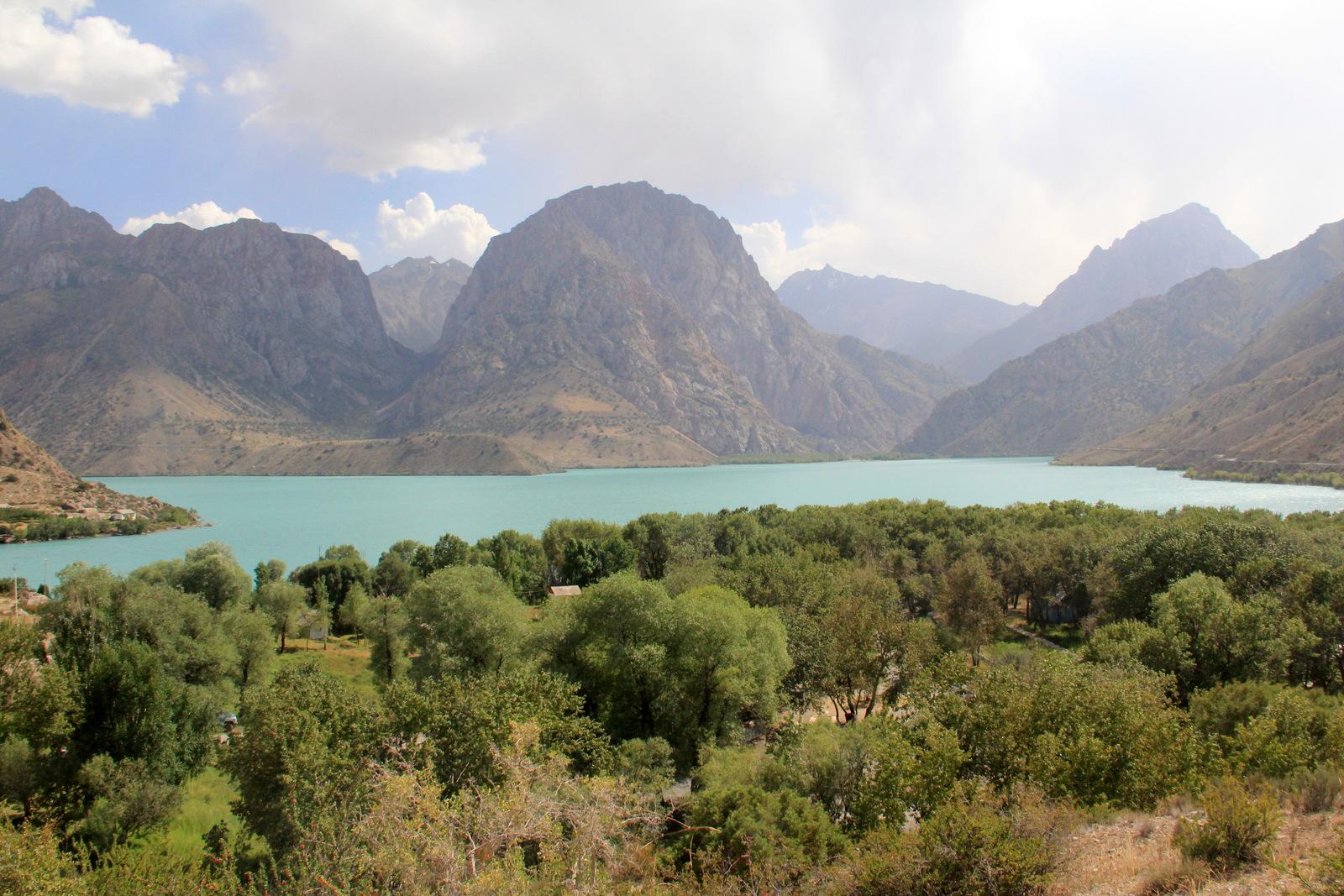
The Zeravshan Valley (also Zarafshan or Zarafshon) is in northern Tajikistan, embedded between the impressive mountain ranges of the western Pamir-Alai massive. “Zeravshan”, which means “Spreader of Gold” in Tajik, is the main river which crosses the valley and which supplies its inhabitants with a most precious resource: water. The area is famous for its unique mountain landscapes and its beautiful lakes: the Alauddin lakes, the Kulikalon lakes, Iskanderkul Lake, the seven lakes of Shing among many others. While being an important tourism and recreation destination during the Soviet era of dispatch tourism, it is now an insiders' tip among those interested in mountain trekking, alpinism/mountain climbing and the little traveled branches of the Silk Road. The Tajiks and their ancestors, an Indo-Iranian speaking people called the Sogdians, have lived for more than 1500 years along the Zeravshan valley; a history which is still visible at the Old Panjakent archaeological sites and the remote Yaghnob valley (in fact, the Yaghnob valley is the only place in the world where the direct descendant of Sogdian is still spoken). Several specialized tour operators in Europe and Uzbekistan are offering guided trekking and cultural tours to the area, normally in combination with visits to the Silk Road highlights Samarkand and Bukhara. Independent travelers will find a good network of local operators in Panjakent who can arrange trips on the spot. With support of international development agencies, the quality and variety of services has been improved to meet international standards.
Getting there
Most visitors enter the Zeravshan valley from Samarkand, which is just across the border to Uzbekistan. You will need a valid Tajik visa to enter and a double/multi-entry Uzbek visa if you intend to return the same way you came. There is no public transport crossing the border and unless you have arranged your trip through a tour agent, you will have to switch taxis at the border. The border crossing between Uzbekistan and Tajikistan near Penjikent and Samarkand reopened in 2018, and there seems to be no indication that either side will close it soon. But given the sometimes volatile relationship between Tajikistan and Uzbekistan, there's no guarantee that the border will remain open at any given time. The nearest other border crossing is in Oybek, 250 km from Samarkand and an hour's ride from Khujand. Additional entry routes are from Khujand or Dushanbe. Both are spectacular but also tiresome trips in shared taxi over passes as high as 3600m. In 2009 the price for a seat was about С140 for the Dushanbe-Panjakent bit. The roads range from virtually absent to first league, depending on whether you travel on the original road or one of the bits already repaired. If you are entering from Dushanbe, you will have to cross the once-infamous Anzob tunnel, which was extensively refurbished and reopened in late 2015. Panjakent and Ayni have airports from which small planes occasionally fly to Dushanbe. There is no schedule. Normally, if the passes are closed and enough potential travelers have assembled, Tajik Air runs a trip or two.
Getting around
There is no functional public transport in the Zeravshan valley, but shared taxis are an inexpensive and reliable way to get around along the main road. In Panjakent, the main taxi (and bus) station is in the east of the city (well past the bazaar). If you are heading for smaller settlements you will need to book a whole car if you don't want to wait for ages for enough passengers to assemble. You can either try your bargaining luck at the taxi station or book through one of the local travel agencies who will normally give you a good deal as well. Make sure you get a 4WD vehicle if heading for the mountains - 2WD taxis tend to overestimate the offroad ability of their vehicles. There is a major road connecting the Uzbek border with Panjakent, Zeravshan city, and Ayni (which connects with the main north-south road that connects Khujand with Dushanbe). Roads to smaller settlements spur off from this road, but are often of lesser quality.
See
Old Panjakent -The archaeological site of the ruins of old Panjakent- a walled inter-city which stood 2500 years ago - was once a Sogdian trading city on the Silk Road. Today only ruins are left owing to the fact that the main construction material was clay-bricks. Often referred to as “The Pompeii of Central Asia”, it is well worth a visit. Duplicates of old Sogdian art are exhibited in the nearby museum. The director will also take you on a tour, which will open your eyes to the interesting details which will normally escape the layman's eye. If 2500 years doesn’t seem to suffice, 20 km further, one may find the oldest settlement in all Central Asia – Sarazm. The name Sarazm (or Sari Zamin) aptly means “the beginning of the world” for this site which is more than 5500 years old. More than 6000 people used to live here making it the oldest city in Central Asia. Sarazm has been listed on the UNESCO World Heritage List. The nearby museum shows archaeological finds including a picture of the discovered skeleton of the multi-millennia princess of Sarazm adorned with her impressive jewellery. The original is on display in the capital Dushanbe. The seven pearls of the Shing - A string of seven lakes, each with its particular color and flora embedded in an impressive mountain scenery is a must-see in the Zeravshan valley. The lowest lake is a 1½-hour drive from Panjakent and the point of departure for numerous trekking routes. If your luggage is heavy, you will find porter donkeys in the villages. During the high season it might be prudent though to arrange donkeys beforehand through a travel agency, as the animals are still used by farmers in their daily work.
Fann mountains - The Fann Mountains constitute the westernmost portion of the Pamirs within Tajikistan, falling roughly equidistant from Panjakent, Istaravshan, and Dushanbe. Although strictly part of the dramatic Pamir-Alay range, the Fanns offer greener, gentler mountainscapes than the Gorno-Badakhshan region.
Eat
If you are looking for a good meal, your homestay or one of the few restaurants in Panjakent are your best bet. There is a chaikhana (teahouse) serving the odd shashlik in every bigger settlement but cuisine is often not of the highest level. As elsewhere in Central Asia, the diet is based on the staples rice and mutton. If you have the opportunity to eat in a private house (homestay) make use of it, in order to witness the full splendor of Tajik hospitality. Panjakent and Ayni offer fairly well-stocked local bazaars where you can fill up your supplies. Make sure you bring enough food when going to the mountains independently - in the higher parts of the valley markets tend to be very small and in remote villages, you may only find fresh bread. Make sure to wash (with clean water) and peel any produce you buy before you eat it. The tap water in the region is not of good quality, so it is
Overview adapted from Wikipedia, travel guide fromWikivoyage (CC BY-SA). Photography via Wikimedia Commons.