
Yucatan Peninsula
Guatemala · Americas
About Yucatan Peninsula
The Yucatán Peninsula is a region of southeastern Mexico, consisting of the Mexican states of Yucatán, Campeche, and Quintana Roo. The adjacent states of Tabasco and Chiapas are also considered part of the Yucatan region on Wikivoyage.
The Yucatán was the home of the Maya civilization before it was conquered by the Spanish Conquistadors in the 16th century. Much of the population is part or all of Maya descent, and in many places the Mayan language is still spoken, usually in addition to Spanish, the main language of business.
Until the mid-20th century, most of the Peninsula's trade with the rest of Mexico was by sea, and the culture, cuisine, and traditions developed different flavors from other parts of Mexico. Starting in the late 20th century the Yucatán has become more integrated into Mexico, especially such areas on the Caribbean coast as Cancún and Chetumal, where many people from other parts of the nation have moved to take advantage of the economic opportunities of development. The Mayan Riviera stretching south from Cancún has seen the most growth related to tourism and the Caribbean coast south of Sian Ka'an is now being referred to as the Costa Maya and is seeing interest from cruise lines as well as beach lovers seeking solitude (which can still be found in southern Quintana Roo, but for how long?).
Yucatan Peninsula travel guide
Understand
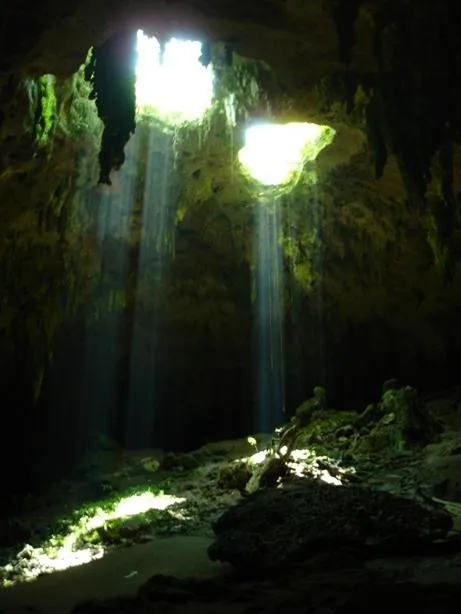
The Yucatán has a rich cultural history. Yucatán is famous for ancient Maya ruins such as Chichén Itzá. Contrary to what some people may think, Mayan culture never "disappeared" and is still very much alive, with most of the Yucatán still predominantly being ethnically Maya. Referring to locals as Mexican rather than Maya, may risk offending them. During colonial rule and after independence, the Yucatan remained culturally distinct from the rest of Mexico because of its isolation. With the first railway and highways only linking it with the rest of the country from the mid-20th century. Before that most trade was by sea with Cuba, Spain and the rest of Mexico. The region has had a turbulent history. The Maya civilization flourished in the Yucatán Peninsula for more than a thousand years before the Yucatán was conquered by the Spanish in the 1500s. After the Spanish conquest, the region had a colonial caste system with Spanish-born Europeans on top of the social ladder, and pure Mayans coming last. Independence was declared in 1821 before joining Mexico in 1823. Independence was declared for the second time in 1841, with the region remaining independent for seven years, and even flirting with annexation by the United States (the bill even cleared the House of Representatives). In 1847, a caste war broke out between the Mayans and European-descended Criollos. After the war, an independent Mayan state controlled a large part of Quintana Roo, roughly stretching from Tulum to the Belize border. This area was reincorporated into Mexico at the beginning of the 20th century. The Yucatan has a distinctive ecosystem as a vast limestone peninsula. Ecologically, it's very different from the rest of tropical Mexico, and more similar to Northern Guatemala and Belize, being all on the same peninsula and in geographical Central America. One of the unique features of the landscape are Cenotes. Cenotes are caves or pools of stagnant water that were formed by erosion of limestone. Th
Getting there
By plane Cancún#By plane'Cancún International Airport (CUN IATA); Cozumel International Airport (CZM IATA), Manuel Crescencio Rejón International Airport (Merida) (MID IATA), and Tulum International Airport (TQO IATA) are the most popular entry points to the Yucatan peninsula from all over Mexico. There are direct international flights from Canada, Cuba (handy for unofficial visits to Cuba), Europe, Central America, the United States and South America into Cancun and Tulum and only from the United States and Canada to Merida and Cozumel. There are also alternative airports with connections from Mexico which may be closer to your final destination in:
Angel Albino Corzo Airport (TGZ IATA) in Tuxtla Gutierrez is the largest airport in Chiapas state closest to San Cristobal de las Casas, Comitan, Chiapas de Corzo and Cañón Sumidero. Alberto Acuña Ongay International Airport (CPE IATA) Smaller airport south of Campeche with domestic flights from Mexico City only. Chetumal International Airport (CTM IATA) Smaller airport in Chetumal with domestic flights from Mexico City and international connections from Belize City with Tropic Air. It is also another transit point for onward travel to Flores, Guatemala (Tikal) and to Belize from Mexico City as it may be less expensive to fly to Chetumal from Mexico City (or elsewhere in Mexico) and continue by bus or shuttle to Belize City then flying into Belize City from Mexico City. Carlos Rovirosa Pérez International Airport (VSA IATA) in Villahermosa is the largest airport in the state of Tabasco and the nearest commercial airport to Palenque town and ruins which are 2-3 hr east of Villahermosa in the state of Chiapas. Tapachula Airport (TAP IATA) Nearest airport to Tapachula, Puerto Chiapas and the Guatemalan frontier towns of Cd Hidalgo/Cd Tecun Uman; and Talisman/El Carmen. It is also another transit point for onward travel to Guatemala from Mexico as it may be less expensive to fly to Tapachula from Mexico City (or elsewh
Getting around
By car The Yucatan is the easiest part of Mexico to drive around in. Aside from Cancun and Merida, there are few real urban areas. Car rentals are easy to arrange in major airports and resort areas, and the only real worry is making sure that you observe local traffic laws (especially speed limits).
By bus Many different class buses are available to/from all the major and many of the minor cities. Mexican first class buses are excellent value and remarkably comfortable - comparable to European train services. Many cheaper services are also available - from second class (little noticeable difference really) to very basic minibus and truck services. Safety seems to decrease with price, however - second class and below may lack seatbelts. Major differences between first and second class is that first class use toll highways where available and make limited or no stops en-route. Second class buses operate on shorter routes along 'libre' highways through every hamlet, village, town and city; with stops anywhere along the road to pick up and drop off people. Beware of the excessive air conditioning that seems to be a feature on most services - the bus may be many degrees colder than the outside air, and being stuck on a twelve hour journey without adequate clothing can make a journey singularly unpleasant. Travelling second class is not recommended for taller people. As second class buses hold more seats than first class ones do, there is almost no leg room. The major first class bus line is Autobuses del Oriente (ADO). Most of the smaller lines (Mayab; for example), are owned by ADO.
By combi Combis are collective-taxis (colectivos) in form of mini vans (Toyota Hiace; Chevy Express; Ford Econoline; Ford Transit; Dodge/Mercedes Sprinter) offer services to many of the small towns & villages from a bigger town or city and between the small towns. Cheaper than a taxi and usually faster than a bus since it makes fewer stops.
By taxi Available for hire even in small
See
Mayan archeological sites. Yucatán is home of several famous Mayan archaeological zones. The best known and most widely visited by tourists is Chichén Itzá, the site of the Kukulcan Pyramid, the Maya Observatory, and the Sacred Cenote. A contrasting cultural style, more ornamental, can be observed at Mayan sites along the Ruta Puuc. The most famous Mayan sites in Quintana Roo are located at Coba and Tulum. Equinox: The period when the Earths sun is directly above the equator, about Mar 20 & Sep 23 of each year. Mayans were very dependent on astronomy as reflected in their art and Temples. At Chichen Itza, during sunset on the Equinox, the shadows of the serpent-god Kukulcan, moves down along the pyramid, a very impressive sight! Other structures have Equinox related events that take place on those days also, like Tulum. Ecological parks: The Yucatán Peninsula is the site of several Ecological Parks, like Xcaret, Xel-Há and Garrafón; aimed for the conservation of the flora and fauna of
Overview adapted from Wikipedia, travel guide fromWikivoyage (CC BY-SA). Photography via Wikimedia Commons.