
Yamagata
Japan · Asia
About Yamagata
Yamagata is the prefectural capital of Yamagata prefecture. Zao Onsen, the largest ski resort in Tohoku that doubles as a hot spring resort, is within city limits, but it's 40 minutes away bus and covered in a separate article.
Yamagata travel guide
Understand
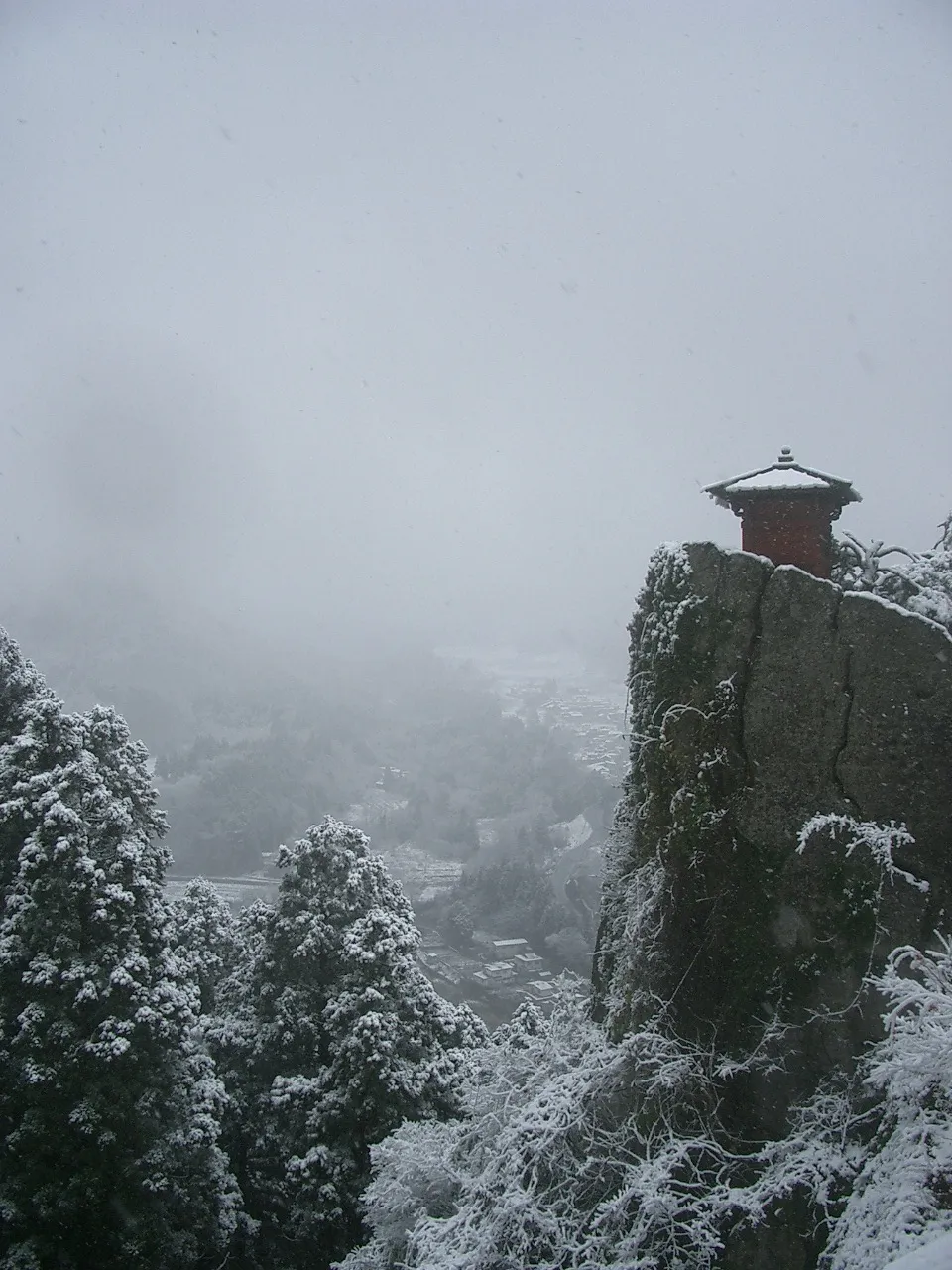
Yamagata has been best known by outsiders for Mount Zao's hot springs and Yamadera for centuries. In fact, Matsuo Basho stopped by Yamadera on July 13, 1689 as part of his poetic journey, Narrow Road to the Deep North, and penned the following famed haiku poem:
さや にしみ の shizukasa ya iwa ni shimiiru semi no koe Silence, and seeping into the rocks — the cry of the cicada — Matsuo Bashō The meaning of this will be instantly apparent should you visit the temple (or most anywhere in Japan) during the late summer - judging from the date, it is considered Basho heard a quieter kind of cicada, niiniizemi (Platypleura kaempferi). (though other kinds' shrilling does sometimes get intense enough to sound like it is drilling through rock!) To this day, for many visitors to Yamagata, it is the desire to visit Yamadera that compels them to come in the first place and from there branching out to discover other gems of the city and prefecture.
History Like much of the Tohoku Region, Yamagata was inhabited by Ainu and Emishi people until they were expelled in 708 AD as the Yamato pushed northward and the area that is now Yamagata Prefecture and Akita Prefecture was annexed as Dewa Province in 712 AD. The capital at the time was in Sakata, but the area in and around present-day Yamagata City had a sizable population. Forts were built during this time that would later be expanded to become Yamagata Castle, Yamadera was built as the most prominent temple in the province, and the hot springs of Mount Zao were already known and frequented by visitors. The Mogami Clan (from the Shiba Clan) ruled over what is modern Yamagata Prefecture (minus the southern Okitama area) during the Sengoku Period. The Mogami sided with the Eastern Army during the Battle of Sekigahara, so they were not only able to keep their land, they were rewarded and became the 5th wealthiest domain in the country under Mogami Yoshiaki who built up Yamagata Castle. After he died, the Mogami had difficulty establ
Getting there
By plane 1 Yamagata Airport (GAJ IATA), Higashine. It has domestic flights from Osaka (Itami), Tokyo (Haneda), and Nagoya (Komaki Airport). Flights directly to Yamagata can be very expensive. Sendai has flights from more airports and is typically significantly cheaper, so it is recommended to fly into Sendai and then travel by train to Yamagata. From Sendai Airport Station to Yamagata Station it takes a little over 2 hours and costs ¥1680.
By train The Yamagata Shinkansen zips from Tokyo to Yamagata in 2 hr 45 min at a cost of ¥10,690, and continues onward to Shinjo. From Fukushima onward the Shinkansen travels on an ordinary track and thus at Limited Express Train speeds. From Sendai, kaisoku (rapid) trains on the JR Senzan Line take about 1 hour and 20 minutes to reach Yamagata, and the local train makes the journey in 1 hour and 40 minutes; they cost the same (¥1; 230 as of Spring 2026).
By bus JR Bus Tohoku runs an overnight bus service, the Sakuranbo, from Shinjuku Station in Tokyo. The trip takes about 6 hr 15 min and costs ¥6,500.
Getting around
Most of the town is centered around the JR station in the middle of town. Yamagata has a bus route, taxis, and bicycles for rent. Most of the most popular tourist destinations have bus routes that run to various areas around town including the areas further out, such as Yamadera and Zao Onsen. On weekends and holidays during the open season, some of the Zao Onsen buses terminate at the Okama Crater. Yamako Bus (バス) timetables can be found here (English). For Yamadera, it may be more convenient to travel by train to Yamadera Station. The temple entrance is a 5-minute walk away from the station past many souvenir shops. By train, Yamadera is less than 20 minutes (¥240 as of July 2018) from Yamagata Station on the JR Senzan Line which runs all the way to Sendai. By car, Yamadera is about 25 minutes NE of Yamagata Station at the junction of Highway 19 and Highway 62. There is a large parking lot near Yamadera Station, and smaller parking lots closer to the temple complex. Parking costs ¥300-¥500.
See
1 Yamagata Castle, ☏ +81 23-641-1212. 05:00-22:00. The original castle was constructed in 1357 by Kaneyori Mogami but the castle was greatly expanded by Yoshiaki Mogami nearly 200 years later. The castle contained a palace building and other structures protected by multiple walled sections with turrets surrounded by a moat. It was the largest castle in the Tohoku region, but it never had a donjon. Yoshiaki also built up the surrounding area as a respectable castle town, both expanding it and improving the existing infrastructure. He is sometimes called the "founder" of Yamagata City, even though people had been living there long before his lifetime. None of the original structures survive today however, efforts are ongoing to rebuild each part of the former castle. Reconstructions have been made out of wood to stay true to the original castle. You can wander the castle grounds and enter the Ninomaru East Gate building to learn a bit more about the castle. The JR Ou Main Line travels directly along the moat past the Ninomaru Gate. It's fun for trainspotters to get pictures of the trains with the castle but the downside is that it limits the angles from which you can view it. The site is listed as one of the top 100 castles in Japan. Free. 2 Mogami Yoshiaki Historical Museum, 1-53 Omotecho, ☏ +81 23-625-7101. Mogami Yoshiaki was a daimyo of the Dewa Province. He is credited for vastly expanding Yamagata Castle and transforming the area from a modest, somewhat run-down town into a respectable modern city. He fought many battles in the region and gained territory for siding with the Tokugawa during the Battle of Sekigahara to make his domain one of the top in the nation at the time. The museum includes exhibits about the city's history in addition to those about Mogami. 3 Yamagata Prefectural Museum, 1-8 Kajo-machi. A museum with exhibits of historic artifacts from Yamagata Prefecture. It is home to the famous "Jomon Goddess" (Jomon no Megami
Do
1 Yamagata Traditional Kokeshikan (やまがたこけし yamagata dentō kokeshikan), Nana Beans 5F. The Kokeshikan has displays of old kokeshi and explanations of the various types of kokeshi. Visitors can also try painting their own kokeshi dolls. ¥300 to paint your own kokeshi.
Events
Hanagasa Festival (まつり). August 5-7. The Hanagasa Festival is Yamagata's most famous festival and the prefectural representative among the top festivals of the Tohoku Region. It began as a single dance in the Zao Summer Festival and branched out as its own distinct celebration in 1965. It is set apart from other summer dancing festivals by its use of flower hats (hanagasa) by all participants. The festival has become so popular that many cities and towns throughout Yamagata Prefecture hold their own Hanagasa Festivals, but this is the original and the largest. (updated Jun 2017) Japan's Top Imoni-kai Festival (のフェスティバル), Alon
Overview adapted from Wikipedia, travel guide fromWikivoyage (CC BY-SA). Photography via Wikimedia Commons.