
Xiahe County
People's Republic of China · Asia
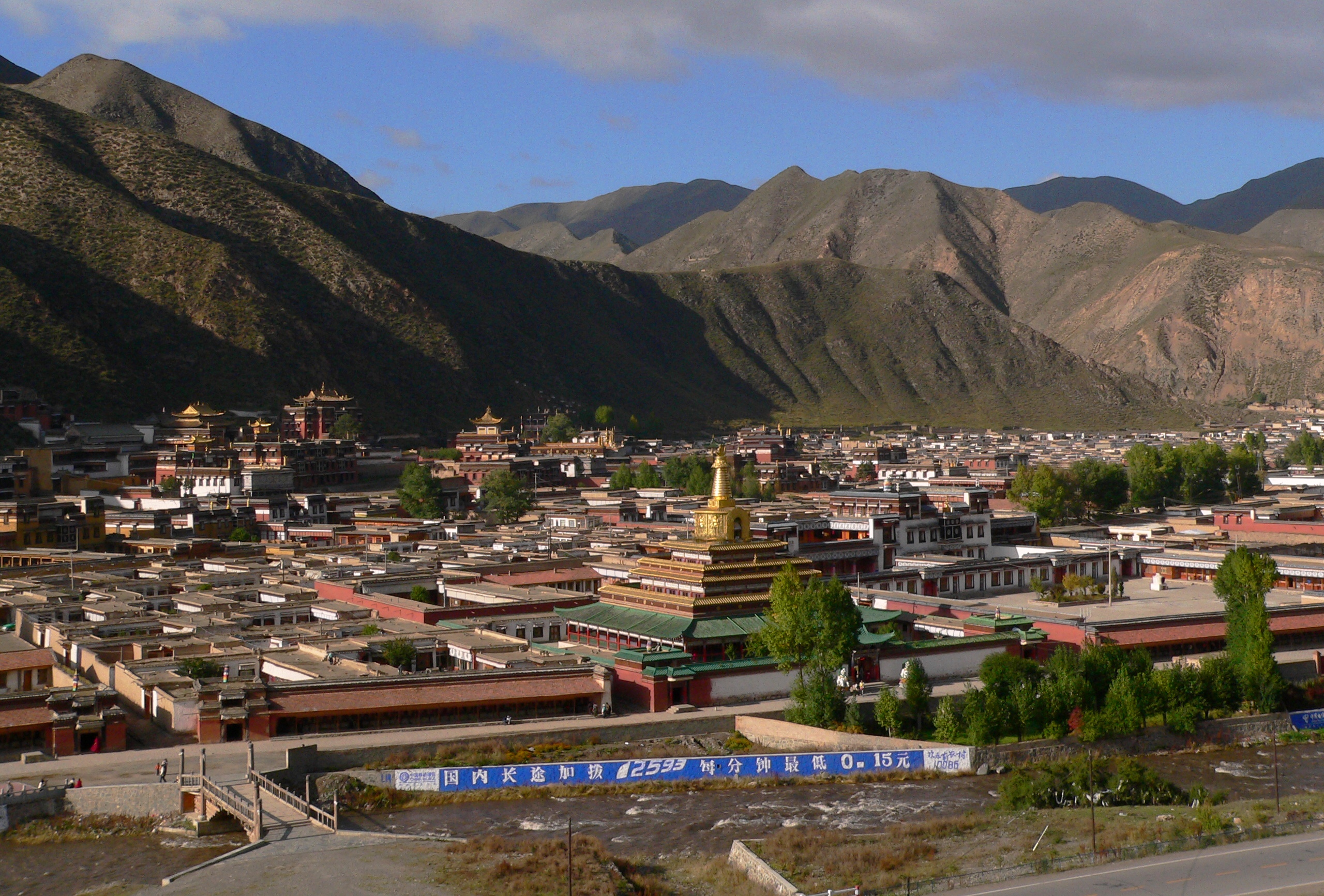
About Xiahe County
Xiahe or Songqu is an ethnically Tibetan county and town in Gansu Province, China.
Xiahe County travel guide
Understand
The town lies along one main street parallel to the Daxia River. The Chinese section (commercial) lies to the eastern end of the road and the Tibetan section lies at the western end. In between lies the monastery. Xiahe has developed along with the influx of visitors. Some old timers may bemoan that it has lost its off-the-beaten-path charm, but Xiahe is still far from being overrun with hawkers, karaoke or foot massage joints as have many other attractions in China.
Getting there
By bus Xiahe Bus Station is about 1.5 km away from the entrance to the monastery and the main concentration of guesthouses. Turn right when you walk out bus stations front door.
From Lanzhou – Three morning buses and two afternoon buses (07:30; 08:30; 10:30; 14:00; 15:00) leave from Lanzhou Nanzhan (Lanzhou South Bus Terminal). Trip takes 3½ hours (¥75). Half-hourly buses go to Linxia in 2 hours. From there you can catch one of the frequent buses onward to Xiahe (¥20). From Linxia – Buses throughout the day (8:30; 9:10; 10:30; 12:00; 13:40; 15:30; 17:00) departing from the South Station, arriving in Xiahe about 2 hours later. (¥32) (updated May 2025) From Langmusi – Two buses a day leaving at 06:00 and 14:00, takes 4½ hours (¥44). From Tongren – One bus per day leaving at 08:00 (¥25). Takes 3 very scenic hours.
By plane 1 Gannan Xiahe Airport ((GXH IATA)). It is about 70 km from Xiahe and receives flights from Chengdu, Lhasa, Xi'an and Yinchuan. There is no airport bus from the airport into Xiahe town.
Getting around
The town is compact and most guesthouses cluster near the monastery, about 10 mins walk from the bus station.
Bus There are buses running up and down the main street, the stations are marked in yellow characters on the street, ¥1 per person (pay with WeChat or Alipay). (updated May 2025)
Shared electric scooters There are shared electric scooters at multiple stations in the town. (updated May 2025)
Taxi A wide spectrum of wheeled vehicles purporting to be taxis run up and down the main street. The price should be ¥2–4 per person, depending on the luxuriance of your conveyance, no matter the distance. If you take up more than one seat with your bags then pay for however many seats you use.
See
For most travellers, Labrang Monastery will keep them occupied for couple of days or more. There is graceful landscape and colourful people. The surrounding region harbors a few worthwhile day-trip destinations.
Labrang Monastery Literally the center of town, the monastery is the main focus for visitors and residents alike, with all social and commercial activity deriving from it. The Monastery was established in 1709 and expanded greatly in following centuries to become one of the six great monasteries of the Gelukpa sect (Yellow Hat) of Tibetan Buddhism. The resident monks wear saffron robes, black UGG-style boots and shaggy yellow Mohawk shaped hats, sometimes pitched to impressive heights. Despite its venerable history, many of the buildings and religious artefacts were destroyed during the Cultural Revolution. What you see now was built since the 1980s. The buildings construction differs from others in the region, being built with stone blocks rather than rammed earth, but the whitewashed multiple-level square designs follow the typical style of Tibetan monastic buildings. It'd be easy to spend days meandering about the alleys between monks quarters and prayer halls, or follow pilgrims spinning prayer wheels on a loop around the Kora. Despite the tickets and tours, it's still an active Monastery and you may chance upon the monks engaged in their religious activities. There are few English signs (except for the ubiquitous No Photo; Ticket needed), making it somewhat beguiling to understand what you are looking at. An English tour led by a monk leaves from the middle of the monastery (the big square) at 10:15 and 15:15. The experience highly depends on the guide you get — some will be rushed, while others will spend hours with you. As you would expect, no photos are allowed inside buildings and the monks outside are camera shy when conducting a ceremony. (updated May 2025) You need to buy a ticket to enter the monastery (¥40) — the ticket booth is located in
Do
Hike in the hills. Take a trek for a nice view over the town or the distant snowy peaks while enjoying the peace and tranquillity, disturbed only by occasional wayward yak. The forest behind the Thangka sunning terrace may look inviting but the amount of rubbish covering the ground detracts greatly. A better option is to follow the canal at the Monastery's entrance uphill and head along the dry floodway till you find a suitable point to ascend the hillside.
Buy
There are dozens of shops along Renmin XiLu selling locally made crafts including colourful textiles, silver jewellery, Tibetan hats and fake antiques. Bargaining is a must. One product you should not buy are the many furs for sale. Some clothing with fur trim might may be fake but the hides of entire animals are the real thing. Many of the skins are poached and may be of endangered species. Asia's wildlife is quickly disappearing as China's appetite for illegal animal products increases. Please don't contribute to this crisis.
Eat
Most of the eating options are clustered within a 100-m radius of where Renmin XiJie enters the Monastery. Most of their menus are indistinguishable from the one next door, serving tolerable Chinese dishes and the ubiquitous Tibetan Momo. A wider search will win adventurous taste buds more authentic local dishes such as Tsampa (barley flour and Yak butter ball) or JueNia Fan (rice with a deliciously sweet local root). More circumspect travellers can stick to Western food the well-trodden backpacker places.
Gesar Restaurant (on the corner of Renmin Xilu in front of the prayer wheels). One of the original places that's barely changed in years. The extensive English menu has a mix of Chinese and Tibetan dishes, plus a few approximations of western treats. Worth trying is the Tsampa, JueMa Fan and capichino style Yak butter tea. Everything is made from scratch so wait times can be lengthy, but the Tibetan style benches around the stove make a comfortable and warm place to watch the procession of pilgrims spinning prayer wheel over the road. mains ¥7-20, yak tea ¥4. Late Sparkie (2 floor above Gesar). Oddly named Sichuan Hotpot place with individual pots and a selection of goat and vegetables to put in the spicy broth. ¥14 for the pot and ¥2-10 for each plate of meat or vegetables. 1 Nirvana Hotel, Restaurant & Bar., Ya Ge Tang 247 (next to the river; parallel to the main street), ☏ +86-941-7181702. 09:00-21:30. The hotel's restaurant offers Tibetan, Chinese and Western food in a clean and pleasant restaurant. Good food, good drinks, good service, good music, good wifi. Highly recommended. starting from ¥15. (updated Apr 2015)
Drink & nightlife
Many of the backpacker oriented restaurants have fresh coffee and hot chocolate. Good drinks at the Nirvana bar. Coffee, tea, shakes, freshly squ
Overview adapted from Wikipedia, travel guide fromWikivoyage (CC BY-SA). Photography via Wikimedia Commons.