
Western Maranhão
Brazil · Americas
About Western Maranhão
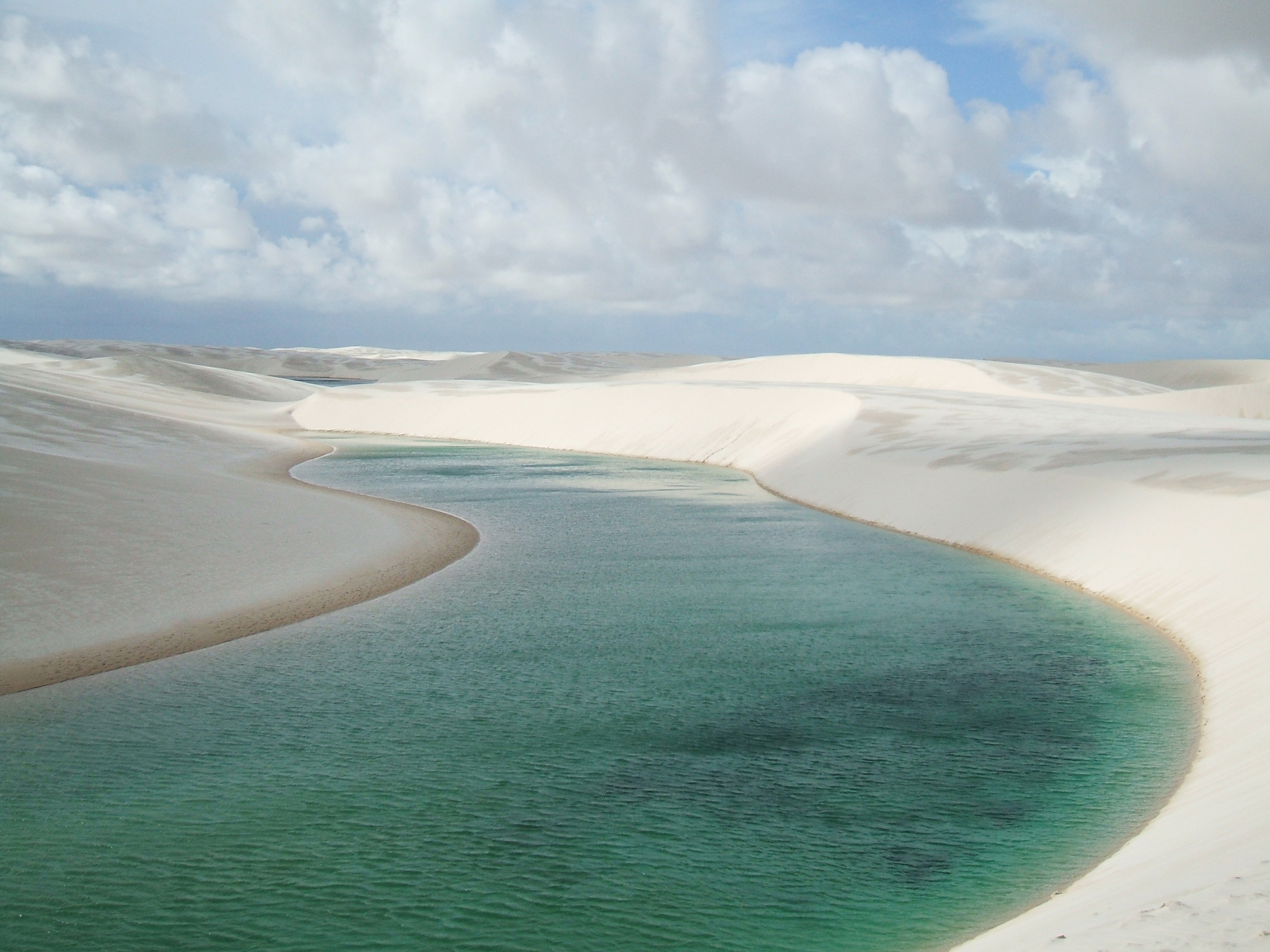
Maranhão is a state in northeastern Brazil. Maranhão has the second longest coastline in the country, resulting in a great diversity of ecosystems. There are 640 km of tropical beaches, the Amazon rainforest, several varieties of cerrados, mangroves, delta in the open sea, dunes, the only desert in the world with thousands of lagoons with crystalline waters.
Western Maranhão travel guide
Understand
Maranhão is second only to Bahia in terms of Afro-Brazilian culture, although it has an air of the Caribbean mixed in. This is especially noticeable in the unique reggae played here. Maranhão is one of the poorest states of Brazil. The predominant indigenous groups are from the Macro-Jê and Macro-Tupi language groups.
History The first European settlement was made by a French trading expedition under Jacques Riffault of Dieppe, in 1594, who lost two of his three vessels in the vicinity of São Luís Island, and left a part of his men on that island when he returned home. Daniel de La Touche, Seigneur de La Rividière was sent to report on the place, and was then commissioned by the French crown to found a colony on the island; this was done in 1612. The French were expelled by the Portuguese in 1615, and the Dutch held the island from 1641 to 1644. Very successful Indian missions were soon begun by the Jesuits. In the late 18th century, there was a great influx of enslaved peoples into the region, which corresponded to the increased cultivation of cotton. According to the historian Sven Beckert, the region's cotton exports "doubled between 1770 and 1780, nearly doubled again by 1790, and nearly tripled once more by 1800."
Climate The climate is hot, and the year is divided into a wet season and a dry season. Extreme humidity characterizes the wet season. The heat, however, is greatly modified on the coast by the south-east trade winds.
Getting there
By plane Marechal Cunha Machado International Airport is 13 km from the center of São Luís. Renato Moreira Airport is a national airport in Imperatriz.
Getting around
Highways BR-010 and BR-230 cross the state.
See
The dunes of Lençóis Maranhenses National Park are an important area of environmental preservation. The state capital, São Luís, is designated a Unesco World Heritage Site. The historic center of Alcântara is also worth a visit. The Parnaíba River delta, between the states of Maranhão and Piauí, is an important conservation area, with its lagoons, desert dunes and deserted beaches or islands, such as Ilha do Caju, which shelters rare birds.
Eat
The state has 640 km of coastline, which supplies products widely used in regional cuisine, such as shrimp, crab and sururu.
Drink & nightlife
Guarana Jesus - A soda that tastes like bubble gum.
Overview adapted from Wikipedia, travel guide fromWikivoyage (CC BY-SA). Photography via Wikimedia Commons.