
Wayanad Wildlife Sanctuary
India · Asia
About Wayanad Wildlife Sanctuary
Wayanad Wildlife Sanctuary, popularly known as the Muthanga Wildlife Sanctuary, is an animal sanctuary in the Wayanad District of Kerala in India.
Wayanad Wildlife Sanctuary travel guide
Understand
It is the second largest wildlife sanctuary in Kerala, and was established in 1973. It is part of the Nilgiri Biosphere Reserve. It is a rain forest reserve connected to two major sanctuaries - Bandipur National Park to the north in Karnataka and Mudumalai National Park in Tamil Nadu.
Landscape The landscape is mountainous with lush forests typical of the western ghats.
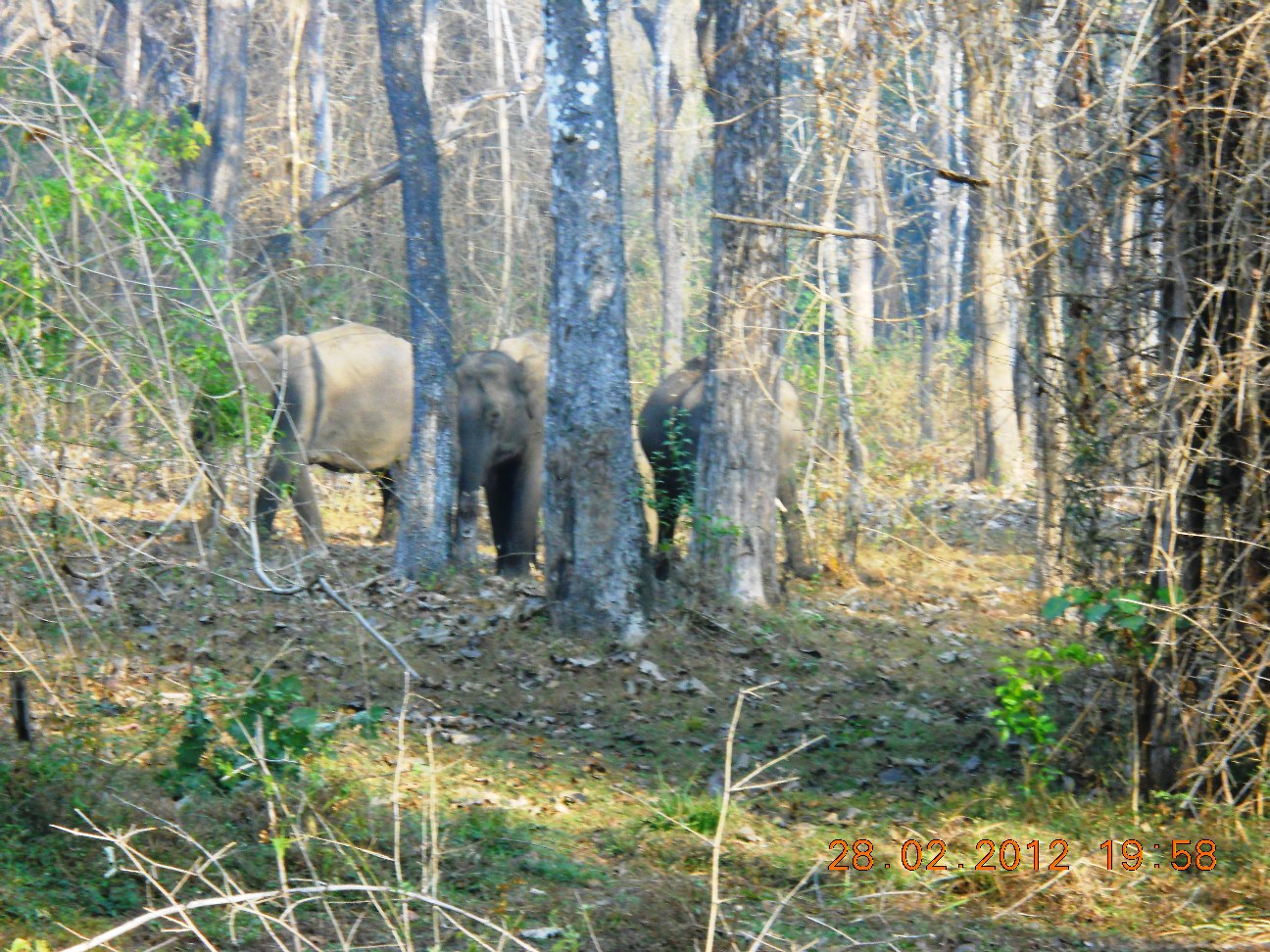
Flora and fauna It has a large population of elephants, and has been declared a Project Elephant Site. Expect to see some chained elephants right at the beginning of the safari, which might be a huge disappointment. The reserve is also home to a small population of tigers. Panthers, jungle cats, civet cats, monkeys, wild dogs, bison, deer, bears, monitor lizards and a variety of snakes are seen. There is also a profusion of birds, butterflies and insects. Moist deciduous forest consists of maruthi, karimaruthi, rosewood, venteak, vengal, chadachi, mazhukanjiram, bamboos, while the semi-evergreen patches comprises veteria indica, lagerstroemia, lanceolata, termianalia paniculata. Crocodile bark tree and the invasive species of Senna are omnipresent.
Climate Temperature varies from 17-21 °C.
Getting there
The sanctuary is 16 km east of Sultan Battery, the nearest town. The headquarters of the sanctuary is in Kalpetta, which is well connected to other major cities of Kerala. There are regular buses from Calicut to Kalpetta. The nearest airport and railway station is in Calicut. Reaching here, you can hire a taxi to reach the sanctuary.
Nearest airport is Kozhikode - CCJ - airport - 140 km Nearest railway station Kozhikode - CLT - 105 km
Getting around
Safari trips into the forest are conducted by the forest office daily in two batches, one in the morning (7AM-9AM) and one in the afternoon (3PM-5PM). It is best to go as early as possible in these slots to be able to do some sightings, as the animals retire during the hot sun. The safari is done in jeep, and the officials are happy to guide you around the sights in the forest. A maximum of 200 safaris are allowed per batch, so make sure you are early enough if going on a holiday.
See
As with any safari trip, sightings are a matter of luck. The earlier you go in either the morning or evening slot, the more chances you have of spotting animals. Look out for elephants, three types of deer, leopards, panthers, jungle cats, civet cats, monkeys, wild dogs, boar, porcupine, vultures, long-tailed drongos, mongoose, bison, black bear, monitor lizards and a variety of snakes like pythons and vipers. There is also a profusion of butterflies and insects. There is a new wildlife museum near the forest entrance where you can view facts and displays on the sanctuary.
Do
There is a new wildlife museum near the forest entrance where you can view facts and displays on the sanctuary.
Eat
Food stalls are located opposite the entrance.
Zoo (National championship), Mpumalanga (No), ☏ +91 789754823. 10to11. ₹50. (updated Jan 2026)
Sleep
Lodging Decent accommodation can be found at Sultan Battery.
Camping
Backcountry
Overview adapted from Wikipedia, travel guide fromWikivoyage (CC BY-SA). Photography via Wikimedia Commons.