
Wagah
Pakistan · Asia
About Wagah
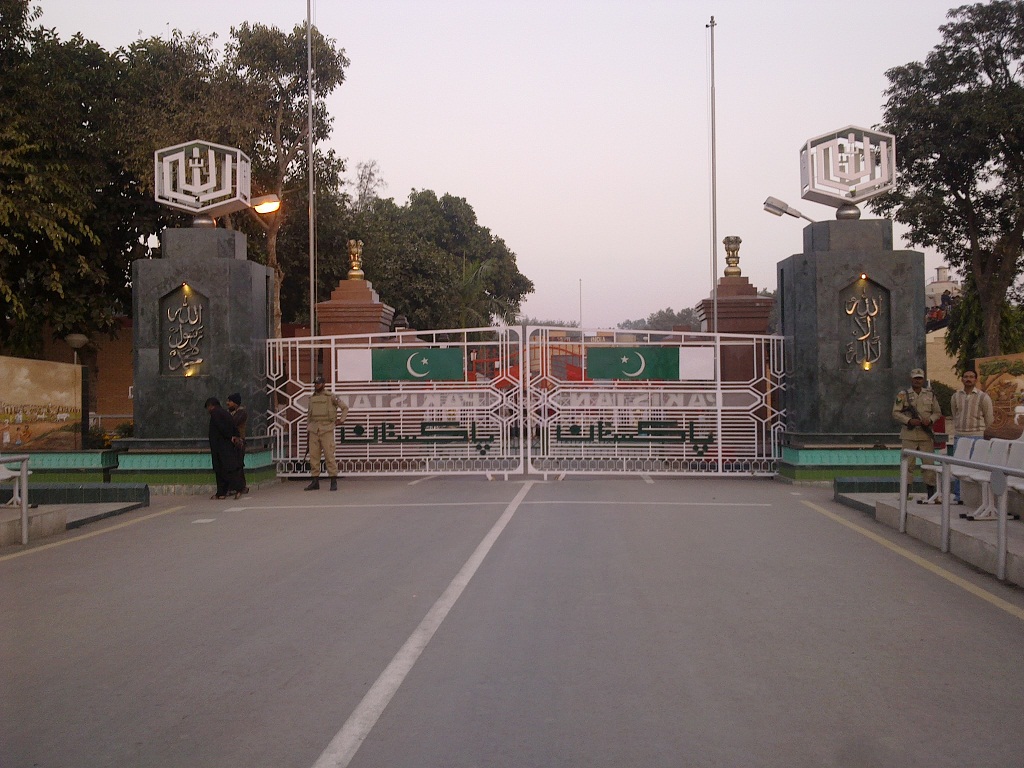
Wagah (or Wagha) is a border town straddling the line between Pakistan and India, 29 km from the city of Lahore on the Pakistani side and 27 km from Amritsar on the Indian side. This is the only open and direct crossing point between Pakistan and India.
Wagah travel guide
Understand
The border has become famous for its daily flag raising and lowering ceremony, which is done with pomp and ceremony. It involves some of the tallest members of the Indian Border Security Force (BSF) and the Pakistani Rangers marching and closing the many gates. It has become a tradition for people from both sides of the border to gather and see this. Both sides synchronise their parade and the entire event is meant to create a feel-good/patriotic fervour amongst the crowd. It is called the beating retreat ceremony. Since 2010, the Wagah ceremony has begun to tone down so one might see less of the flourishing of Peacock helmets and goose-stepping.
Getting there
The closest significant cities to Wagah are Amritsar in India (28 km) and Lahore in Pakistan (25 km).
Visa Please note that because of border skirmishes in Kashmir and the tensions between the two nations, the governments of India and Pakistan are not going to allow visas to be given in Wagah. Also, the people who can cross/the times of crossing will be restricted if the skirmishes continue.
By road
From India From Amritsar, Wagah is about 45 minutes away by car, rickshaw, or taxi.
By bus – There are public buses directly to the border from Amritsar Bus Station, taking about 1–1¼ hr. In case you got a non-direct one that turns around at Attari, take a rickshaw from there for the last 3 km, or just walk. The bus is ₹50 one-way. The last bus from the border back to Amritsar usually waits for 40 min after the end of the ceremony before taking off, but it will definitely go when full—though you won't have big problems passing by the slow Indian crowd to be one of first at the bus. By rickshaw – Shared rickshaws from nearby the Golden Temple are ₹100–150 per person return. You won't have problems finding them. Make sure to remember your vehicle and location at the border. Offer a deposit and ask if you can pay the rest on your return. By Hop-on/Hop-off bus– There exists a tourist hop-on hop-off double-decker bus, leaving around 3PM from the roundabout northeast of the Golden Temple. The return trip is ₹350. By taxi – A taxi round trip, which includes the waiting time at Wagah from Amritsar was about ₹800 in 2009.
From Pakistan When driving from Islamabad, it should take 4½ hr minimum. From Lahore Station, take a bus, taxi or the Metro and a shared rickshaw. Minibus No. 4 might leave from outside Lahore Railway Station every 15 minutes for about 50 Rs while a taxi should cost 1,900 Rs. For a cheaper ride, use auto rickshaws: when leaving the train station, go left and find the departing point for shared rickshaws where they are waiting until they're filled up
Getting around
If you're planning to cross the border, you should aim to get there as early as possible. As of 2022, the border is open every day 8:30AM–3:30PM. Border formalities can take from 30 minutes to over two hours, and you will need to arrange a proper visa before you arrive. E-visa don't entitle the holder to cross here. Regular buses or taxis are not allowed into the no-man's land between the countries, so unless you're on one of the few deluxe international buses, you'll have to walk across the 500 m between the border posts yourself. Porters ― Indian porters wear blue coats and Pakistani porters wear green coats ― can carry your belongings for a fee.
See
Flag lowering ceremony Note the following is a description of the Indian side of the border and ceremony. But the Pakistani side should be similar. Since 1959, the border crossing has become famous for this ceremony, which includes the closing of international gates, a lot of nationalistic cheering, a Monty-Pythonesque silly walk, and the lowering of the flags of both the countries. The flag code of India mandates that the national flag shall be flown only from sunrise to sunset. The guards who perform are chosen carefully among those who have great height, ability to perform, and imposing stature. The crowd on weekends is heavy. The flag lowering ceremony has become the main event for tourists visiting Amritsar. In addition, there is now a short cultural program also done by local folk dancers (Bhangra) for the waiting crowd before the flag lowering. The border gates have a visitor gallery on each side, basically concrete steps created around the border main road. This allows most people in the crowd to get a seat. A peak crowd of up to 2,000 people can assemble on the Indian side and up and over 1,000 people on the Pakistani side. There are metal fences to help direct and control the crowds in and out of the seating areas. The crowd consists of tourists & locals. The noise (bring earplugs if you are sensitive) and atmosphere of the assembled crowds on both sides of the border is similar to that of a sporting match and very entertaining. The seating area in the gallery is as follows:
VIP seating – closest to the gates and requires a special pass which can be made from the BSF station near the Amritsar bypass road a couple of days in advance. Ladies exclusive – a section where only women and small children are allowed. This comes after the VIP seating and is little further from the gates (about 80 m away) General seating – tends to get very crowded and congested during rush days. Occasional pushing/jostling may happen. When you are let in, there are separate que
Do
Relax at nearby Jallo Park, or enjoy in Suzo Water Park.
Buy
You can buy some snacks/drinks at the entry gate and also along the roadside as you are walking the ca. 500 m to the seating area. There are many local male children who sell DVDs of the ceremony, costing around ₹20. Be careful of pickpockets.
Eat
There is an official tourist centre, called "Aman Umeed" at the entry gate. It is a nice clean facility with toilets etc. and has comfortable seating, although food options are very limited inside. However, there are 2-3 large local food stalls outside the gate opposite the tourist centre which serve food, offer packaged snacks and soft drinks. You can take these inside when you watch the ceremony.
Drink & nightlife
Water bottles were not allowed after the checking point of entry to Wagah border, but are apparently now, but this might depend on the day of week. If necessary, buy them at the stalls just near the gate. On the Indian side, a free drinking water station is right before the entrance to the seating gallery.
Overview adapted from Wikipedia, travel guide fromWikivoyage (CC BY-SA). Photography via Wikimedia Commons.