
Trinidad
Cuba · Americas
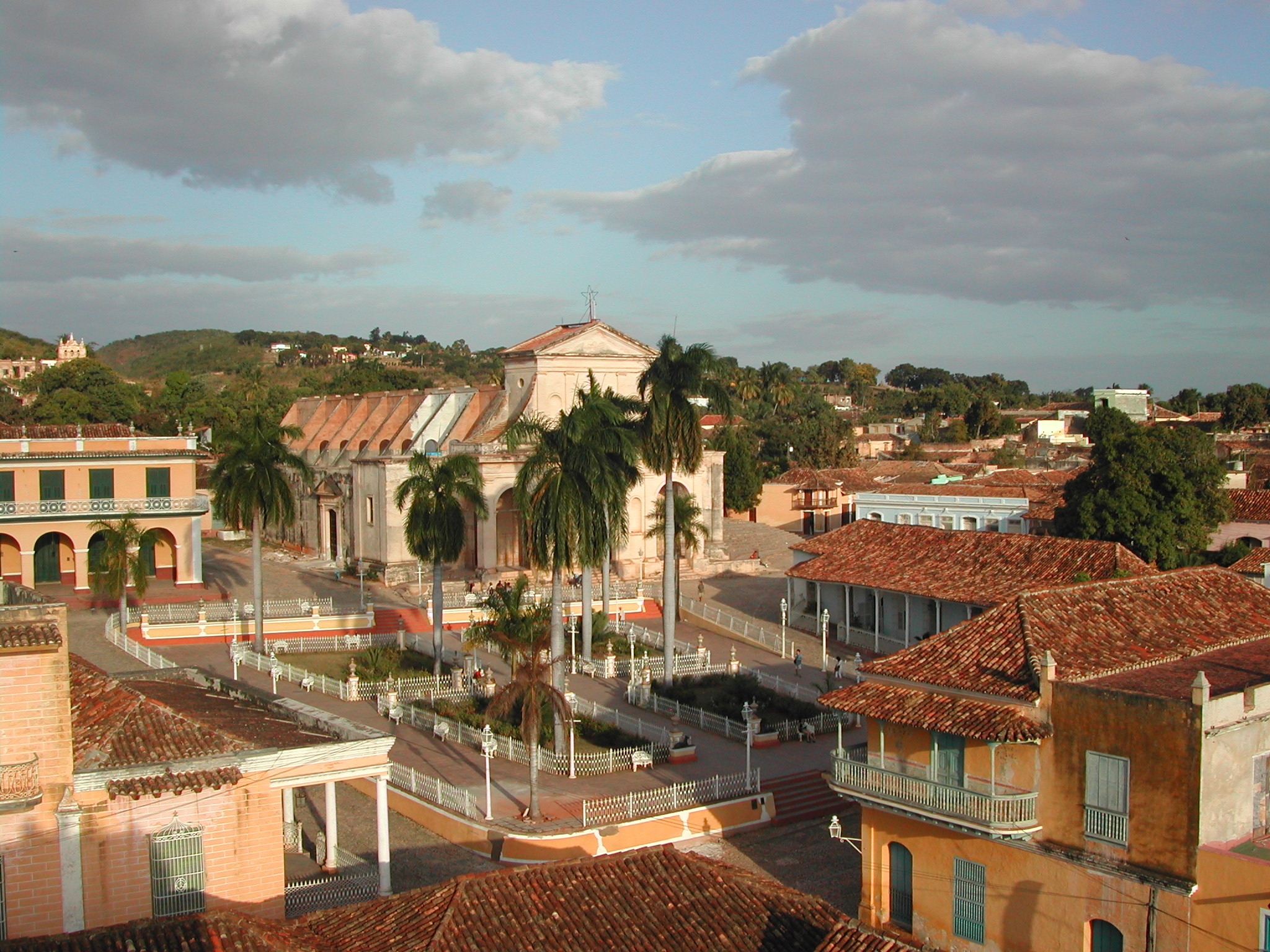
About Trinidad
Trinidad (sometimes called Trinidad de Cuba) is a city in Central Cuba. It is a UNESCO World Heritage Site.
Trinidad travel guide
Understand
As a UNESCO World Heritage, Trinidad is a must see on your trip to Cuba offering a beautiful and mostly preserved old town.
Getting there
By bus 1 Central Bus Station. Viazul buses have a twice daily service from Havana stopping at Cienfuegos, and a daily service from Santiago de Cuba stopping at Holguin, Camagüey, and Sancti Spiritus. There is also a service to/from Varadero stopping at Santa Clara and Cienfuegos that is not listed on the Viazul website. It leaves Varadero at 07:30 and returns from Trinidad at 14:25. Viazul and Cubanacan offer direct buses from Viñales as well. You buy Viazul tickets from the air conditioned office right in front of where the buses park, not from the Astro or local bus counters. (updated May 2015)
By taxi or colectivo You can also get in and out quicker by taxi, specifically, colectivos at about the same price as a Viazul bus ticket. When going to Havana this is also more convenient, as you will not be dropped off at the Viazul station, but will instead be driven to the desired location. Drivers can be found at the central bus station or around the 2 Cubatour Office. If you organize your transport at least a day in advance, the driver will pick you up at the desired time at your hotel or casa. In April 2022 the cost of a colectivo (airconditioned minivan for 7 passengers and driver -- they are always full) from Havana to Trindidad is €35 or US$40 per person.
By train Trinidad has not been connected to the rest of Cuba by train since a hurricane destroyed an essential bridge in 1992. There is a local train running to the Valle de los Ingenios from the 3 tiny train station. In April 2022 the train is not running because the locomotive is broken and pending repairs. The man guarding the engines in the depot across the road from the station will give you a short tour if you wish.
Getting around
Street names may be difficult to find, although the town is very small. Offline GPS maps are useful, but if you ask around, people are helpful. Adding to the confusion, almost all streets carry two names an old and a new one. The central part of the town is small enough to explore on foot. The old city is centered around 1 Plaza Mayor. (updated May 2015) The streets are cobble stones, very irregular and walking could be difficult for older folks. Wear runners for sure. Do not even think about wearing high heels. Your ankles will pay.
See
2 Casa de la Música (at the stairs on the central square). Open air location, where there is a small platform from which groups perform at night. Usually, there is salsa music, and great salsa dancers there enjoy the music and dance and perform with foreigners. It is great to enjoy a few drinks there as well. often free. (updated May 2015) 3 Museum of the War Against the Bandits (Lucha Contra Bandidos). The museum is in a former convent close to the cathedral near the Plaza Mayor in the old colonial center. The War Against the Bandits was the 1961-1969 fought against U.S.-sponsored counterrevolutionaries, who hid out in the nearby mountains. If you do not read Spanish, the displays may be difficult to understand, but the piece of the American U-2 spy plane shot down speaks for itself. Also well worth the entrance fee is the mirador (view) from the convent's tower, reached by several flights of wooden stairs, which has superb views across the whole town. (updated May 2015) 4 Cathedral. The cathedral is beautiful inside and has a tower you can climb for a view. (updated May 2015) 5 Museo Romántico. A museum of mostly furniture from the colonial times. (updated Oct 2017)
Do
Old Colonial Center. Walk around in the old colonial center. Check out the colonial homes and furniture too. The houses are open and some of the antiquities are visible from the streets. Also the market in the old colonial center is nice to walk around and look at the handicrafts. Drawn thread tablecloths and linens seem to be a speciality. The vendors are refreshingly laid back, you can look around and get virtually no hassle or pressure to buy. (updated May 2015) 1 Viewpoint Cerro de la Vigía (To get there; continue up the hill northeast from the Plaza Mayor.). Climb the hill behind the town to get a great view. As you walk up the hill you go through poorer neighbourhoods. You may be asked for clothes or trinkets by the local kids. Seems pretty safe during the day but be careful at night. As you exit the city you’ll also pass by the Disco Ayala, a discothèque in a cave near the top of this hill. (updated May 2015) 2 Topes de Collantes National Park. The national park starts just outside the city and features some great views and many hikes, some of which leading to waterfalls, rivers or ponds. The closest park area is El Cubano and it’s possible to even walk there (4-5km one way), yet the park areas further up the hill (around the village of Topes de Collantes) have a greater variety in plants and more of a jungle feeling. The parks are accessible either by car, by taxi (expect about US$30-40 for the car to drive there including pick up in the evening) or by taking one of the day tours offered by Cubatur. (The local bus service to Topes de Collantes has not run in years.) Access is free, though transport is not and most hikes will charge an entrance fee of about ~US$3-9. (updated May 2015) 3 Playa Ancón (Ancón beach) (Ancón peninsula). The peninsula is one of the few places in Cuba where you can access a great beach without staying at a resort hotel. A taxi will take 10-15 min to get there for ~US$6-10, there’s also an (often very overcrowded) bus leaving 4 times
Buy
There are several convenience stores in town. In contrast to other places in Cuba, the 5-l water canister costs CUC3 instead of CUC1.90.
1 Bank with ATM (Banco de Credito y Comercio) (in the center of José Martí street). (updated May 2015)
Eat
Budget There are several 'so called' peso pizza establishments in the town which allow tourists to purchase Pizza for the national peso price. This usually works out at around CUP5-10. This is a good idea for travelers on a budget. One of the biggest places in Trinidad is situated on the corner of Frank Pais and Francisco Javier.
1 Local food stall. This cheapie has a fixed menu, but offers actual dishes. Worth trying out if you’re already sick of peso pizza. ~US$1. (updated May 2015)
Mid-range Many casa particulares offer dinner, typically for around CUC10 per person. If you did not yet try local food, these usually authentic dishes are very well prepared and well worth checking out. However, Trinidad also has a good variety of restaurants and some serve food that’s hard to come by elsewhere. Note that the restaurants listed in guide books are typically well visited, so you may have to queue for a seat when coming between 19:00-22:00. When wandering around the city, touts may offer to guide you to a restaurant. If that happens, kindly refuse their service or be prepared to have their commission added to the bill. Highlights include:
2 La Botija. This authentic tavern with
Overview adapted from Wikipedia, travel guide fromWikivoyage (CC BY-SA). Photography via Wikimedia Commons.