
Tioman Island
Malaysia · Asia
About Tioman Island
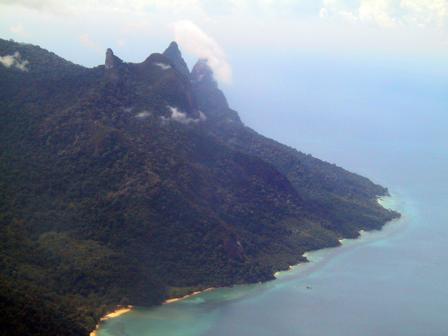
Tioman (Malay: Pulau Tioman, "Tioman Island") is a small island, 20 km long and 12 km wide, off the east coast of peninsular Malaysia. In the 1970s, Time magazine selected Tioman as one of the world's most beautiful islands. The densely forested island is still sparsely inhabited. Also it is surrounded by numerous white coral reefs, making it a haven for scuba divers from around the region.
Tioman Island travel guide
Understand
Tioman is in Pahang off the East Coast of Peninsular Malaysia within the Mersing Marine Park, which also contains less commercial islands such as Sibu Island. The primary gateway Mersing is in Johor. Tioman's beaches were depicted in the 1958 movie South Pacific as "Bali Hai". Already the most commercially developed of Malaysia's eastern islands, a controversial RM 40 million marina project for Kampung Tekek, complete with 175 m cargo jetty, now threatens to speed up the pace of development on Tioman considerably. However, visitors with an aversion to such progress can avoid this part of the island and stay elsewhere without any impact. Garbage disposal is a major problem on the island. In theory, all garbage and pre-sorted recycling is taken via boat to the mainland on a monthly basis, but there is much informal burning/dumping of rubbish. You will find enormous monitor lizards across the island, sifting through the rubbish piles looking for food. There is also an abundance of feral cats. Many resorts do sort their waste for recycling and dispose of it properly. However some resorts just dump all their garbage in the jungle. With 200,000 visitors per year, the waste produced by tourists can easily swamp the island if not properly managed. How your chosen resort disposes of rubbish and recycling is worth asking about during your stay. So do not expect a pristine environment, but progress is being made. As of 2020, a new incinerator had been built but was not in use. Various recycling programs exist but their use is not 100%. Tourists can minimise their impact by producing as little rubbish as possible.
Getting there
No matter which way you choose to arrive, a marine park fee of RM35 (as of 2023) is levied on all visitors to the island. If you arrive by ferry this is payable at the ferry port in Mersing.
By ferry Most visitors arrive by ferry from Mersing on the mainland. As of 2023, two ferry companies, Bluewater and Cataferry, provide services departing from Mersing, Johor and Tanjung Gemok to various jetties on Tioman including Genting, Paya, Tekek, Air Batang and Salang Jetty. You can purchase tickets online in advance or directly at the counter. The trip takes 1.5-2 hours to the first jetty. There are about one to three services per day in each direction, depending on tides. Some ferry companies overcrowd their vessels. If you ever feel uncomfortable boarding a vessel for any reason, refuse. A good way to avoid this is to avoid the last vessel as it is always the busiest. The boat is sometimes boarded by the Malaysian coast guard but it appears that the operators are aware of when this will take place and take pains to follow the rules only on those days.
Bluewater Ferry charges RM75 (2025) (more on public holidays) for adults, and takes travellers to Tekek, Air Batang Genting, Paya and Salang. The ferry operator tends to leave Mersing when the tide is high enough, when there are sufficient passengers aboard, or if a connecting bus needs to be met. Hence, it may not always be possible to strictly adhere to the timetable and you should leave sufficient buffers (1-2 hours) or prepare yourself to spend a night in Mersing. In Mersing, the ferry port is about 1 km down the river from the bus terminal. Face the river and go right. Follow through the commercial centre of Mersing, past the stadium to river mouth. The bus may also drop you off at the corner where a conveniently located travel agent will attempt to sell you accommodation on the island. It may suit some to make a booking in the town before going to the island, others may prefer to take their chances and check out
Getting around
Local transport is by bike, cars at Tekek, and by boat. A concrete road runs through Tekek, extending from the Berjaya resort in the south, past the airport, and to the northern end of Tekek village. There is a concrete path running the 800 m of Air Batang area and believe it or not: the Air Batang locals bought about 20 scooters and drive up and down this 800-m path that ruins the calm for the tourists. Elsewhere there are almost no roads on Tioman. Cars may charge around RM20 for the short distance from the end of Tekek jetty/parks info office to the airport and up to RM120 for the biggest distance with a minimum of 2 or 4 passengers. The east–west concrete track was started by the Japanese in WWII and was re-opened several years ago. It follows the main electricity cable between Tekek and Juara. A 4-wheel drive vehicle is required. When you arrive you may be asked for up to RM175 to charter a whole vehicle to take you across. In May 2012 chartering a whole vehicle from Juara to Tekek cost RM60, though individual passengers in shared vehicles were quoted as RM35/head. It takes 45 min and is an interesting, steep and hairy ride.
By boat By far the best and cheapest way of hopping from one village to the other is to use the Mersing/Tioman ferry service. On its way to and from Mersing it goes between Salang in the north and Genting in the south. The ferry will take you to most villages between from RM20 per person (for the Bluewater ferry) and is much cheaper than the private speedboat services. As of July 2011, the ferry operators do not appear to be charging for the island-hopping. Speedboats charge from about RM20–60 for a single trip, depending on the destination. For example, a speedboat from Salang to Tekek will cost about RM30, but a trip from Salang to Juara will cost about RM60–100. Although you can try to negotiate, they know full well that they're the only game in town (unless you hike). A single trip by boat as far as from the west coast to the east co
See
Air Batang (ABC village)
The village used to be named Ayer Batang or Air Batang, word by word translation means water stick; traditionally people used bamboo sticks to carry water here. A long time after this, the first to build chalets in the village named them Ayer Batang Chalets, (ABC) and the name stuck. Today ABC is a small village with one small path crossing from north to south, following the coast line, no cars, just some motorbikes (sometimes driven by children). The people living here are mostly quiet, enjoying their relaxed way of living and the untouched feel of their village. As long as you respect them, they will respect you. Don't expect a party destination, while there are a few bars and occasional parties, the main purpose here is relaxing, meeting other people, diving and trekking. This is also a major reason people visit ABC, to see traditional island life while enjoying a tropical holiday. Walk along the path (it will take you about 40 min to go from one side of the village to the other) enjoy the sea and the giant trees, have your lunch on a terrace and observe life moving around you. Being a small village close to the jungle also brings different kinds of visitors: monkeys and giant monitor lizards. These animals will regularly cross your path, reminding you that they know the place better than you ever will. Lastly the mos
Overview adapted from Wikipedia, travel guide fromWikivoyage (CC BY-SA). Photography via Wikimedia Commons.