
Tehran Imam Khomeini International Airport
Iran · Asia
About Tehran Imam Khomeini International Airport
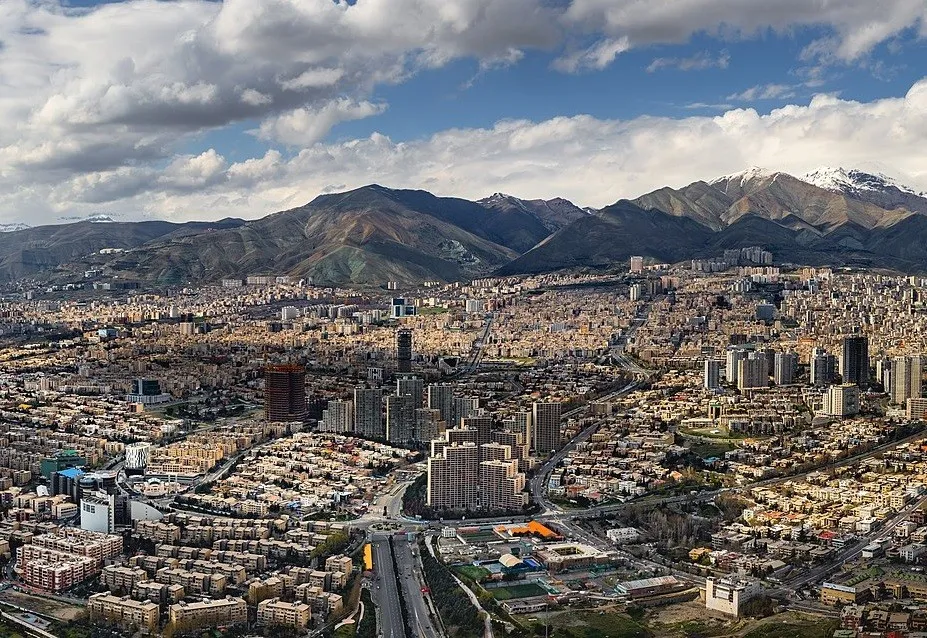
Tehran (also spelled Teheran) (Persian: تهران), is the capital city of Iran. A bustling metropolis of 14 million people, it sits at the foot of the towering Alborz mountain range. Tehran is a cosmopolitan city, with great museums, parks, restaurants, and warm friendly people. It deserves at least a few days of your Iranian itinerary.
Tehran Imam Khomeini International Airport travel guide
Understand
The city can be roughly divided into two parts - north and south. The northern districts of Tehran are more prosperous, modern, cosmopolitan and expensive while southern parts are less attractive but cheaper. At the time of the Zand dynasty, it was a little town that was significant from a strategic point of view. The first of the Qajar kings, Agha Mohammed Khan, named Tehran as the country's capital in 1778, and most of its growth started during the reign of a subsequent Qajar monarch, Fath-Ali Shah. The castle that Agha Mohammed Khan had built was to contain the new majestic buildings. At the same time, the city's population doubled. Due to the increasing significance of the city, gates, squares and mosques were built and it was at the time of Nassereddin Shah that the city's master sketch was prepared and modern streets were constructed. Later, huge central squares like Toopkhaneh square (now Imam Khomeini) and quite a few military buildings were built. Even though the Qajar dynasty was in a period of decline, Tehran soon took the shape of a modern city. The structure of large government buildings, new streets, recreation centres, urban service organizations, and academic and methodical centres was started, even as most of the old gates and buildings were destroyed and the city's old architectural fabric replaced by a contemporary one. Tehran has also earned itself an unenviable reputation as a smog-filled, traffic-clogged and featureless sprawl of concrete bursting at the seams with 14 million residents. But you can also find an endless number of nice and cosy places in and around the city - if you know where to look. Tehran is a city of more than 800 parks, all well-kept. The city is nearly a mile high above sea level and as a result is cooler than other cities in the Middle East. Still, summer temperatures are very hot, averaging 33°C (91°F) in July and frequently exceeding 38°C (100°F). The air tends to be very dry. A combination of factors make Tehran a plea
Getting there
For information on Iranian visas please refer the Iran#visas page.
By plane 1 Imam Khomeini International Airport (IKA IATA) (55 km southwest of the city center, Robat Karim railway station (ایستگاه راه آهن رباط کریم) around 3 km northwest near Line 1 'Kahrizak' ~ 20 km NE). The only airport in Tehran to which international passenger flights operate. (updated Nov 2016) Getting there and away:
By metro – The easiest way to reach city center. Line number 8 connects Airport Terminal A with Metro Line 1 (red line) (75; 000 rials; that can be used for the full network; Mar 2019). Runs irregularly: 06:50, 08:10, 09:30, 10:50, 12:10, 13:30, 14:50, 16:10, 17:30, 18:50, 20:10. For Metro Line 1 (red) there is a metro from IKA to Tehran during daytime—the trains run hourly (Sep 2017). By bus – To and from the city (e.g. Haram Metro station) every 30-60 min 07:00-23:00. They leave right in front of the main exit and cost 20,000-30,000 rial. There are unconfirmed reports of a shuttle bus operating between IKIA and Mehrabad Airport every 4–5 hours. By taxi – They cost a fixed rate of 800,000 rials (or US$19 or €17 as of Nov 2025), ask at the taxi counter. The drive to/from the city center takes 45 minutes without traffic, but can take upwards of 90 minutes with traffic. There is a booth organizing taxis right outside the arrivals hall. You can also bargain with taxis dropping off passengers at the arrivals hall because otherwise they would have to go back to Tehran empty. Taxis to the nearest metro station (Haram-e-Motahhar) cost 500,000 rials. Shuttle taxis and green minibuses operate between the airport and Shahed Station on the red line of the metro. This can be a convenient option going to the airport from town, but finding the shuttle taxis at the airport will be difficult as many don't stop there. At 7,000 rials for a metro ticket and 40,000 rials for a shuttle taxi (they will try to rip you off or charge for bringing in luggage even if there is space, so make sure to o
Getting around
Getting around traffic-clogged, sprawling Tehran is a true test of patience. While taxis are your best bet, they are pricier here than the rest of the country. A large local bus network will also take you almost anywhere you need to go, as long you can make sense of the routes and Persian line numbers. The true star of Tehran's transport system, however, is the metro.
By bus Tehran has an inexpensive but confusing bus network. Some require prepaid contactless card (min 5; 000 rials), which can be bought from booths beside the bus stops and metro stations used when you get off the bus, and some should be paid by cash (ranging from 1; 000-4; 000 rials). The buses are partitioned in two sections, men-only (the front section) and women-only (the back section). In the BRT lines, the women-only section is at the front. Also, the fee is paid on the station, using the prepaid contactless card (shared with Metro), or paying to the guard. Since bus numbers, route descriptions and other information are in Persian, your best bet is to look confused at a bus terminal; a local will surely stop to help. Each bus line has a certain and almost invariable path but only people know exactly which bus stations exist for a certain road. You shouldn't expect a map or guides even in Persian showing the bus network or bus stations. Even asking the bus driver wouldn't be a great help for you to find your way either. If you get in a bus and looking for a certain station to alight, ask one to help you - you will find many people wish to help you to find your way, most of the time.
Bus Rapid Transit (BRT) The BRT buses are colored in red. BRTs has special lines and travels very quickly from Azadi square (west of Tehran) directly to the East (Terminal-e-Shargh). Railway square (south of Tehran) directly to the north (Tajrish square). Azadi square to free university (northwest). Azadi Square to South Terminal and parkway bridge (north of Tehran) to jomhuri square. Costs 1,000-3,000 rials. I
See
Monuments 1 The Azadi Tower (Persian: برج آزادی; Borj-e Āzādi), Kuy-e-Mehr Abad (Azadi Square Subway Station). The longstanding symbol of Tehran was constructed to commemorate the 2,500th anniversary of the Persian empire, combines elements of Sassanid and Islamic architecture. The entrance of the tower is directly underneath the main vault and leads into the Azadi Museum on the basement floor. Do not sit on the grass! Officers chase away people. (updated Nov 2016) 2 Mausoleum of Ayatollah Khomeini (The Tomb of Imam Khomeini), near to Behesht-e Zahra, Cemetery Highway (بزرگراه بهشت زهرا) (Metro: Haram-e-Motahar NW 300m). The gigantic mausoleum is on the southern edge of the city. The sheer size of the shrine/shopping centre is enough to make the trip worth it. Women can borrow chadors at entrance. Bags have to be left for free at one of the compound doors. Entrance is free. (updated Mar 2019) 3NOT EXISTING IMAGE Milad Tower (برج میلاد) (from Metro Tarasht 3.5 km NE or from Metro Hem
Overview adapted from Wikipedia, travel guide fromWikivoyage (CC BY-SA). Photography via Wikimedia Commons.