
Taos
United States · Americas
About Taos
Taos is a prominent town of 6,000 people (2018) in North Central New Mexico. While much more laid-back than Santa Fe, Taos has become a popular travel destination in its own right, noted for its art colony, its New Age community, excellent skiing, and Taos Pueblo, a photogenic American Indian community that is open to visitors under controlled conditions.
Taos travel guide
Understand
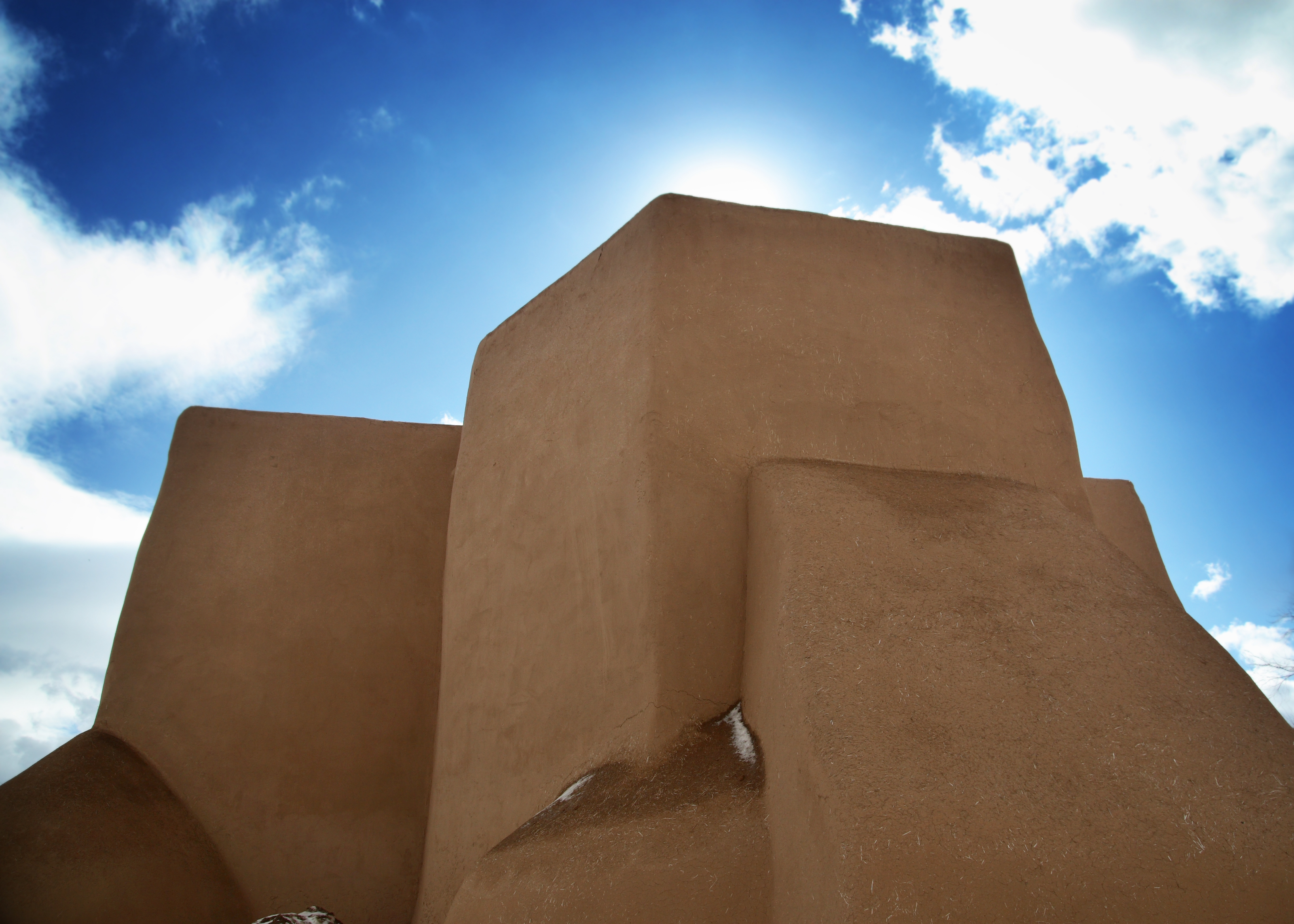
The Town of Taos is one of several places with "Taos" (pronounced "touse"; rhymes with "house" or "mouse") in their name, all part of the region and contributors to its attractiveness but differing in just what the attractions are. Ranchos de Taos is a small village south of Taos proper that is notable for a spectacularly scenic and much-photographed church. Taos Pueblo is just north of town, and is an ancient American Indian community (and UNESCO World Heritage Site) in a particularly beautiful setting. Taos Ski Valley, also known as Twining, is about 20 miles (32 km) north of town in the Sangre de Cristo Mountains. Finally, the Taos Box is a section of the nearby Rio Grande known for its superb whitewater. Before setting out for an attraction, know exactly which Taos you're visiting; there are attractions outside Taos proper in Ranchos de Taos, Taos Pueblo and Taos Ski Valley, all of which are covered below with those for the town.
History It's not clear exactly when the first humans arrived in the Taos area, but samples taken from the main structure of Taos Pueblo found it to likely have been built somewhere between 1000 and 1450 AD, which would make it one of the oldest continuously inhabited communities in the Americas. Situated in a tributary valley of the Rio Grande, Taos marked the northernmost extent of the Pueblo Indians. It would also mark the northernmost extent of Spanish settlement in the Southwest following the arrival of Spanish conquistadors and missionaries in the 17th century. Of all the pueblos, Taos may have been the most resistant to the brutal treatment they received from the Spanish, leading the Pueblo Revolt in 1680 and keeping up armed resistance to the Spanish long afterwards. Over time, the Spanish eventually began to fight alongside the Pueblo Indians against other tribes in the region, which led to the creation of the Spanish village of Taos in the 1790s. In the early 1800s, many mountain men and fur trappers arrived in the area, ma
Getting there
By plane Taos Regional Airport (TSM IATA). JSX from Dallas–Love, Denver–Rocky Mountain, Austin–Executive, Burbank, San Diego/Carlsbad (updated Apr 2025) The Albuquerque Sunport (ABQ IATA), three hours' driving time distant, is one of the nearest airports with extensive commercial air service. Santa Fe Airport is the other nearest airport with extensive commercial service, with 2 hours drive time.
By car Taos is about a two-hour drive north of Santa Fe. Its position on the west slopes of the Sangre de Cristo Mountains restricts road access somewhat, as there are few passes through the mountains and the ones that exist may be closed in the winter due to snow. Coming from Denver and other points north, there are two options: either follow Interstate Highway 25 to Raton and then US Highway 64 over Palo Flechado Pass and into Taos, or follow Colorado state road 159 south to the New Mexico border, at which point it becomes New Mexico state road 552 and continues to Taos. There are also two routes into Taos from Santa Fe and Albuquerque. The most direct route follows US Highway 285 through Pojoaque to Española, then New Mexico state road 68 along the banks of the Rio Grande to Taos. There are a number of scenic viewpoints on this road; it's worth stopping to see if river runners are on the Rio, particularly during high water (spring) at which time this stretch of river is one of the finest whitewater experiences in the continental United States. The slower and higher, but even more scenic, "High Road to Taos" diverges at Pojoaque and first follows New Mexico 503 to Chimayo, then New Mexico 76 and New Mexico 75 to Peñasco, and then New Mexico 518 to outlying Ranchos de Taos and finally the Town of Taos. This is a beautiful drive in the spring and summer; the Sangre de Cristos are snow-capped until June or so, while later in the summer, the thunderstorms that build over the mountains provide a different kind of elemental beauty.
By bus Faust Transportation (☏ +
Getting around
With little traffic Taos is easy to drive around in, seeing as there is really only one main road stretching from the beginning of town to the end. the downtown area is great for walking, with many restaurants, shops, and galleries to visit. Taos Trolley Tours runs bus tours that reach most of the main attractions. The trolley-style bus won't move any more quickly through traffic than your car will, but using it will at least save you some aggravation behind the wheel, and reduce the congestion slightly for the other drivers. Call ☏ +1 575 751-0366 for details; usually closed during the winter. For those without a car, it's relatively easy to hitchhike in and around town. For nearby northern towns, such as Arroyo Seco, Valdez, and Arroyo Hondo, walk north toward the gas station where Paseo del Pueblo (US-64) forms a fork with highway to the Taos Pueblo. Other established hitchhiking spots are at the Junction of US-64 North (Airport/Manby Spring), State Highway 522 (Arroyo Hondo/Stagecoach Spring), and State Highway 240 (Arroyo Seco), and north on Highway 240 at Old Blinking Light. Taos also has an official form of public transportation, and that's the Chile Line shuttle service, ☏ +1 866-206-0754, which operates a free, fixed-route service on weekdays with designated stops along the main street of town (Paseo del Pueblo) up to the pueblo and a shuttle service from many of the hotels in Taos to the Taos Ski Valley.
See
Downtown Taos
The historic district at the center of town, this is where you'll find the majority of traveler attractions in Taos. 1 Taos Plaza, the historic center of town, is a shady town square surrounded by adobe architecture about half a block west of the intersection of Paseo del Pueblo and Kit Carson Road, which gets clogged with tourists in the summer months. The buildings surrounding the Plaza hold many of the town's finest restaurants and hotels, as well as a number of houses that belonged to founders of the art colony or other significant personages which have since been turned into museums and galleries.
2 Kit Carson Home and Museum, 113 Kit Carson Rd (a block east of the plaza), ☏ +1 575 758-4945. March-October: Daily 10AM-5PM; November-February: Daily 10AM-4PM. The Taos home of Kit Carson, a 19th-century frontiersman, Indian agent, and Army officer who played a prominent role in the Indian Wars. The house has been lovingly preserved, with artifacts from Carson's life and period furnishings illustrating frontier life in Taos, including one room done up to look like a frontier trading post. $7 adult, $6 senior, $5 teens/students, children 12 and under free. (updated Dec 2015) 3 Governor Bent Home, 117 Bent St (a couple of blocks north of the plaza). Summer: daily 9AM-5PM; winter: 10AM-4PM. The former home of Governor Bent, the first Governor of New Mexico when it was territorial United States, who was killed here in a raid by angry residents who objected to American rule. This small museum has some artifacts from the
Overview adapted from Wikipedia, travel guide fromWikivoyage (CC BY-SA). Photography via Wikimedia Commons.